Closing the Gap: Leaders Bridging AI Strategy and Talent Readiness
The Growing Gap Between AI Adoption and Talent Readiness
The rapid integration of artificial intelligence is reshaping the corporate landscape, yet a significant disconnect remains between technological investment and workforce preparation. Companies are racing to adopt AI tools to drive efficiency, but many are discovering that their greatest hurdle isn’t the software—it’s the human element. Without a clear understanding of behavioral data and skill alignment, organizations risk leaving their most valuable assets behind in the digital transformation.
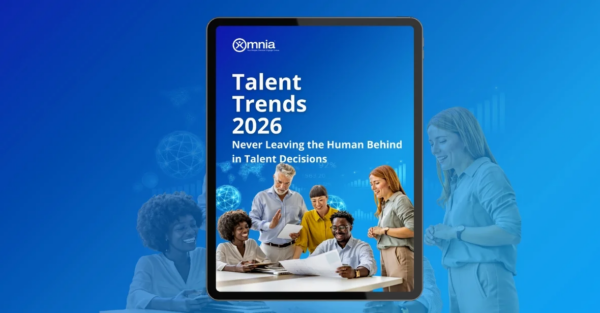
Keather Snyder, President and Chief Operating Officer of The Omnia Group, has been closely tracking this shift. With the release of the “Talent Trends Report 2026,” The Omnia Group brings forward data and perspective on what it calls the “AI Acceleration vs. Talent Readiness Gap.” In this interview, Snyder discusses how leaders can use behavioral science to ensure their teams are not just surviving the AI revolution, but leading it.
Q1: What is the primary driver of the disconnect between AI adoption and talent readiness?
One of the clearest messages in Omnia’s Talent Trends 2026 report is that leaders are making a real effort. They are not ignoring change. In fact, 73.8% of organizations now conduct regular one-on-one meetings, assessment use rose to 58.1%, up from 44.6% last year, and AI use in talent strategy more than doubled, from 17.9% to 42.3%.
What makes this especially meaningful is that this is not just a snapshot; it is part of Omnia’s five-year longitudinal study of how small and mid-sized businesses are hiring, developing, and retaining talent over time.
So the issue is not that leaders are doing nothing. The issue is that the pace of change has become so fast that even with more attention, more tools, and more effort, many organizations are still struggling to fully prepare their people.
For employees, this can feel like a lot is changing all at once. New tools are emerging, expectations are shifting, and people are trying to understand what it means for their roles and futures. If leadership support is inconsistent, even positive change can start to feel uncertain.
To me, this is the heart of the issue. Leaders are doing more, but they still need the time, structure, and support to help their people navigate change well.
Q2: How does behavioral data help identify employees suited for AI-augmented roles?
What our study makes clear is that AI adoption is rising quickly, but technology alone does not tell leaders who is ready for change, where support is needed, or how to align people to new demands. That is where behavioral data becomes so valuable.
It helps organizations move beyond assumptions and make more confident decisions about role fit, development, and readiness. The report points to a widening gap between AI acceleration and leadership readiness, which tells us the challenge is not just about access to tools. It is about understanding people well enough to use those tools wisely.
Behavioral data helps leaders look at the full person, not just the resume or technical skill set. AI-augmented roles often require more than learning a new system. They call for adaptability, judgment, communication, and comfort with change.
Some employees are naturally energized by experimentation and fast-moving environments. Others are especially strong at bringing clarity, building trust, or translating information into action. Both kinds of strengths matter. Behavioral data helps leaders understand where someone is most likely to succeed and how to support them more thoughtfully.
That is why the human side of AI matters so much. Technology can help us process information, but leaders still need a reliable way to understand people.
Q3: How can executives foster a culture of psychological safety during AI transitions?
The first step is to recognize that those concerns are real. When employees hear more about AI and automation, it is very natural for them to wonder what that means for their jobs, their growth, and their future with the company.
What I find encouraging in Omnia’s Talent Trends 2026 report is that leaders are trying to respond. More organizations are making space for regular one-on-ones, and more are using assessments to make better people decisions. That matters because psychological safety does not come from a policy. It starts in real conversations between leaders and employees.
At the same time, effort alone is not always enough. People build trust when communication is clear, support is consistent, and they feel there is a path forward for them.
What Omnia’s behavioral insights can do is help leaders make that support more intentional and more personal. Some people need reassurance and clarity. Others want involvement and visibility into what comes next. When leaders understand those differences, they can show up in ways that feel more human and more credible.
People are much more open to change when they feel seen, respected, and included in the process.
Q4: Which behavioral traits should recruiters prioritize to future-proof their workforce?
That is one of the clearest themes in our Talent Trends 2026 report. As more organizations bring AI into their talent strategies, the value of distinctly human strengths becomes even clearer.
And we are seeing that reflected more broadly across the industry. ManpowerGroup reports that seven of the ten fastest-growing skills needed by 2030 are soft skills, and that ethical judgment remains one of the hardest capabilities to automate. Korn Ferry similarly found that 73% of talent leaders rank critical thinking as the most important skill needed in 2026, ahead of AI or technical skills.
That matters because, in an AI-enabled workplace, performance depends not just on speed, but on judgment, fairness, and the ability to communicate clearly.
So when I think about future-proofing the workforce, I would start with adaptability, curiosity, and learning agility. I would also add communication, resilience, sound judgment, and critical thinking. Those are the qualities that help people stay effective when work is evolving quickly.
What matters here is balance. AI can absolutely improve efficiency, but it cannot replace ethical reasoning, contextual understanding, or the ability to build trust. The organizations that will do this well are the ones that continue to value those very human qualities and hire with them in mind.
Q5: What is the first step for COOs to synchronize tech roadmap with talent strategy?
I would start by asking a very simple question: where is the work changing first, and are our leaders truly ready to guide people through it?
Omnia’s Talent Trends 2026 report shows just how quickly this shift is happening. AI use in talent strategy climbed to 42.3%, more than double last year’s 17.9%. At the same time, only 47.7% of organizations consistently train managers on interviewing and people decisions, up from 32.6% in 2025. That tells me that leaders are leaning in, but many still need more structure and support to lead this level of change well.
For a COO, synchronizing tech and talent strategy means not treating people as an afterthought. It means understanding how roles are changing, where managers may need support, and how to make sure employees are not just expected to adjust on their own.
The earlier leaders connect those dots, the more likely they are to create change that feels sustainable instead of disruptive.
Q6: What will be the biggest differentiator for companies that successfully navigate AI and human talent?
I believe the biggest differentiator will be leadership consistency.
That is really the message I take away from Omnia’s Talent Trends 2026 report. Our five-year longitudinal study shows real progress. Leaders are adapting, and in many ways, they are doing more than they were even a year ago. The effort is there, but the consistency is not always there yet.
The organizations that succeed will not necessarily be the ones moving fastest. They will be the ones whose leaders can bring clarity, sound judgment, and consistency to change. They will help people feel supported, not sidelined. They will use technology to improve decisions, but they will not lose sight of the human responsibility that comes with leading well.
In the end, the organizations that stand out will be the ones that pair technology with leadership discipline, human judgment, and consistent follow-through.
The insights shared by Keather Snyder underscore a pivotal reality: technology is only as effective as the people empowered to use it. Success in the age of AI requires more than just capital investment; it demands a deep understanding of employee behavior, cognitive adaptability, and proactive upskilling. By leveraging behavioral analytics, organizations can turn the threat of disruption into a sustainable competitive advantage.
As we look toward the future, the integration of AI will continue to accelerate, making the talent readiness gap a make-or-break issue for global leaders. The Omnia Group’s focus on the human element ensures that, as machines become smarter, our workforces become more resilient and strategically aligned. Prioritizing people-centric data today is the only way to ensure your organization remains relevant in the marketplace of tomorrow.