

Fink Warns AI Growth May Deepen Wealth Gap Without Inclusive Participation
The AI Revolution and the Growing Wealth Gap
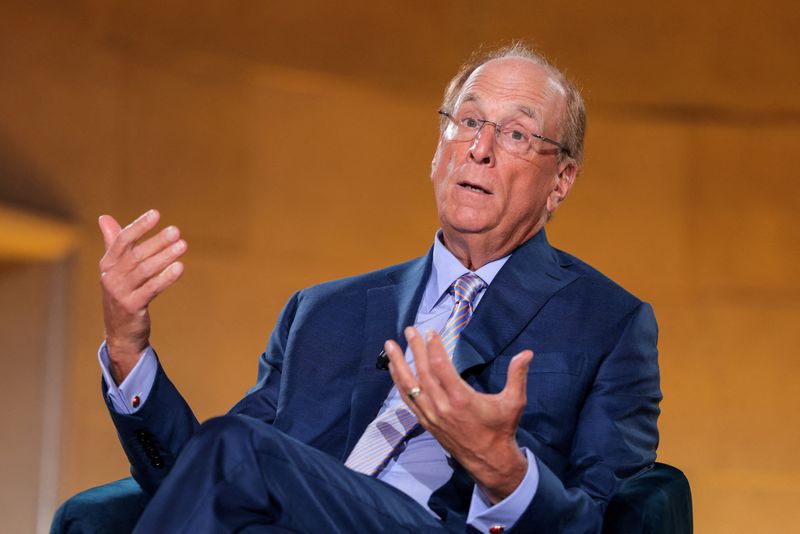
BlackRock’s CEO, Larry Fink, recently sounded an alarm about the potential consequences of the artificial intelligence (AI) boom. In a statement made on Monday, he warned that unless more individuals can share in the market gains driven by AI, the wealth gap could widen significantly. This issue has become a focal point as the rapid advancement of AI sparks discussions about whether its benefits will be distributed evenly across different sectors or if they will only favor large tech companies.
Since the introduction of ChatGPT in November 2022, Wall Street has witnessed a surge in AI-driven market gains, primarily benefiting companies at the forefront of this technological revolution. This trend highlights a growing concern that the benefits of AI are being concentrated among a narrow group of winners.
Fink emphasized in his annual letter to shareholders that the wealth generated over the past few generations has largely been enjoyed by those who already own financial assets. He pointed out that AI could exacerbate this situation, creating even larger disparities.
Despite the increasing number of individuals participating in financial markets in recent years, participation in equities and other traditional assets remains relatively low. As the leader of the world’s largest asset manager with approximately $14 trillion in assets, Fink has consistently used these letters to highlight the role of capital markets in building wealth and the importance of long-term investing.
“History suggests that transformative technologies create enormous value – and much of that value accrues to the companies that build and deploy them, and to the investors who own them,” he stated.
AI: Here to Stay
Fink also mentioned that AI is “here to stay” and remains central to strategic competition between the United States and China. He noted that the U.S. recognizes the importance of AI leadership and emphasizes the need for sustained investment in research, infrastructure, talent, and capital markets capable of financing innovation at scale.
Investors are becoming increasingly cautious about the fast-growing adoption of AI, which could disrupt established business models, particularly in legacy software and services. Automation and new AI-native competitors pose a threat to pricing power and growth in these sectors.
The uncertainty surrounding how quickly companies can adapt and which firms will emerge as winners has introduced volatility into valuations and weighed on parts of the tech sector. Fink highlighted that while AI will create significant economic value, ensuring broader participation in this growth is both a challenge and an opportunity.
Staying Invested Amid Uncertainty
Fink urged clients to remain invested despite ongoing market volatility. He emphasized that staying invested over time is more crucial than trying to time the market correctly. Over the past two decades, every dollar invested in the S&P 500 has grown more than eightfold.
Global markets have faced turbulence in recent weeks due to a combination of geopolitical and macroeconomic shocks. These include the escalating U.S.-Israeli conflict with Iran, which has led to sharp spikes in oil prices and disrupted key shipping routes. This has fueled inflation fears and shaken investor sentiment.
At the same time, concerns about AI potentially reducing the value of legacy software businesses have affected parts of the tech sector. These pressures coincide with signs of softening consumer spending and rising worries about an economic slowdown amid still-elevated interest rates.
Fink reflected on the current period, noting that events that would have defined a decade have become routine. He mentioned wars with global repercussions, trillion-dollar companies, a fundamental reordering of international trade, and the advent of the most significant technology since, at least, the computer.
“Some of the market’s strongest days came amid the most unsettling headlines. The danger is that we focus so much on the noise that we forget what actually matters.”