How Private Credit Could Spark a Public Crisis
The Growing Concern Over Private Credit
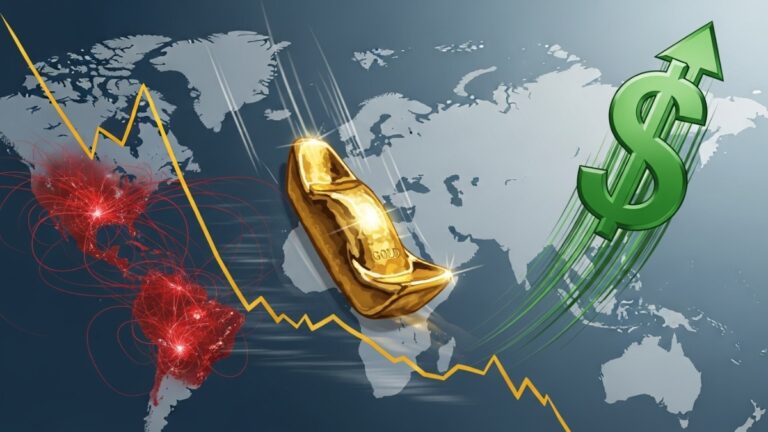
Investors are increasingly pulling their money out of private credit funds, which lend directly to businesses. This move is driven by fears that could have widespread consequences, affecting not just stock traders but also everyday people. But what exactly is private credit, and should everyone be worried enough to start hiding gold under their mattresses?
Key Concerns in the Market
There are several reasons behind this growing anxiety:
- Artificial Intelligence Risks: Many investors are concerned that if artificial intelligence leads to a significant economic downturn, many companies could go bankrupt and default on their loans.
- Comparisons to 2008: While the situation may remind some of the 2008 financial crisis, experts suggest there’s no need for immediate panic.
This week, the issue gained more attention after two major players in the private credit industry, Ares Management and Apollo Global Management, restricted investor withdrawals from their funds. These limits are standard practice, as private credit firms aim to avoid a “run on the bank” scenario that could force them to sell assets at a loss.
Recent Examples of Investor Anxiety
This kind of behavior has been increasing in recent months. Blue Owl Capital, for instance, has lost 40% of its market value this year. It was forced to shut down one of its popular retail-focused funds after investors started demanding their money back.
Understanding Private Credit
Private credit differs from traditional banking because it operates without the same level of regulation. These “shadow banks” issue loans with terms known only to the involved parties. As a result, investors often don’t know what they’re holding. When macroeconomic factors like higher interest rates, inflation, or geopolitical tensions add to the uncertainty, investors naturally seek to reduce their risk exposure and retrieve their funds.
The Spread of Panic
When private credit issues become public, the ripple effects can be significant. Fund managers argue that these fears are overblown. Bank of America analysts recently stated that there’s “misinformation” around private credit causing markets to overreact to minor data points.
While no major lender has collapsed, and the feared wave of defaults hasn’t fully materialized, there have been some notable cases. JPMorgan Chase CEO Jamie Dimon referred to a few bankruptcies as “cockroaches,” highlighting the current state of the sector.
The Size and Impact of Private Credit
It’s important to note that private credit, though growing, is still a relatively small part of the economy. US public equity markets are valued at about $70 trillion, while private credit is around $1.8 trillion.
However, the lack of transparency in private credit creates an information vacuum. Some investors are filling this gap with worst-case scenarios, fearing that the fallout could extend beyond elite investors.
The Role of Mainstream Banks
Mainstream banks both compete with and support private lenders. According to Moody’s, US banks have made about $300 billion in loans to private credit providers, fueling the sector’s expansion.
The potential for contagion is real. If private credit performs poorly, big banks that lent to the industry could lose money. This could lead to tighter lending practices across the board, affecting everyday consumers and small businesses.
The Risk of a Systemic Crisis
In the 2008 crisis, banks held toxic assets that were intertwined in complex financial products. This made it difficult to determine who held bad debt, leading to a freeze in lending. Today, private equity firms use internal models to evaluate privately held debt, but the process isn’t transparent.
Erasmus Kersting, an economics professor at Villanova School of Business, notes that the sector’s opacity and illiquidity can lead to problems once trust turns into a realization of risks. This could result in drastic valuation drops, impacting Main Street through higher insurance premiums, pension underfunding, and reduced bank lending.
The Uncertainty of Exposure
No one knows the exact extent of banks’ exposure to private credit. Estimates vary widely due to the lack of systematic reporting and a clear definition of “private credit.” This uncertainty makes it hard to trace indirect exposures, as noted by Aaron Brown, a former head of financial market research at AQR Capital Management.
Preparing for the Unexpected
While what happens in private markets may not always stay in private markets, the current situation shows that rattled confidence in one corner of Wall Street can spread quickly. Debtwire’s Bringardner advises investors to prepare for the worst, just in case the tremors turn into something more severe.
For more insights and updates, consider creating an account at Jendela Magazine.