
World’s Largest Sporting Goods Retailer Boosts Warehouse Efficiency with Robots
Decathlon’s Warehouse Revolution with Exotec
Decathlon, one of the world’s leading sporting goods retailers, has taken a significant step in transforming its logistics operations by automating seven of its European warehouses using Exotec, a French startup specializing in warehouse robotics and automation systems. This move is part of a broader trend in the retail industry to leverage technology for increased efficiency and productivity.
Exotec’s CEO and cofounder, Romain Moulin, highlighted that the integration of robotic systems can lead to multiple benefits, including reduced warehouse footprint and increased order output. At Decathlon’s Portugal warehouse, the number of orders prepared daily has doubled from 57,000 to 114,000, showcasing the potential of these technologies.
The role of human workers is also evolving as they are required to walk less within the warehouse or are reassigned to other tasks. According to Moulin, this change has significantly improved working conditions for employees.
The Skypods: A Game-Changer in Warehouse Automation
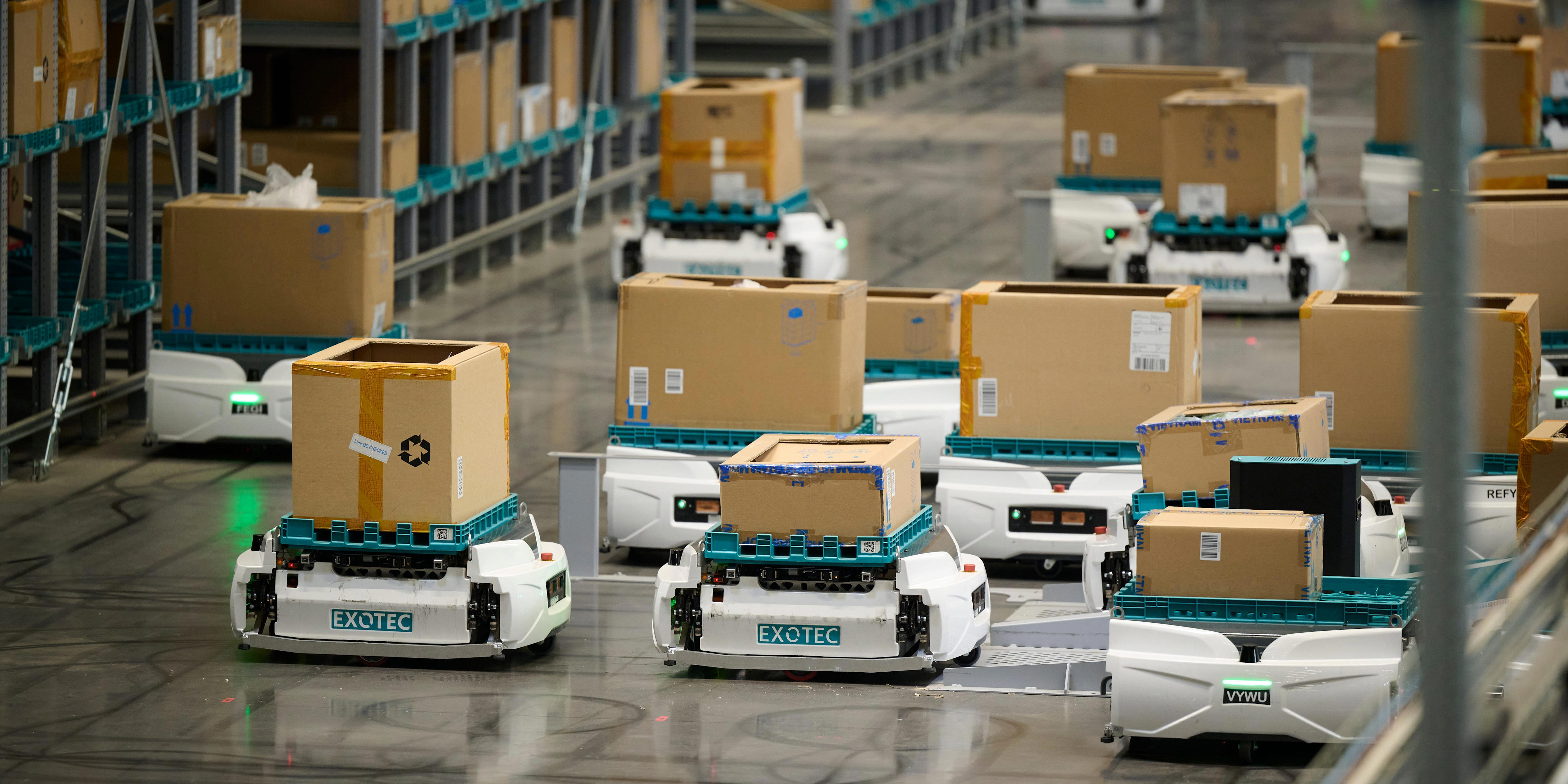
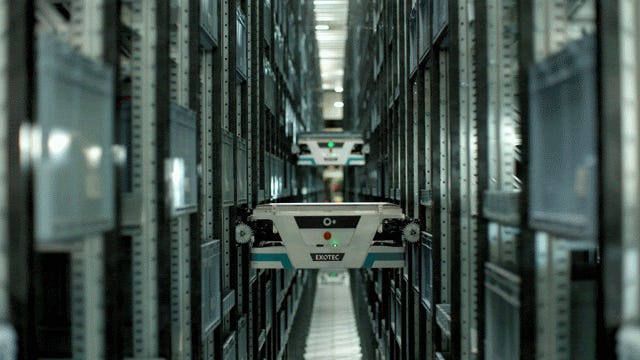
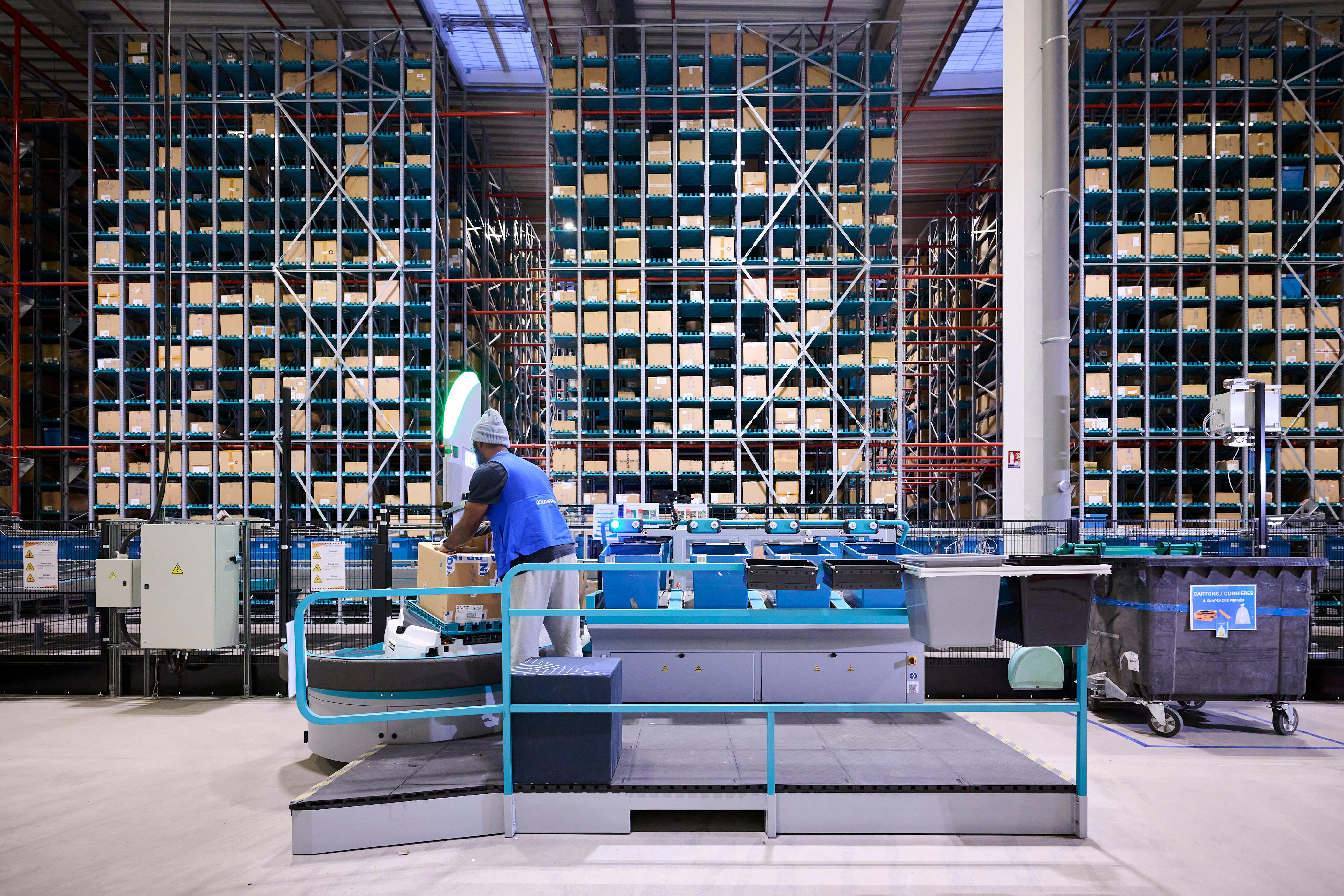
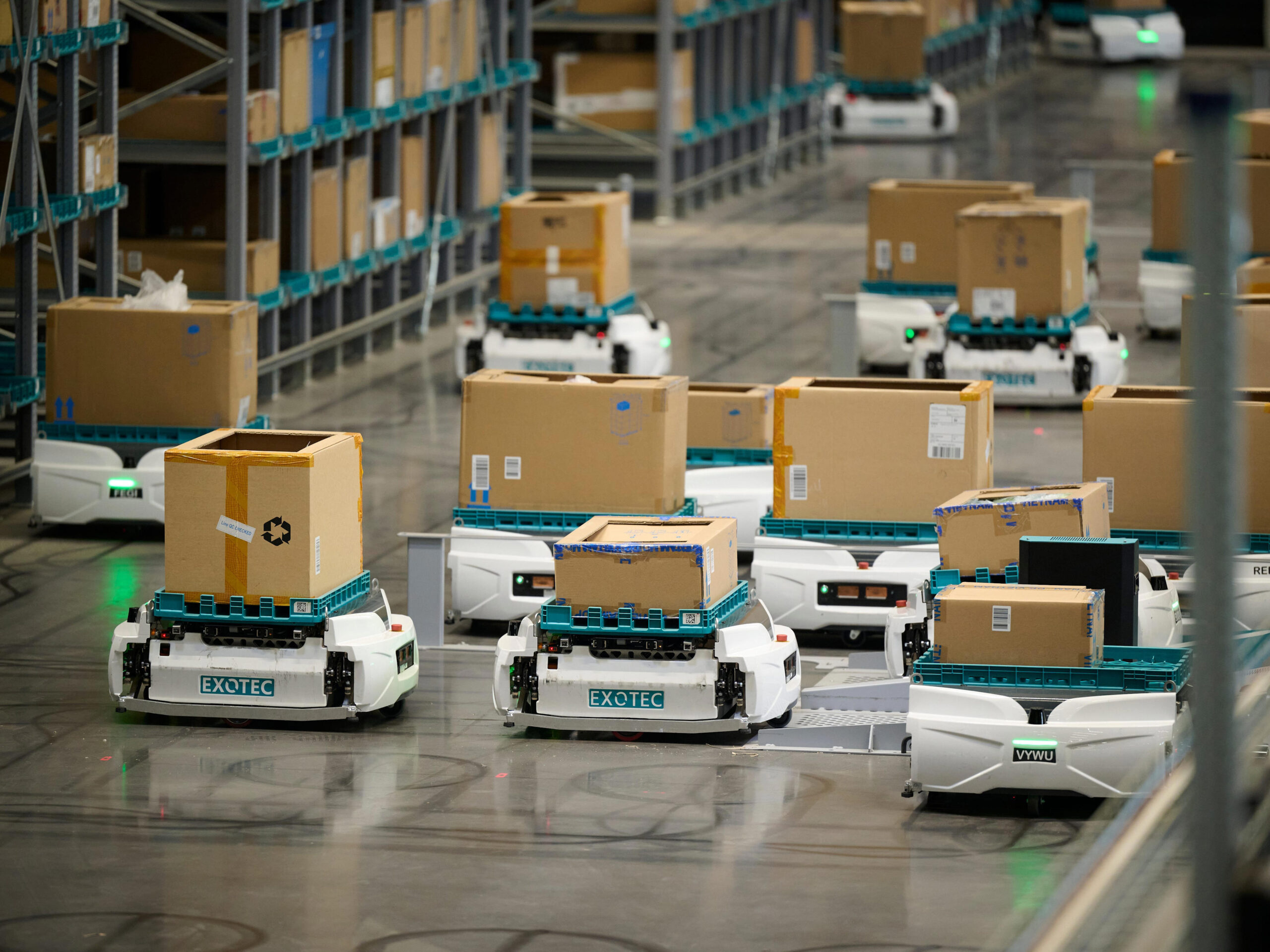
Exotec’s flagship product, the Skypods, represents a major advancement in warehouse automation. These wheeled robots resemble rectangular Roombas and are designed to move, store, and retrieve hundreds of thousands of items daily from storage bins stacked on their heads. Additionally, the robots have the capability to move three-dimensionally, attaching themselves to Exotec’s proprietary storage racks and climbing up to about 46 feet. This feature allows clients like Decathlon to reduce warehouse footprints and increase item density.
The company’s automated system includes a range of technologies such as 150 to 200 Skypods, automatic depalletizers and palletizers, carton-opening machines, and RFID tunnels that scan items on a conveyor belt. This comprehensive approach enables companies to quickly adapt the system across multiple sites.
Transforming Traditional Warehouse Operations
In traditional brownfield warehouses, items are organized on shelves that are typically 6 to 7 feet high, accommodating human workers. Pickers then use carts to retrieve items for orders, which often requires larger spaces to accommodate increased shelf space. The average warehouse size is about 194,000 square feet, according to Moulin.
With automation, this changes significantly. Exotec’s platform can reduce a warehouse’s footprint to 65,000 square feet, allowing companies to either dedicate more space to shelving or to other operations. At Decathlon’s UK logistics site, the walking distance for pickers has decreased from over 6 miles to under 1 mile per day.
Enhancing Workplace Safety and Efficiency
Decathlon reported improvements in workplace safety at its UK site, where incidents related to order picking have decreased from 1 in 5,000 to 1 in 10,000. Part of this improvement can be attributed to Exotec’s platform, which allows pickers to be moved to other operations.
At one site, the number of pickers dropped from 50 to 12 after the installation of Skypods, with other workers reassigned to different tasks. Moulin noted that companies can shift workers to roles such as return or repair operations while increasing throughput.
According to Decathlon, one warehouse in France nearly doubled the number of stores it can replenish, from 37 to 73. At its Portugal site, the number of stores has increased from 41 to 73.
The Future of Retail and Robotics
Moulin emphasized that the big bet for retailers is that warehouse automation can help companies move more goods while addressing persistent labor shortages. He noted that customers in Europe, the US, and Japan often express difficulty in finding people to perform these tasks.
While some industries explore humanoid robots to solve the labor gap, Moulin stated that Exotec’s clients do not currently have an immediate need for humanoids. He explained that the company uses simple robots to move inventory, powered by AI, to avoid the challenges associated with manual picking.