Households in Poor Areas Bear Heaviest Council Tax Burdens, Data Reveals
Households in some of the most economically disadvantaged regions of England are still facing some of the highest average council tax bills, according to recent official data. The figures reveal a stark disparity between different areas of the country, with certain metropolitan regions continuing to experience significantly higher charges compared to other parts.
Residents living in metropolitan areas, primarily located in the North and Midlands, will see their annual council tax for Band D properties—used as the standard measure—average £2,409 this year. This is notably higher than the £2,068 average seen in London boroughs, which include both affluent and deprived neighborhoods.
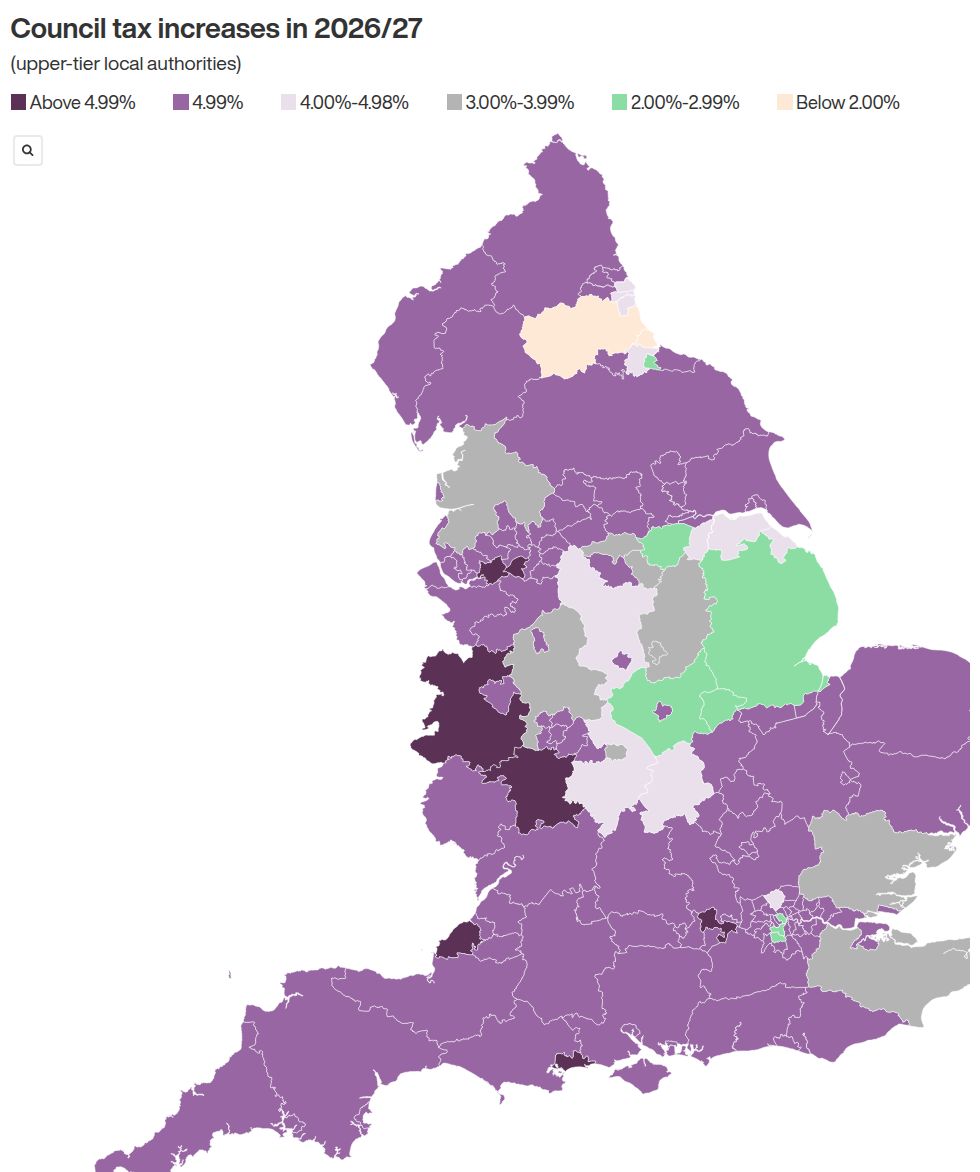
In areas served by unitary councils, which often have mixed levels of economic prosperity, the average Band D charge stands at £2,490. Meanwhile, those under county-wide councils pay an average of £2,452. These figures highlight the uneven distribution of financial burdens across different regions.
On a national scale, the average Band D council tax for 2026/27 is expected to be £2,392—an increase of £111 or 4.9% from the previous year. This marks the fourth consecutive year where the average increase has been around 5%, indicating a persistent trend of rising costs for local authorities.
The data includes all additional charges such as adult social care, parish precepts, and costs levied by police, fire, and regional authorities. This comprehensive approach ensures that the full financial impact on households is accounted for.
A Press Association analysis found that the 19 Liberal Democrat-run councils in England, whether with majority or minority control, imposed the highest average core council tax increases of 5.17%. This includes significant hikes like the 8.99% increase in Shropshire and 7.48% in Windsor & Maidenhead, which contributed to the overall rise above 5%.
For Labour-controlled councils, the mean average increase was 4.79%, while Conservative-run councils saw an average increase of 4.92%. The median average increase for Lib Dem-controlled councils is 4.99%, showing a slight variation in how different parties manage local finances.
Zoe Franklin, the Liberal Democrats’ local government spokesperson, commented on the situation, stating that the party now controls more councils than the Conservatives due to public dissatisfaction with being overlooked. She emphasized that in many areas, the Lib Dems have taken over local governments that were in poor financial condition, aiming to address years of Conservative mismanagement.
Franklin also criticized Labour for not addressing the social care crisis and slow action on Send funding, which she said puts the financial stability of local councils at risk. She stressed that all councils are forced to make tough decisions due to chronic underfunding and called for urgent government action to resolve these issues.
Of the 384 authorities required to hold a referendum if proposed council tax increases exceed a certain threshold, 274 used the maximum flexibility available to them. This represents a decrease of 21 from the previous year. Sir James Cleverly, the shadow communities secretary, accused the government of orchestrating these rises, calling them “cooked up in Whitehall.” He criticized Keir Starmer’s promise to freeze council tax, highlighting that families are facing back-to-back hikes.
Steve Houghton, chairman of the Special Interest Group of Metropolitan Authorities, described the recent funding agreement as “transformative.” However, he noted that metropolitan councils serving some of the most deprived communities still face severe financial challenges. Rising demand for services, especially in adult and children’s social care, combined with increasing energy costs and inflation, places immense pressure on councils to maintain essential services.
A spokesperson for the Local Government Association acknowledged the financial pressures on households and the need for councils to raise bills to protect services. They emphasized that while council tax is a vital funding source, it cannot address long-term challenges. Significant new funding and long-term reform of the local government finance system are needed to ensure the sustainability of councils and the services they provide.
Labour and the Liberal Democrats have been approached for further comment.