

Let’s Get This Straight: Oil Prices Rule as Hormuz Closes
The global economy is often compared to a weather system, where most of the attention is focused on individual elements like earnings reports, retail sales, or even the hype surrounding artificial intelligence. However, a major storm has formed in the Strait of Hormuz, a critical 21-mile chokepoint responsible for 20% of the world’s petroleum and nearly one-third of all seaborne oil. This event has created a Category 5 hurricane-like scenario, drawing liquidity and attention away from other sectors and into its volatile eye.
This effective closure of the Strait has caused a sharp increase in Brent crude prices (CBK26), leading to significant gains for ETFs like the US Brent Oil ETF (BNO). The impact of this situation is not just limited to energy markets but is rippling through the entire financial landscape.
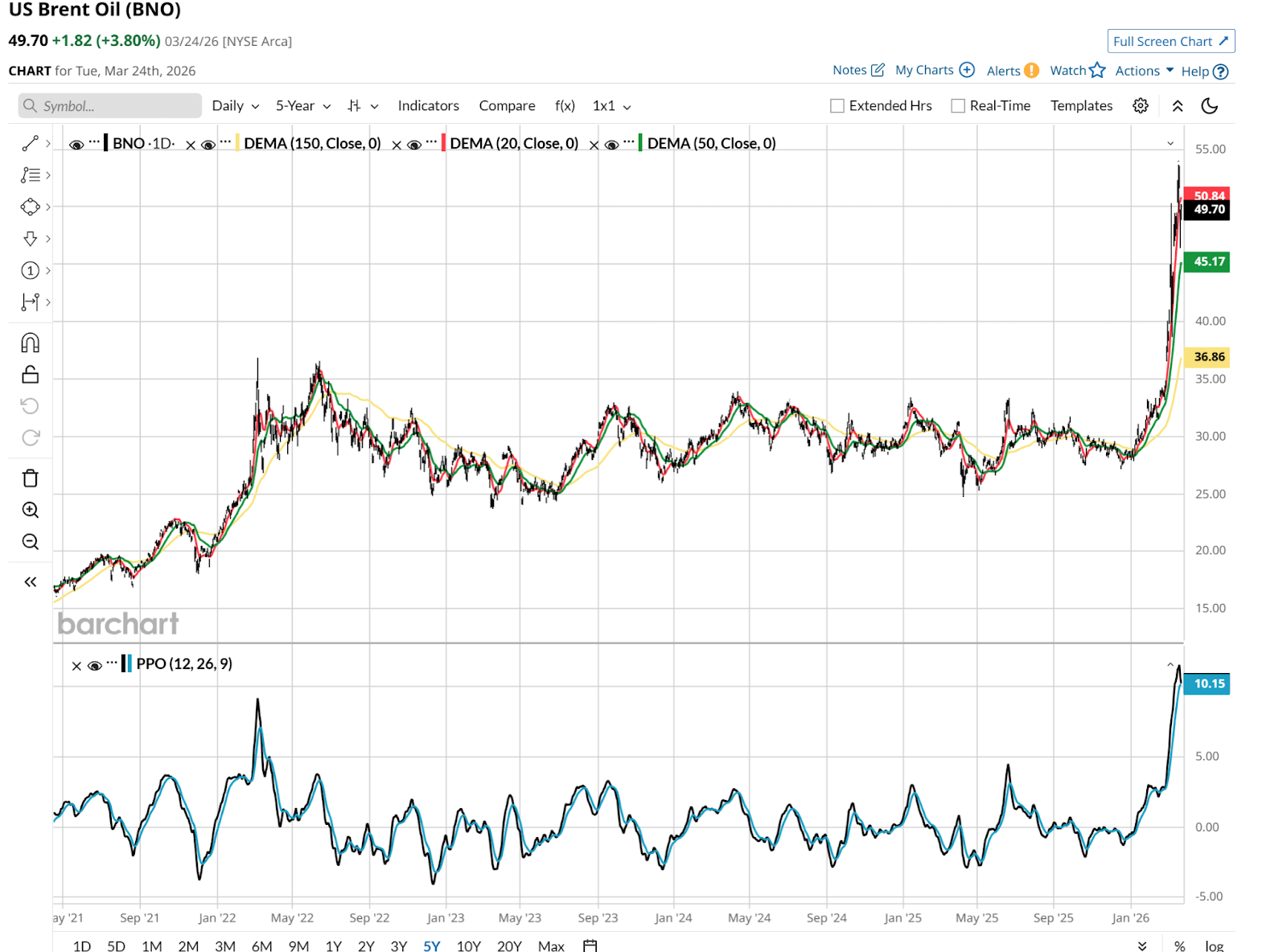

A recent analysis of the ROAR Score history for BNO shows that the ETF experienced a rapid rally, with risk levels shifting from high to low within just 20 trading days. Looking at data from 60 days ago and 40 days ago, it’s clear that the shift happened quickly. In just 30 days, the low-risk environment disappeared, and the ETF settled into a more neutral risk posture. This is a classic example of an ETF or stock getting ahead of itself.
For investors who held BNO during the period when the low-risk signal was active, the returns were impressive. The price of BNO surged from $30.57 to $49.70 in about two months, representing a 60% gain. This demonstrates how quickly market conditions can change and how important it is to monitor risk indicators closely.
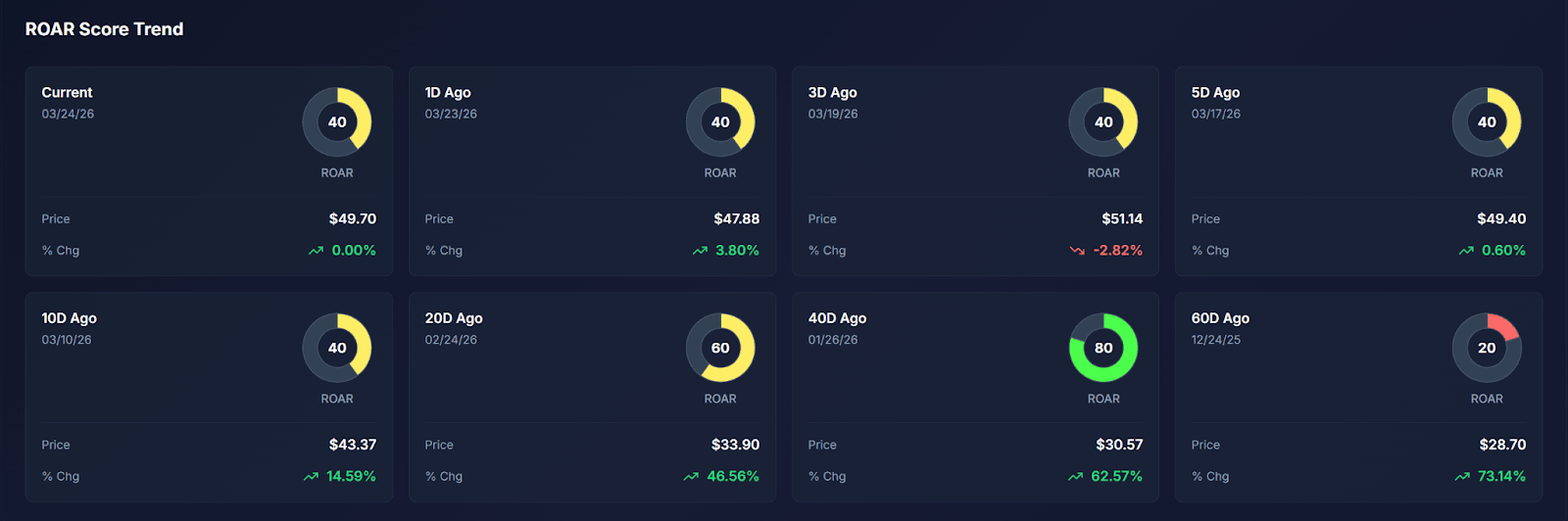

The “Hormuz Hurricane” is forcing every asset class to adjust to its volatile nature. Just as a hurricane in South Florida gradually draws moisture out of the air to feed its own growth, the situation in the Strait of Hormuz is creating a highly liquid environment for the energy sector while draining liquidity from others.
This situation is unique because, unlike previous conflicts involving Iran, the closure of the Strait has actually occurred. As a result, markets are focusing almost exclusively on this issue, and this trend is likely to continue until there is a resolution.
What Does the Strait of Hormuz Mean to the AI Trade?
The liquidity vacuum created by the Strait’s closure has had a significant impact on the AI trade. High-growth tech and AI firms, which rely on low interest rates and strong future earnings, are seeing their valuations compressed. When energy costs rise, they act as a supply-side tax, increasing operational costs for data centers and pushing the Federal Reserve to maintain higher interest rates for longer.
This leads to a situation where investors are not selling tech stocks because they dislike AI. Instead, they are selling to raise cash to cover surging “War Risk Premiums” and margin calls as broader indices like the S&P 500 ($SPX) and Nasdaq ($NASX) decline. This trend has persisted for four consecutive weeks.
The surge in energy prices is also stoking fears of stagflation, which could potentially paralyze the Federal Reserve. Barclays recently estimated that sustained oil prices above $100 could push global inflation up by 0.7 percentage points, making previous “soft landing” hopes obsolete. These prices could also shave 0.2 percentage points off global GDP. The Fed cannot cut rates to stimulate the economy without risking further inflation.
The most dangerous part of this situation is the disconnect between oil futures and physical oil. While futures are trading above $100, the scarcity of actual barrels has led to massive premiums paid by refiners in Asia. This means the real-world damage to trucking, airlines, and manufacturing is worse than what the headline oil price suggests.
The Strait of Hormuz has turned the market into a 1-factor model. But it is not a simple one. Until this situation dissipates, every long opportunity outside of energy is essentially fighting against this pressure.
Do you have that Strait now?
Rob Isbitts developed the ROAR Score, based on his 40+ years of technical analysis experience. ROAR helps DIY investors manage risk and create their own portfolios. For Rob’s written research, check out ETFYourself.com.
On the date of publication, Rob Isbitts did not have (either directly or indirectly) positions in any of the securities mentioned in this article. All information and data in this article is solely for informational purposes. For more information please view the Jendela Magazine Disclosure Policy here.
More news from Jendela Magazine
・This Is Not Your Father’s Gold Market Anymore
・Let’s Get This Strait: Amid Hormuz Closure, Oil Prices Are the Only Macro Force That Matters
・Grain Futures Are Looking to Crude Oil for Price Direction. What Comes Next?
・An Oil Shock, $2 Billion, and 133% Gains: 1 Energy Stock to Watch Now
Get exclusive insights with the FREE Jendela Magazine Brief newsletter. Sign up for a midday guide to what’s moving stocks, sectors, and investor sentiment. Subscribe today!