Equinor Drills at Brazil’s Giant Raia Gas Field
Overview of the Raia Project
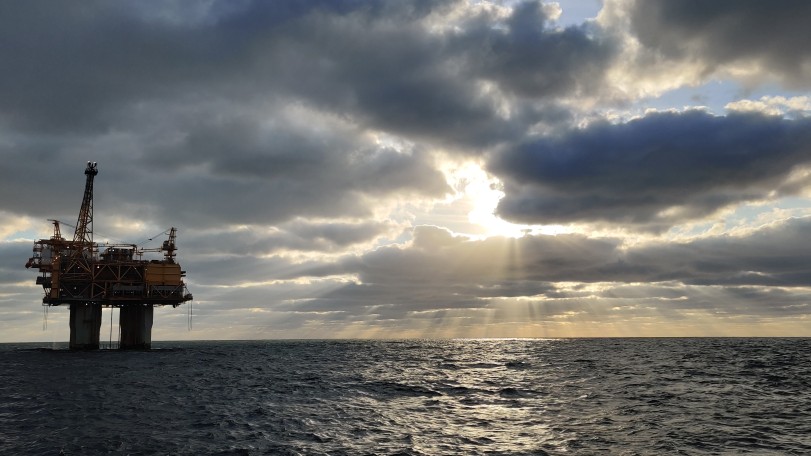
Equinor has initiated drilling at the Raia project, one of the most significant natural gas developments currently underway offshore Brazil. This marks a key step for the Norwegian energy company as it expands its presence in Brazil’s pre-salt basin and the broader gas market.
The drilling campaign began on March 24 using the Valaris DS-17 drillship. It will involve six wells in the Raia area, located approximately 200 kilometers offshore in the Campos Basin, where water depths reach about 2,900 meters. This phase represents a major milestone for a project that Equinor has highlighted as its largest under development.
Partnerships and Production Goals
Raia is operated by Equinor, which holds a 35% stake, alongside Repsol Sinopec Brasil with 35% and Petrobras with 30%. The partners aim to achieve first production by 2028. The scale of the project is considerable, with Raia holding over 1 billion barrels of oil equivalent in recoverable gas and condensate reserves. Once operational, it is expected to export up to 16 million cubic meters of natural gas per day, potentially meeting around 15% of Brazil’s gas demand by 2028. This would make it a crucial supply source for Brazil as the country seeks to bolster domestic gas availability and industrial competitiveness.
Infrastructure and Operations
The development will rely on a floating production, storage, and offloading vessel (FPSO) connected to subsea wells. Gas from the field will be transported through a 200-kilometer pipeline to Cabiúnas in Macaé, Rio de Janeiro state, where it can enter Brazil’s onshore gas system. The FPSO is also expected to manage roughly 126,000 barrels per day of oil and condensate.
Strategic Importance for Equinor
For Equinor, Raia is more than just another offshore project. It represents the company’s largest international investment to date, with an estimated total cost of around $9 billion. This move strengthens its position in one of its core overseas markets. Brazil already plays a central role in Equinor’s portfolio through oil, gas, and increasingly power-related assets. Raia adds a large-scale gas pillar with long-life production and expected cash flow visibility.
Environmental Considerations
Equinor emphasizes emissions performance, stating that the Raia FPSO is expected to rank among the most carbon-efficient globally. It anticipates an average CO2 intensity of around 6 kilograms per barrel of oil equivalent, significantly lower than the industry average of 17 kilograms per barrel. This focus on lower-carbon upstream supply aligns with investor priorities.
Operational Experience and Economic Impact
Raia builds on operational experience in Brazilian deepwater. Equinor references the partners’ previous work on the Bacalhau field, where the DS-17 drillship was also involved. This continuity may help reduce execution risk as the industry faces rising offshore project complexity, tight supplier capacity, and pressure to bring large gas resources to market efficiently.
Beyond output and emissions, the project carries broader economic weight. Equinor estimates that Raia could support up to 50,000 direct and indirect jobs over its 30-year life cycle, underscoring its industrial significance in Brazil. Offshore developments remain a major source of employment, investment, and infrastructure buildout.
Execution Phase and Future Outlook
In practical terms, the start of drilling signals that Raia has transitioned from planning into heavy execution. With wells, FPSO integration, and commissioning advancing in parallel, Equinor and its partners are positioning the project as a cornerstone of Brazil’s future gas supply.