Exclusive: South Korea’s Pension Fund to Boost FX Hedging Ratio Long-Term
South Korea’s National Pension Service Explores Strategic Hedging to Stabilize the Won
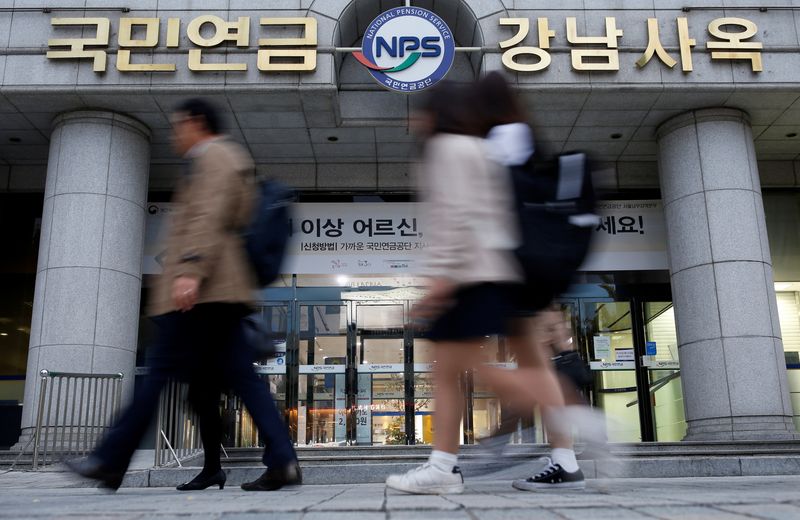
South Korea’s National Pension Service (NPS), one of the world’s largest public pension funds, is considering increasing its strategic hedging ratio over time. This move aims to help stabilize the South Korean won, which has been under pressure due to global economic uncertainties and regional conflicts.
The NPS typically avoids hedging its overseas assets to maximize returns from a strong U.S. dollar. However, it retains the right to use rule-based tools for both “tactical” and “strategic” hedging of up to 15% of its foreign assets during sharp currency movements. This flexibility allows the fund to respond to market volatility without compromising long-term investment goals.
Recent Currency Volatility and Market Concerns
The won recently hit its weakest level since March 2009, reaching 1,518.4 per dollar amid heightened volatility driven by the Middle East conflict. This decline has raised concerns about the stability of the South Korean economy and its ability to manage foreign exchange risks effectively.
According to two sources with direct knowledge of the discussions between the NPS, the government, and the central bank, a consensus was reached on three key points:
- First, the need to expand the strategic hedging ratio in the long term.
- Second, plans to move forward quickly with forex bond issuance.
- Third, the method for evaluating the fund’s performance.
The NPS, which manages approximately $530 billion in foreign assets, has been engaging with government ministries and the Bank of Korea since November to find ways to balance returns while promoting foreign exchange stability.
The New Framework and Its Implications
Details of the “New Framework” meeting have been reported for the first time by Jendela Magazine. The sources, however, chose to remain anonymous due to the sensitive nature of the discussions.
The exact hedging ratio has not yet been finalized. Any decision will require approval from the NPS’ fund management committee, which will also determine the specific details of the ratio.
Despite the lack of official comments from the welfare ministry, finance ministry, the Bank of Korea (BOK), and the NPS, the potential shift in strategy signals a growing awareness of the need for more flexible currency-hedging approaches.
Currency Pressures and Investor Behavior
The won has been one of Asia’s worst-performing currencies over the past year. This decline has been fueled by uncertainty surrounding how South Korea will finance $350 billion in investments pledged to former U.S. President Donald Trump. Retail investors and exporters have responded by hoarding dollars, further pressuring the currency.
Additionally, renewed tensions linked to the Middle East conflict have added to the instability. To prevent speculation, the specific rules for hedging are not disclosed to the public. This secrecy is intended to deter investors from exploiting the hedging formulas to bet against the won.
Moving Forward with Forex Bonds and Performance Evaluation
The NPS has agreed to issue forex bonds for the first time as part of its strategy to diversify dollar financing. This step is expected to help reduce the impact of onshore dollar trading on the won.
The council also emphasized the importance of adjusting the performance evaluation system to make it neutral to foreign exchange effects. This change would help avoid misunderstandings, such as when the fund favors a weaker won at certain times to maximize returns.
The fund management committee, which includes the welfare minister and private sector representatives, plays a critical role in ensuring that decisions align with the interests of taxpayers.
Conclusion
As South Korea faces ongoing economic challenges, the NPS’ potential shift toward strategic hedging represents a significant step in balancing financial returns with currency stability. With the support of the government and central bank, the NPS aims to navigate these complex dynamics and contribute to a more resilient economic environment.