
New Bill Gives $3,000 to Low-Income Families, Angering Billionaires
A Bold New Legislative Strike
A bold new legislative strike is aiming to turn the nation’s deepest pockets into a direct lifeline for the middle class. While the gap between the ultra-wealthy and the average worker has widened to historic proportions, a newly proposed bill is promising to bridge that divide with a massive redistribution of wealth. For families struggling with the rising costs of housing and groceries, the “Make Billionaires Pay Their Fair Share Act” represents an unexpected financial windfall. The proposal doesn’t just ask for more; it demands a fundamental reset of the American tax code.
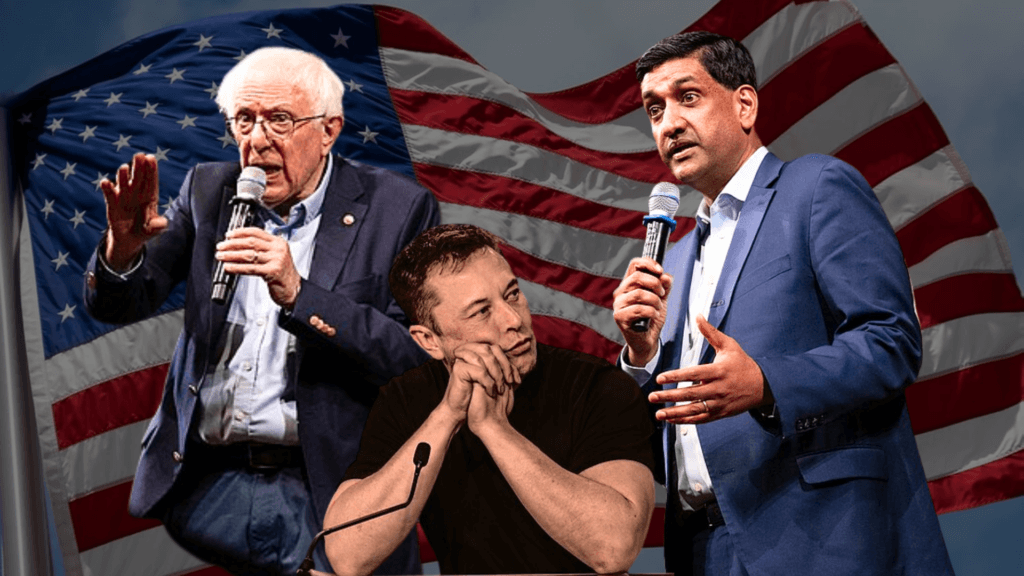
The bill, introduced this week by Senator Bernie Sanders and Representative Ro Khanna, centers on a straightforward yet controversial mechanism: a 5% annual wealth tax on every billionaire in the country. This isn’t a tax on what they earn in a year, but a tax on the staggering $8.2 trillion they already own. For households earning under $150,000, the payoff is immediate—a $3,000 direct cash payment per person during the first year. A family of four could see an extra $12,000 deposited into their bank accounts almost overnight.
However, the ripple effects of this legislation are already causing a localized earthquake in the world of high finance. As the bill moves into the halls of a GOP-controlled Congress, its chances of passing remain slim, yet its political impact is undeniable. It is forcing a national conversation about the “New Gilded Age” and the moral implications of extreme wealth concentration. What researchers found next in the projected tax bills of the world’s richest men has sent shockwaves through Silicon Valley and beyond.
Inside the Shocking Billionaire Tax Bills
The sheer numbers involved in this proposal are difficult for the average mind to grasp. According to analysis by UC Berkeley economists, the tax would target exactly 938 individuals—the “Billionaire Class”—and would raise an estimated $4.4 trillion over the next decade. No American worth less than $1 billion would pay a single cent more in taxes. Instead, the burden falls entirely on titans like Elon Musk, Jeff Bezos, and Mark Zuckerberg, whose fortunes have grown by trillions while the bottom half of the country has seen its share of wealth stagnate.
For the individuals at the top, the “bill” is astronomical. Elon Musk, currently the world’s wealthiest man, would be required to pay $42 billion in taxes under the first year of this legislation. Despite this massive payout, he would still be left with approximately $792 billion—a sum still greater than the GDP of most countries. Similarly, Jeff Bezos and Mark Zuckerberg would each owe roughly $11 billion. The legislation treats these fortunes not as private trophies, but as untapped resources that could fund the “public good.”
The proposed revenue isn’t just for cash checks; it is earmarked for a massive overhaul of the American social safety net. Sanders and Khanna intend to use the $4.4 trillion to reverse more than $1 trillion in cuts to Medicaid and the Affordable Care Act. The bill also includes provisions to expand Medicare to cover dental, vision, and hearing for seniors—services that have long been excluded from the program. By grounding the tax in concrete social programs, proponents argue they are building an economy that works for everyone, not just the 1%.
Why This Changes Everything, and Why Billionaires are Fuming

The pivot toward a wealth tax marks a dramatic shift in how the government views private property. Billionaires are not taking the news quietly; many argue that such a tax is unconstitutional and would stifle the very innovation that drives the American economy. There is a growing concern that an annual 5% “haircut” on assets would force founders to sell off shares of their companies, potentially destabilizing the stock market and leading to an exodus of the wealthy to more tax-friendly nations.
However, the impact on the ground for working families would be transformative. Beyond the $3,000 checks, the bill seeks to establish a $60,000 minimum salary for every public school teacher in America. It also aims to cap childcare costs at 7% of a family’s income, addressing one of the most significant financial burdens facing young parents today. By shifting the focus from “top-down” economics to “bottom-up” investment, the legislation reflects a broader pattern of progressive policies aiming to repair a fractured social contract.
The controversy is especially heated in California, Ro Khanna’s home state, where a separate but similar ballot initiative is currently gathering signatures. Governor Gavin Newsom has voiced strong opposition, warning that state-level wealth taxes create a “race to the bottom” by incentivizing billionaires to flee for Texas or Florida. This local struggle highlights a universal theme: the tension between the need for public revenue and the mobility of extreme wealth. If billionaires can simply move their money, can a wealth tax ever truly be enforced?
The Question for the 2028 Election
As we look toward the future, the “Make Billionaires Pay Their Fair Share Act” is less about immediate law and more about a long-term political litmus test. While it faces a steep uphill battle in the current Congress, it is poised to become a defining issue in the 2028 presidential primary. Potential candidates will likely be forced to take a hard stance: do they support a radical redistribution of wealth, or do they side with the protection of private capital?
The return to urgency is palpable among voters. Recent polling shows that 52% of Americans—including a majority of independents—believe wealth inequality is a “very big problem” that needs a structural solution. As more families find themselves living paycheck to paycheck, the promise of a $3,000 check and a $60,000 teacher salary becomes an increasingly powerful political tool. The “Water Bankruptcy” of our social systems is forcing a desperate search for new sources of “liquid” capital.
Ultimately, this bill serves as a memorable warning to the elite that the status quo may no longer be sustainable. Whether or not it ever reaches the President’s desk, the conversation has permanently shifted. The idea that a handful of people should own more than half the country is being challenged by a poetic, yet powerful demand for fairness. The era of the “unrestricted billionaire” may be reaching its final chapter, and the next page will be written by those who believe it’s time for the 1% to finally pay their tab.