
Treasury Yields Volatile as Trump Delays Iranian Energy Strikes
The Impact of the Middle East Conflict on Global Financial Markets
The ongoing conflict in the Middle East has created significant volatility in global financial markets, particularly affecting Treasury yields and the U.S. dollar. This situation has been further complicated by shifting political statements from President Trump, who recently claimed that peace talks with Iran were “going very well” and announced a delay in potential strikes on Iranian energy facilities for another 10 days.
Following these comments, Treasury yields initially fell during after-hours trading, but quickly retraced much of that decline. Similarly, the WSJ Dollar Index dropped initially but then edged back up. Earlier in the day, Treasury yields had climbed sharply as hopes for a quick resolution to the conflict diminished. The yield on the 10-year U.S. Treasury note reached 4.415%, its highest closing level since last July, while the 2-year yield settled at 3.983%, also hitting a high since last June.
Extended Conflict and Rising Inflation Fears
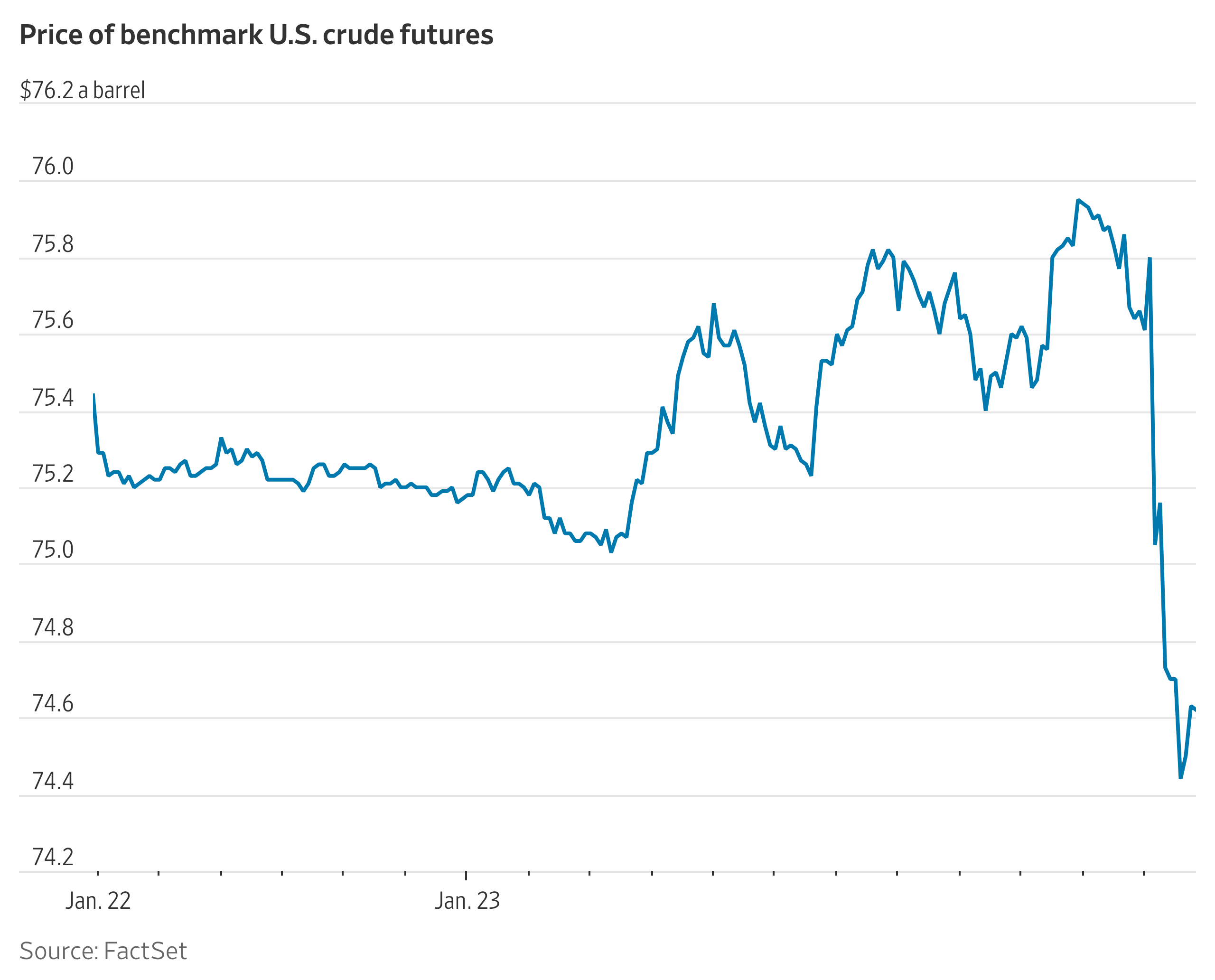
As the war continues, demand for Treasurys remains strong, keeping yields elevated. Crude oil prices have risen around 5%, fueling concerns that inflation could persist long enough to prevent the Federal Reserve from cutting rates well into next year. According to LSEG, a rate hike this year is nearly as likely as a hold.
A seven-year Treasury auction saw weak demand, similar to previous auctions of two-year and five-year notes. Despite this, the 10-year yield rose 0.088 percentage points to 4.415%, and the two-year yield added 0.103 p.p. to 3.983%. These levels mark their highest since last summer. The spread between the two yields, however, is the narrowest since July. Meanwhile, the WSJ Dollar Index rose 0.4%.
Weak Demand in Treasury Auctions
Treasury yields remained near session highs after a $44 billion auction of 7-year notes attracted soft demand from investors. Yields have continued to rise, tracking oil prices and investor sentiment about the Iran war. The Treasury Department sold the 7-year notes with a 4.255% yield, slightly higher than expected. While other auction stats were weak, they showed better demand than previous auctions of shorter-term notes. As a result, bonds didn’t immediately sell off after the auction, but they remain under pressure due to ongoing concerns about the war and energy prices.
Rising Yields and the Dollar Amid Ongoing Hostilities
Treasury yields and the dollar rose as U.S. jobless claims increased slightly, in line with a WSJ consensus. The weekly figure remained rangebound, rising to 210,000 from 205,000, indicating that the labor market is holding up. The Treasury will auction seven-year bonds at 1 p.m. ET, following lukewarm demand for two-year and five-year tenders earlier in the week. Oil prices rose 4% as hostilities continue in the Mideast. The 10-year yield was at 4.376%, up from 4.326%, while the two-year yield rose to 3.935% from 3.880%. The WSJ Dollar Index rose 0.2%.
Uncertain Resolution and Elevated Energy Prices
U.S. Treasury yields rose as oil prices remained elevated, with the uncertain timeline for an end to hostilities in the Middle East keeping energy prices high. Bas Kooijman of DHF Capital S.A. noted that “a return of energy prices to the upside could continue to reinforce inflationary fears.” This backdrop has prompted markets to scale back expectations for Federal Reserve interest-rate cuts this year, with forecasts pointing to rates staying unchanged for a longer period of time than previously anticipated, supporting both the dollar and Treasury yields. The 10-year Treasury yield rose 5.6 basis points to 4.384%, according to Tradeweb, while the dollar also rose, with the DXY index up 0.2% at 99.772.
Eurozone and U.K. Bond Yields Rise
Eurozone government bond yields rose significantly, tracking U.S. Treasury yields and oil prices higher, as the timeline for a resolution in the Middle East conflict remains uncertain. The rise in bond yields reflects the challenge central banks face as they balance the inflationary and growth impacts of the war. Michiel Tukker and Benjamin Schroeder of ING noted that “markets appreciate the U.S. seeking a deal, but without concrete steps, they will be reluctant to dial back their aggressive central bank discount.” The 10-year German Bund yield rose 5.6 basis points to 3.009%, while the 10-year Italian BTP yield increased 8.3 basis points to 3.924%, according to Tradeweb.
In the U.K., yields on government bonds climbed due to increased uncertainty around the Middle East conflict and when it is likely to end. Lack of progress in U.S.-Iran talks raised doubts about the possibility of reaching an agreement to end the war. Ten-year gilt yields climbed 7 basis points to 4.901%, according to Tradeweb data.
Market Volatility and Oil Price Concerns
U.S. Treasury yields rose in Asian trade as markets remained choppy, with President Trump stating his desire to wrap up the Middle East conflict in the coming weeks. Oil prices rose again, with Brent crude last trading at $104.19. The U.S. Treasury’s $44 billion auction of seven-year notes will be scrutinized following weak two- and five-year note auctions earlier in the week, while several Federal Reserve governors are set to deliver speeches. The two-year Treasury yield rose 4.5 basis points to 3.925%, while the 10-year yield rose 3.6 basis points to 4.362%, according to Tradeweb.
Japan’s Bond Yields and Economic Risks
Given Japan’s high dependence on resource imports, there is a significant risk that growth could slow due to higher oil prices, according to Ataru Okumura of SMBC Nikko Securities. He noted that “if surging oil prices drive global rates higher, the JGB yield upside may be more contained in the short term” as the risks to growth could drive demand for Japanese government bonds (JGBs). The 10-year JGB yield is expected to reach near 2.1% if the 10-year U.S. Treasury yield drops to 4%, while it could climb to around 2.3% if the U.S. 10-year yield rises to 4.5%, Okumura said. The 10-year JGB yield was last at 2.270%, compared with the 10-year Treasury yield at 4.333%.
Rates Markets Focus on Inflation, Not Growth Risks
Rates markets have begun to price in interest-rate hikes amid elevated inflation expectations in the context of the Middle East conflict, but have ignored potential downside risks to growth, according to Oscar Munoz of TD Securities. He noted that “given the Federal Reserve’s cautious approach to oil shocks historically, the rates market has struggled to appropriately price the twists and turns of the Iran conflict.” So far, Treasury market pricing has focused exclusively on the inflation side of the Fed’s mandate and has ignored the potential recessionary impacts of higher energy prices. While bond yields could remain elevated in the near term as the Federal Reserve remains in ‘wait-and-see’ mode, worries about slowing growth could limit the move higher, Munoz said.
JGBs and the Outlook for U.S.-Iran Talks
JGBs are mixed in price terms in early Tokyo trade. Recent signals that Iran could be open to negotiations with the U.S., together with speculation of a one-month cease-fire, offer some hope, according to ING’s Economic and Financial Analysis Division. However, “a series of false starts and premature declarations of victory argue for continued caution,” the division said. Also, oil near $100 per barrel keeps inflation risks “well alive,” the division added. The two-year JGB yield is unchanged at 1.305%; the 40-year yield is up 1 bp at 3.730%.