

Trump Seeks to Protect Farmers Amid Tariffs and Conflict as $10B in Aid Goes to Wealthy Farmers
A Glimpse into the Agricultural Support System
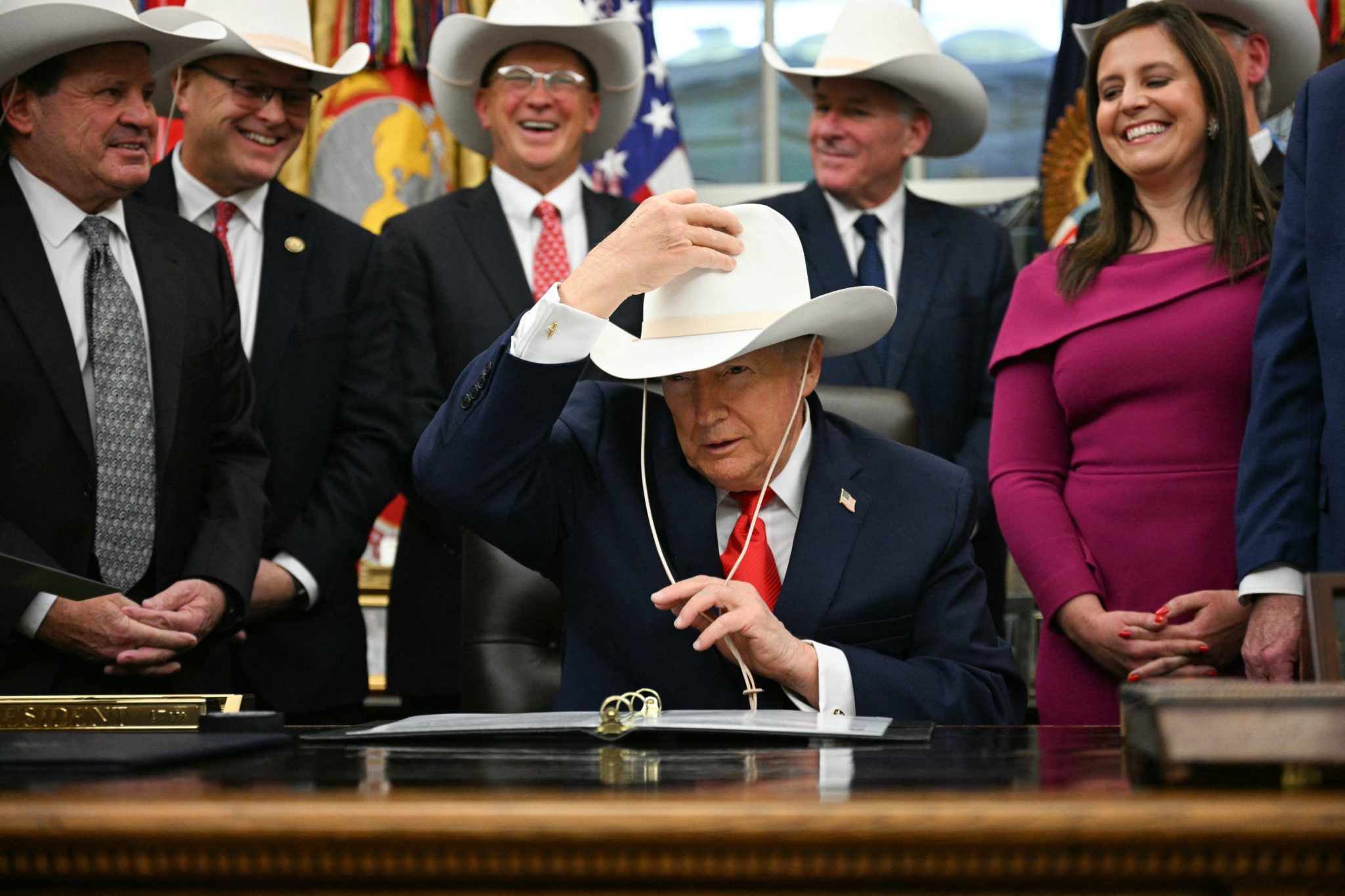
President Donald Trump recently held what he described as the largest gathering of American farmers at the White House, bringing together over 800 individuals dressed in cowboy hats. The event took place on the South Lawn, where a shiny golden tractor was displayed. During the gathering, the president emphasized his support for the agricultural industry, mentioning that he had allocated $12 billion through the USDA’s Farmer Bridge Assistance Program. He also urged Congress to approve further relief in the upcoming funding bill.
However, recent data from the Cato Institute highlights a significant disparity in how this support is distributed. According to the institute, the average income of a U.S. farm household in 2024 was $159,334, which is approximately 32% higher than the national mean household income and nearly double the national median of $83,730. This figure challenges the perception of struggling farmers and raises questions about the effectiveness of current support systems.
The data also reveals that the majority of subsidies are directed toward the top 10% of farms. A 2023 report by the Government Accountability Office (GAO) found that over 1,300 farmers with an adjusted gross income exceeding $900,000 have received subsidies from the federal crop insurance program. This indicates that the financial assistance provided to farmers is not evenly distributed and may be favoring larger, wealthier operations.
The Evolution of Federal Crop Insurance
The federal crop insurance program, established in 1938 under President Franklin Delano Roosevelt, was initially designed to help the agricultural sector recover from the Great Depression and the Dust Bowl. Over time, it has evolved into a critical support system for farmers, offering financial protection against losses caused by natural disasters and economic downturns. Today, the program covers more than 120 unique commodities, representing the vast majority of U.S. crop production.
Despite its origins as a recovery measure, the program now serves as a long-term financial safety net for many farmers. However, critics argue that it has become a form of permanent welfare for high-earning businesses. Chris Edwards, an editor at the Cato Institute, wrote in a blog post that the subsidies are not an emergency safety net for poor farm families but rather a system that benefits wealthy entities. He noted that the program often claims to be “market-based,” yet it costs taxpayers billions of dollars annually.
Subsidies and the Wealthy
One of the key criticisms of the crop insurance program is the lack of income limits, which allows the top 10% of farmers to capture 56% of all subsidies in the program. This has led to concerns that the program is disproportionately benefiting large-scale operations rather than small or medium-sized farms.
Some billionaire farmers have also been identified as recipients of these subsidies. A 2015 GAO report highlighted that four individuals, who earned their wealth through various industries such as mining, real estate, sports, and information technology, participated in the federal crop insurance program and received premium subsidies. While the USDA does not disclose the names of certain recipients, this data suggests that the program’s benefits extend beyond traditional farming communities.


Challenges Facing Farmers
Tariffs and the rising cost of inputs are creating financial strain for many farmers across America. The ongoing conflict in Iran is driving up energy costs and fertilizer prices, adding to the pressure faced by agricultural producers. Additionally, some farms are encountering challenges from the AI industry, as companies seek to convert farmland into data centers.
President Trump has claimed that U.S. farmers have been mistreated by other countries and has taken steps to support the industry amid rising fuel and fertilizer prices linked to the Iran war. However, the financial burden on farmers remains a pressing issue, with many struggling to remain profitable in an increasingly complex market.
Financial Implications of the Crop Insurance Program
The federal crop insurance program is expected to cost taxpayers $14.7 billion in 2026, a significant sum that is comparable to the size of federal agencies like the Environmental Protection Agency. Of this amount, approximately $9.6 billion will go directly to farmers, while $5.1 billion will be allocated to insurance companies. The Congressional Budget Office projects that spending on the program will continue to rise, drawing criticism from those who argue that it primarily benefits insurance firms rather than farmers.
Chris Edwards likened the program to a scenario where the government provides $900 annually for a $1,500 car insurance premium, while simultaneously paying billions to insurance companies to boost their profits. This analogy underscores the growing concern over the program’s structure and its impact on both farmers and taxpayers.