
USMCA Review Could Extend to 2027, Analyst Says
The Future of USMCA: A Review on the Horizon
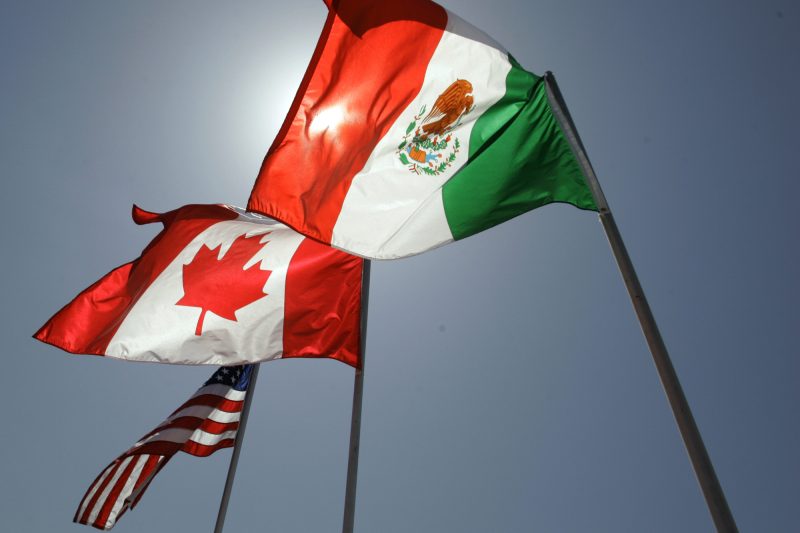
As the U.S.-Mexico-Canada Agreement (USMCA) approaches its six-year review date on July 1, concerns about its future are growing. This review is a mandatory process outlined in the treaty, and it could lead to significant changes or even a complete renegotiation of the trade deal.
Experts believe that despite the political tensions surrounding the agreement, particularly from the Trump administration, the USMCA will eventually be extended. Enrique Perret, executive director of the Washington-based U.S.-Mexico Foundation, expressed optimism about the outcome of the review.
“My bet is that we are going to have a good announcement in July about the trilateral negotiations,” said Perret. “We are going to end in good terms on rules of origin and China. But I think it’s going to be (done) by 2027 – another year.”
The Review Process and Its Implications
According to the Congressional Research Service, the deadline for initiating the review is July 1. If any of the countries propose changes, they must notify their partners 30 days in advance, as per Article 34.7 of the USMCA. Major changes would require congressional approval.
The review could result in anything from a full-fledged renegotiation to tweaks in specific industries like automotive, supply chain security, or labor standards, according to the Brookings Institution.
The treaty does not specify how long the review process should last. However, the treaty is in force until at least 2036 unless extended, though mandatory annual reviews kick in and any country may withdraw after providing six-months’ notice.
Challenges and Concerns
Despite the optimism, there are several challenges that could affect the review process. The Mexican Finance minister and the Office of the U.S. Trade Representative initiated talks this month to prepare for the July review. However, dialogue with Canada has been slow to come. Experts at the Borderplex Alliance’s Border Summit 2026 in El Paso said Canadian and U.S. negotiators may meet in May.
Nelson Kalil, consul for political and economic affairs at the Canadian Consulate General in Dallas, highlighted the importance of the relationship between Canada and the U.S.
“We are going through an existential crisis at the moment, not just in our relationship with the U.S. but our own approach to trade and prosperity,” said Kalil. “Seventy percent of our trade goes to the U.S. Even if it drops if we diversify, it’s not going to drop that much. We are right there, we’re not leaving the neighborhood.”
Another factor that may impact how quickly the review concludes is how insistent the Trump administration is in conditioning an extension of the trade deal to cooperation on unrelated issues of security and migration.
Mexico’s Role in Addressing Chinese Influence
Perret mentioned that Mexico has been cooperative not only on those fringe issues but also on a Trump priority of capping Chinese influence south of the border.
“The other huge component is national security. We cannot talk about China without talking AI (artificial intelligence), without drones, without defense equipment, without semiconductors. Mexico recognizes that trend,” he said.
Last year, Mexico slapped tariffs on nearly 1,500 Chinese products.
The Complexity of the Review
Shane Doucet, founder of the consulting firm Doucet Consulting Solutions, said the review wasn’t supposed to be complicated.
“It’s not supposed to be a full negotiation; it’s supposed to be a conversation on improvements. How has it worked during the past six years? ‘Oh, yes, maybe we can change this,’ But it looks like, unfortunately, it may be evolving into a much bigger” affair, he said.
This evolution could foster uncertainty on North American businesses already dealing with Trump’s tariffs, summit participants said.
Conclusion
As the USMCA review approaches, the stakes are high for all three countries involved. While there are challenges ahead, the potential for a positive outcome remains. The success of the review will depend on the willingness of all parties to cooperate and address the complex issues at hand. With the right approach, the USMCA can continue to serve as a vital framework for trade and economic cooperation in North America.