

Bitcoin’s Price Forecast Amid $80,000 Mining Costs
The Struggles of Bitcoin Miners
Publicly listed Bitcoin miners have faced a tough quarter, with an average cost of $80,000 to produce one BTC while the cryptocurrency trades around $67,000—a loss of roughly $13,000 per coin mined. This financial strain has led many miners to take drastic measures to mitigate their losses.
Miners have signed over $70 billion in AI contracts and sold 15,000+ BTC from their treasuries to offset the costs. Some CEOs have even declared that they are no longer Bitcoin companies. These actions signal a shift in focus from pure Bitcoin mining to other ventures that might offer more stability and profitability.
Bitcoin’s mining difficulty has dropped three consecutive times for the first time since July 2022. This decline indicates that fewer miners are participating in the network, which could have long-term implications for the Bitcoin price.
Why Is It Costing So Much to Mine Bitcoin?

The primary reason behind the high costs of Bitcoin mining is the April 2024 halving, which cut the block reward from 6.25 BTC to 3.125 BTC. Miners now earn half the Bitcoin for the same amount of electricity and computing power, effectively doubling the cost to produce each coin overnight. This situation is compounded by the current macroeconomic environment.
Electricity makes up roughly 75-85% of a miner’s total expenses. The ongoing conflict in Iran has pushed oil prices above $100 for the first time since 2022. The Strait of Hormuz, which handles around 20% of the world’s oil and gas flows, has been disrupted by the conflict, driving up energy costs across global supply chains. Miners operating on thin margins after the halving are now paying significantly more for this essential input.
This impact is visible on the Bitcoin network itself. Mining difficulty has dropped three times in a row, marking the first streak of consecutive negative adjustments since July 2022. The hashrate has fallen from a peak of 1,160 EH/s to roughly 920 EH/s as unprofitable operations shut down. Average block times have stretched to over 12 minutes, well above the 10-minute target.
When mining difficulty drops like this, it means more miners are leaving the network than new ones are joining, and the ones leaving are doing so because they are losing money on every block they mine.
What Are Bitcoin Miners Doing About It?
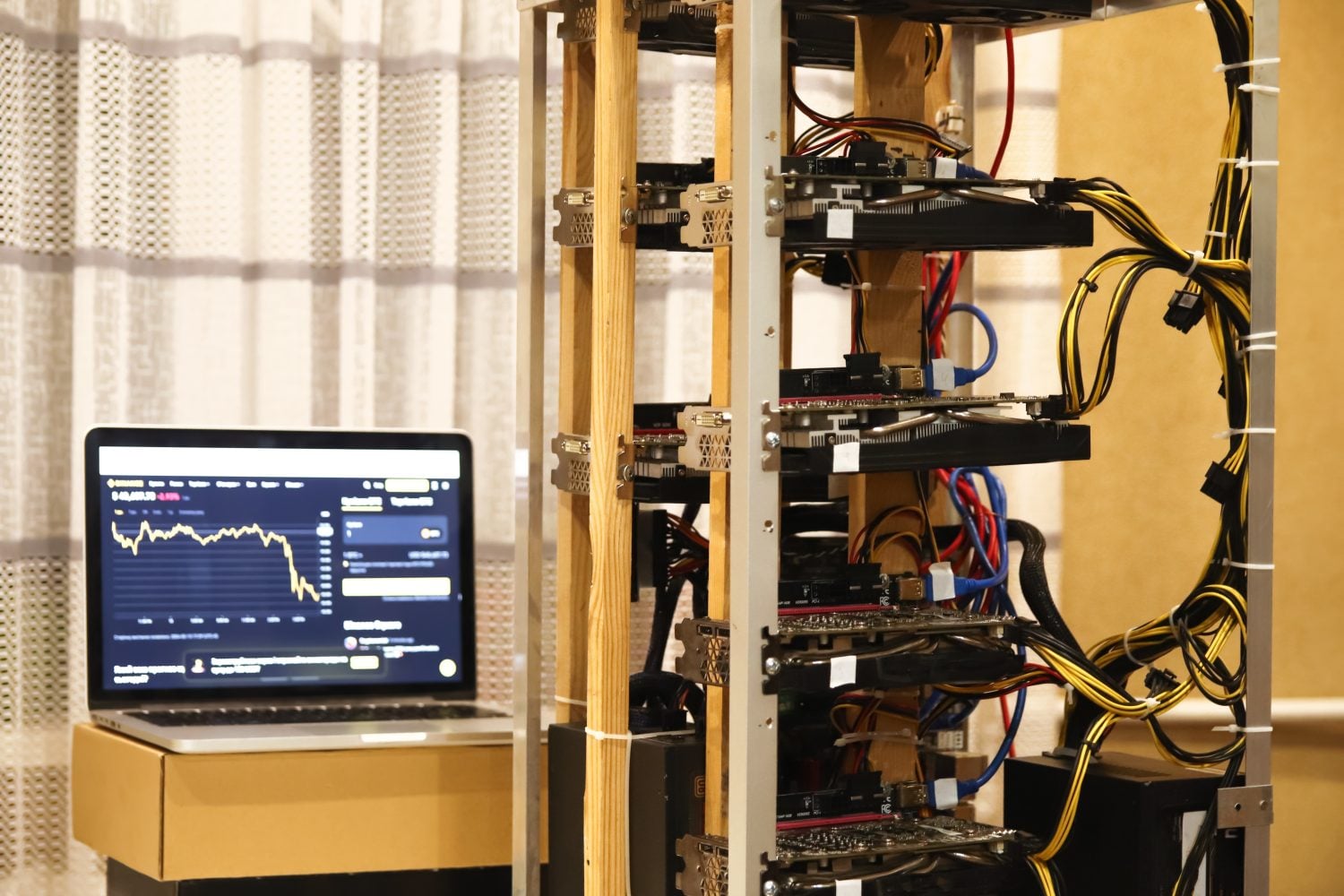
Rather than waiting for Bitcoin to recover above their breakeven, publicly listed miners have signed over $70 billion in AI and high-performance computing contracts that use the same power infrastructure they built for mining. Core Scientific locked in a $10.2 billion, 12-year deal with CoreWeave, and Hut 8 signed a $7 billion AI data center lease at its River Bend campus.
CoinShares estimates that listed miners could derive 70% of their revenue from AI by the end of 2026, up from around 30% today. Wall Street is rewarding the pivot clearly—miners with secured AI contracts now trade at 12.3x forward sales, more than double the 5.9x multiple for miners still focused purely on Bitcoin. The market is telling these companies their infrastructure is worth more running AI than mining BTC.
To fund the transition, miners are selling their Bitcoin. And they are not just the coins they mine each day, but the reserves they have been building for years. Publicly listed miners have collectively sold over 15,000 BTC from peak treasury holdings. Bitdeer reduced its treasury to zero in February, while Riot Platforms sold 1,818 BTC worth $162 million in December. Even Marathon, the largest public holder at 53,822 BTC, also expanded its policy in March to authorize selling from its entire balance sheet reserve.
Bitfarms CEO Ben Gagnon also stated that they are no longer a Bitcoin company. When the companies that secure the Bitcoin network are liquidating their own holdings to fund a completely different business, that creates a type of selling pressure that goes well beyond normal miner activity.
What Does the Mining Crisis Mean for the Bitcoin Price?
If you are holding Bitcoin right now, the miner crisis is adding more selling pressure on top of an already weak market. Miners dumping freshly mined coins at a loss and liquidating treasuries to fund AI transitions means more supply hitting exchanges while demand is already thin. CoinShares expects further capitulation if Bitcoin stays below $80,000, and the next difficulty adjustment in early April is projected to decline again.
Bitcoin’s mining difficulty has already started self-correcting with three consecutive drops, though, and the same pattern has historically marked the tail end of mining capitulations. Every previous cycle where miners were flushed out at a loss has ended the same way. The weakest operators left, costs dropped for the survivors, the selling pressure eases, and the Bitcoin price eventually recovered. What matters now is the Bitcoin price holding the $66,000 support before the recovery happens.
Retirement Could Be Closer Than You Think
Retirement can be daunting, but it doesn’t need to be. Imagine having an expert in your corner to help you with your financial goals. Someone to help you determine if you’re ahead, behind, or right on track. With SmartAsset, that’s not just a dream—it’s reality. This free tool connects you with pre-screened financial advisors who work in your best interests. It’s quick, it’s easy, so take the leap today and start planning smarter!
Don’t waste another minute; get started right here and help your retirement dreams become a retirement reality.