
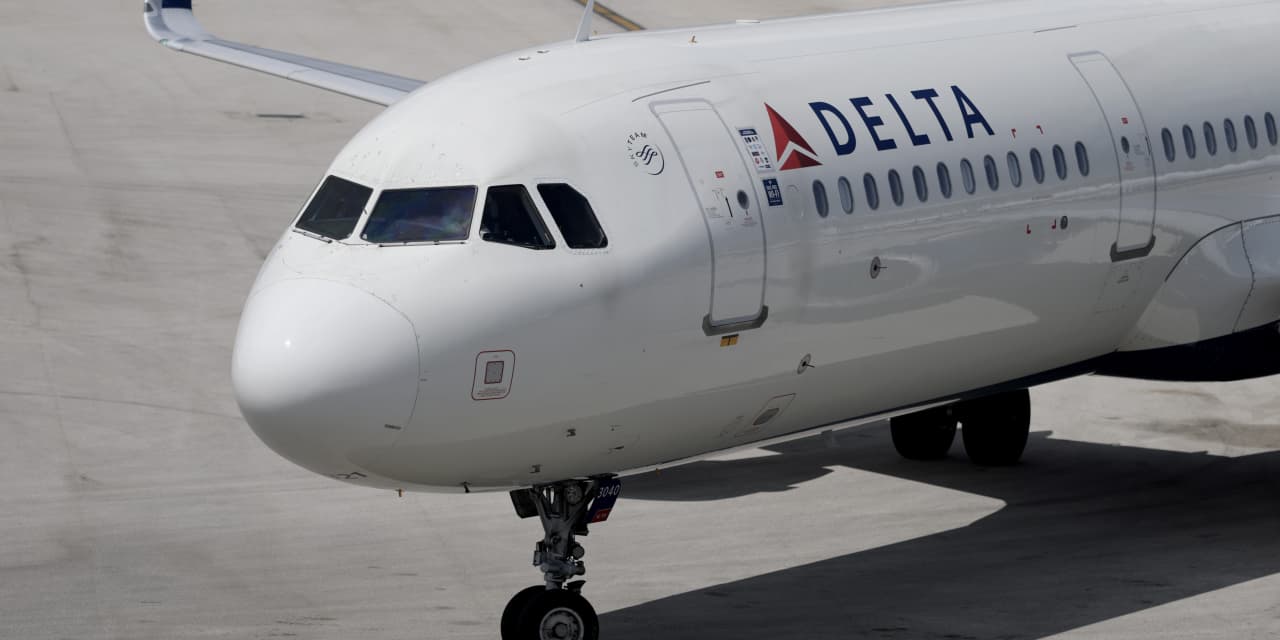
Delta starts earnings season amid rising gas prices and Iran conflict
The Impact of the Iran Conflict on Corporate Earnings
As Delta Air Lines begins its first-quarter earnings season, the results and forecasts will provide insight into how well U.S. consumers and businesses are managing the challenges posed by rising oil and fuel prices due to the ongoing conflict in Iran. This is particularly significant as it comes after a month of increased job growth in March, despite the war’s potential long-term effects.
The U.S. economy has shown resilience, with corporate America expressing more optimism than usual for the first quarter. However, this positive outlook will be tested by the upcoming financial reports from banks, tech companies, and retailers. Wall Street anticipates that S&P 500 Index companies will see a 13.2% increase in per-share profits, marking the sixth consecutive quarter of double-digit gains. This trend highlights strong corporate performance despite consumer struggles with higher living costs.
Energy Prices and Profit Expectations
The energy sector has seen a surge in profit expectations, largely driven by the sharp rise in oil prices. According to FactSet, oil prices have jumped 77% during the quarter. Additionally, 59 companies have issued better-than-expected profit forecasts, the highest in five years. Many of these forecasts were made before the war, but some retailers have indicated they are not overly concerned about higher gas prices.
Delta’s results will come amid a decline in airline stocks, although travel demand appears stable for now. Airlines are focusing on higher-income consumers to offset hesitations among others. Fuel costs are a major expense for airlines, so rising prices can significantly impact profits. Since the U.S. and Israel attacked Iran on Feb. 28, the U.S. Global Jets ETF has fallen around 12%.
Analyst Perspectives on Airline Stocks
TD Cowen analyst Tom Fitzgerald expressed skepticism about the long-term viability of airline stocks, noting the likelihood of prolonged high energy prices and slowing credit card data. However, he highlighted Delta as the “most defensive” airline stock over the long term due to its own oil refinery.
Fitzgerald also raised questions about how the war has affected flight schedules, corporate travel, and longer-term spending, as well as the potential cushion provided by Delta’s premium seating classes against volatile fuel prices. Other factors, such as a winter storm causing flight cancellations and a partial government shutdown leading to long airport lines, could also influence Delta’s performance.
Economic Recovery and Consumer Behavior
Delta’s results come amid concerns about the K-shaped economic recovery, where wealthier individuals see their fortunes grow while middle and lower-income groups remain stagnant or face challenges. Joe Esposito, Delta’s chief commercial officer, noted that the airline serves the top end of this K-shape, a group that continues to invest despite geopolitical events.
Esposito emphasized that consumers are still spending despite economic uncertainties, with travel remaining in demand. He pointed out that people are not waiting idly for the future, a contrast to previous trends.
Diverse Industry Responses
Other companies have also shared their perspectives. Carnival reported stronger cruise demand despite fuel cost pressures, while FedEx executives stated they don’t expect a significant business hit from the Middle East conflict or rising fuel costs.
Meanwhile, luxury furniture chain RH showed signs of caution among wealthy consumers, while discount chain Ross Stores highlighted a strong start to spring shopping. Constellation Brands, which sells Corona and Modelo in the U.S., will report results on Wednesday, following the appointment of Nicholas Fink as its next CEO.
Levi’s and Market Resilience
For Levi’s, which reports on Tuesday, the focus will be on the war’s impact on shopper attitudes. The jeans maker downplayed the threat, noting that the Middle East accounts for less than 1% of its business. Levi’s also emphasized that the amount of product passing through the Strait of Hormuz, a critical oil shipping lane, is minimal.
Harmit Singh, Levi’s chief financial and growth officer, referenced past conflicts like the 2008 crisis and the Russia-Ukraine war, noting that sales did not suffer significantly. This suggests that the company remains confident in its market resilience despite current challenges.