Oil Prices Drop as Trump Praises Iran Talks for Peace End
Oil Prices Volatile Amid Shifting Geopolitical Tensions
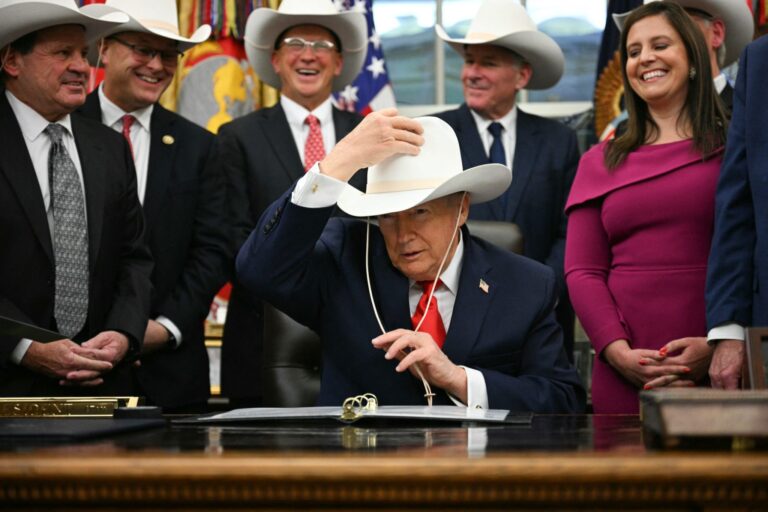
Oil prices experienced a significant drop on Monday following President Donald Trump’s statements suggesting that ongoing talks between the United States and Iran could lead to an end of the conflict. However, Iran denied any such discussions were taking place, adding to the uncertainty in the market.
Brent crude, the global oil benchmark, fell over 7% to around $104 per barrel, after previously plunging more than 13% during the day. The price had earlier climbed above $114 a barrel. Similarly, WTI, the U.S. benchmark, dropped 6.9% to $91.4 a barrel, having hovered near $100 earlier in the day.
Despite these declines, crude prices remain more than a third higher than they were before the United States and Israel launched attacks on Iran on February 28. Trump took to social media to claim that the U.S. and Iran had held “very good and productive conversations” regarding resolving hostilities in the Middle East. He noted that these talks would continue throughout the week and instructed the U.S. Department of War to delay any military strikes against Iranian power plants and energy infrastructure for five days, pending the success of the meetings.
Iran, however, refuted these claims, with state-affiliated media outlets reporting that the country denied any dialogue with Washington. Officials suggested that Trump’s statements were an attempt to lower energy prices and buy time. This denial came just two days after Trump had threatened to “obliterate” Iran’s power plants if Tehran did not reopen the Strait of Hormuz by Monday evening. These comments followed a previous statement where he mentioned “winding down” the war.
The Islamic Revolutionary Guard Corps (IRGC) responded to the threat by stating that it would retaliate against any attacks on its power plants and vowed to keep the Strait of Hormuz closed indefinitely. These remarks contributed to rising oil prices on Sunday, which continued into Monday before the latest developments.
“If you strike electricity, we will strike electricity,” the IRGC stated in a statement published by the semi-official Fars news agency. The IRGC also indicated that Israeli energy and communications infrastructure and power plants in the region hosting U.S. military bases would be targeted.
Iran’s Parliamentary Speaker, Mohammed Baqer Qalibaf, warned that if Trump followed through on his threat, critical infrastructure and oil facilities in the Middle East would be considered “legitimate targets” and destroyed.
Global Energy Crisis Worse Than 1970s
As the conflict entered its fourth week, the International Energy Agency (IEA) reported that the reduction in global oil supply due to the closure of the Strait of Hormuz exceeded the loss caused by the oil shocks of the 1970s. The agency had previously described the war as creating the largest supply disruption in the history of the global oil market.
Tehran has effectively blocked the Strait of Hormuz, a vital waterway through which a fifth of global oil supply flows, since the start of U.S.-Israel attacks on Iran. With the Middle East’s oil production largely cut off from global markets, prices have surged. Attacks on energy infrastructure have further driven up prices, including for natural gas.
According to Fatih Birol, the executive director of the IEA, at least 44 energy assets in the region have been severely or very severely damaged across nine countries. The energy shock caused by the war is worse than the two consecutive oil crises in 1973 and 1979, when the world lost about 10 million barrels of oil per day. Additionally, the loss of natural gas supply surpasses the 2022 energy crisis linked to Russia’s invasion of Ukraine.
Birol emphasized that the disruption extends beyond oil and gas, affecting vital economic arteries such as petrochemicals, fertilizers, sulfur, and helium. He called for the immediate opening of the Hormuz trade as the most important solution to the crisis.
The IEA is working with countries like Canada and Mexico to increase crude and oil product production. Birol mentioned that the agency is incentivizing many countries with refineries to accelerate their output. On March 11, IEA member countries agreed to release a record 400 million barrels of oil from strategic stockpiles to ease the global supply crunch and cap price increases.
“If needed, we can put more oil in the markets, both crude oil and products,” Birol said. “Our stock release will help to comfort the markets, but this is not the solution. It will only help to reduce the pain and the economy.”
Separately, the Trump administration temporarily lifted sanctions on Iranian oil at sea on Friday, allowing the sale of 140 million barrels of oil sitting on tankers—enough to meet global demand for roughly a day and a half, according to the U.S. Energy Information Administration.