
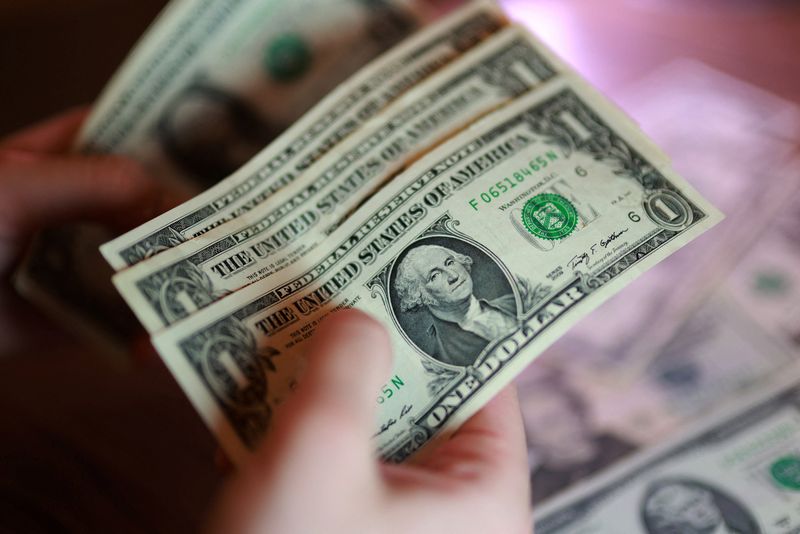
Dollar Surges on Safe-Haven Demand, Eyes Best Month Since July
Dollar’s Strong Performance Amid Regional Tensions
The U.S. dollar is on track for its strongest monthly gain in nearly a year, driven by a surge in investor demand for safe-haven assets as tensions in the Middle East escalate. The ongoing conflict has led to increased uncertainty, with hopes of de-escalation diminishing. This environment has bolstered the dollar’s position, making it a preferred choice for investors seeking stability.
Market Volatility and Political Developments
Markets have been volatile throughout the week, with U.S. President Donald Trump extending another deadline for potential military action against Iran’s energy facilities. This development has created a tense atmosphere, as conflicting narratives from Washington and Tehran continue to shape the geopolitical landscape. Additionally, reports from the Wall Street Journal suggest that the Pentagon is considering sending up to 10,000 more ground troops to the region, further heightening concerns about the duration of the conflict.
Factors Contributing to the Dollar’s Strength
The dollar’s strength is not solely attributed to regional tensions. Rising expectations of a U.S. interest rate increase this year have also played a significant role. As of March 27, the dollar index was trading around 100, reflecting a 2.4% increase for the month. This performance positions the dollar to achieve its best monthly showing since July 2025, when it recorded a 3.4% rise.
Impact on Other Currencies
The yen has weakened significantly, approaching a level of 160 per dollar, which many traders believe could prompt official intervention. Currently, the yen is flat at 159.86 after reaching 159.98 earlier in the day. MUFG currency strategist Lee Hardman noted that the market is testing the Japanese authorities’ resolve, highlighting their repeated statements about being prepared to take bold action if necessary.
The yen has lost 1.3% this month, adding to its pressure from a sharp increase in Japanese bond yields. This follows the Bank of Japan’s publication of new estimates for its neutral rate, indicating a willingness to raise rates to combat inflation. Japan’s heavy reliance on imported energy makes it particularly vulnerable to rising prices compared to other major economies.
Performance of Other Major Currencies
The euro slipped 0.1% to $1.152, while the British pound fell for the fourth consecutive session, dropping 0.2% to $1.331. Carol Kong, a currency strategist at Commonwealth Bank of Australia, commented that the conflict does not appear to be ending soon. She emphasized that the dollar remains dominant during such periods of tension.
Kong added that if the conflict continues, oil prices are likely to rise, further pushing the dollar higher at the expense of net energy importers like the Japanese yen and the euro.
Impact on Risk-Sensitive Currencies
The Australian dollar, a risk-sensitive currency, fell to a two-month low before recovering slightly to trade flat at $0.688. Since the start of the war, the currency has lost approximately 2%, making it the second-worst performer among major currencies after the Indian rupee, which has declined by nearly 3%.
Shift in Interest Rate Expectations
Investors are now pricing in roughly a 70% chance of a quarter-point Federal Reserve hike this year, according to the CME FedWatch tool. This represents a significant shift from previous expectations of over 50 bps of easing before the conflict began. The Bank of England and the European Central Bank are also anticipated to tighten their policies, contributing to a broader trend in rate expectations that has negatively impacted bonds and pushed yields to multi-year highs.
Bond Market Trends
U.S. Treasury yields saw a slight increase on Friday following a jump overnight. The two-year yield stood at 3.9899%, while the benchmark 10-year yield rose by about 1 basis point to 4.4278%. These movements reflect the ongoing uncertainty in the financial markets and the impact of global events on investment strategies.