Stocks drop to six-month low amid Middle East tensions
Market Turmoil and Economic Concerns
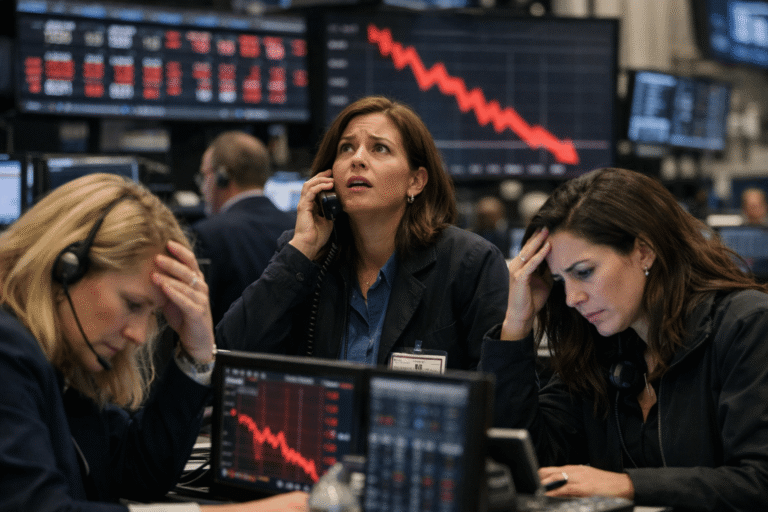
U.S. stocks experienced a significant downturn on Friday, with major indices hitting their lowest levels in over six months. This decline was primarily driven by weakness in megacap stocks, which had a substantial impact on the overall market performance. The ongoing conflict in the Middle East has continued to dampen investor sentiment and reduce risk appetite.
The situation was further complicated by U.S. President Donald Trump’s recent announcement that he had given Iran an additional 10 days to reopen the Strait of Hormuz or face potential destruction of its energy infrastructure. Iran’s rejection of this proposal has added to the uncertainty surrounding the region’s stability.
Secretary of State Marco Rubio indicated that the U.S. could achieve its objectives in Iran without deploying ground troops, suggesting that the operation might conclude within weeks. However, recent military deployments to the region have raised questions about the timeline and strategy of the U.S. response.
Oil Prices and Market Volatility
Despite the geopolitical tensions, U.S. crude oil prices saw a notable increase, rising 5.46% to $99.64 per barrel. Similarly, Brent crude climbed 4.22% to settle at $112.57 per barrel. However, these gains were not enough to offset the broader market declines, as oil prices remained relatively unchanged for the week.
The Dow Jones Industrial Average, S&P 500, and Nasdaq all faced their fifth consecutive weekly decline, marking the longest such streak in nearly four years. The Nasdaq, in particular, confirmed its entry into correction territory, defined as a drop of 10% from its prior high. The Russell 2000 also entered correction territory last Friday, highlighting the widespread nature of the market downturn.
Expert Perspectives and Investor Sentiment
Ken Polcari, a partner and chief market strategist at SlateStone Wealth, noted the shift in market sentiment, stating, “Clearly, the overall tone has turned very negative and now we have broken down into correction territory.” He added that while the current situation presents a significant opportunity, investors should be prepared for potential further declines of between 15% to 20%.
Preliminary data showed the S&P 500 losing 110.20 points, or 1.70%, to close at 6,366.96. The Nasdaq Composite fell 458.84 points, or 2.14%, to 20,949.24, while the Dow Jones Industrial Average dropped 803.60 points, or 1.75%, to 45,156.51.
The CBOE Volatility Index, often referred to as Wall Street’s fear gauge, reached its highest level since March 9, reflecting heightened anxiety among investors.
Sector Performance and Economic Fears
Megacap stocks were the primary contributors to the market decline, with Nvidia and Amazon experiencing significant losses. Software shares also faced renewed selling pressure, as the S&P 500 software and services index hit its lowest level since April 7.
Consumer discretionary stocks were among the worst performers, with cruise operators like Carnival and Norwegian suffering sharp declines following profit forecast cuts. These developments underscore the broader economic concerns linked to the Middle East conflict.
The surge in oil prices and other commodities, such as fertilizers, has fueled inflation fears and reduced expectations that central banks will lower interest rates. Money market participants are no longer pricing in any rate cuts from the U.S. Federal Reserve this year, compared to previous expectations of two cuts before the conflict escalated.
Central Bank Outlook and Consumer Sentiment
Philadelphia Fed President Anna Paulson acknowledged the economic risks posed by the war but did not provide specific guidance on monetary policy. Meanwhile, U.S. consumer sentiment fell to a three-month low in March, raising concerns about the economy’s resilience in the face of ongoing geopolitical tensions.
This combination of factors has created a challenging environment for investors, with market volatility and economic uncertainty likely to persist in the near term.