Baltimore Port Rebounds with Near-Record Year After Bridge Collapse
A Remarkable Comeback for the Port of Baltimore
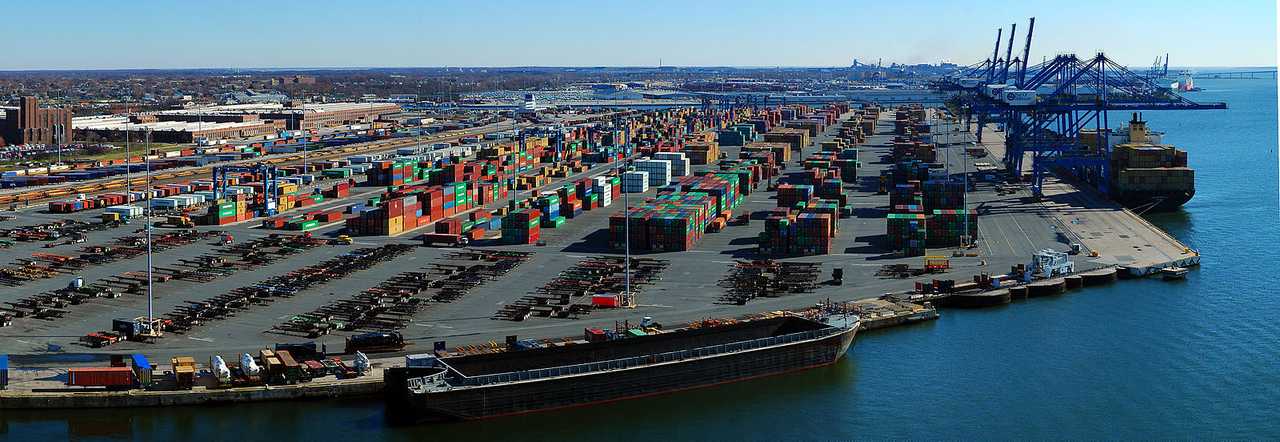
Nearly two years after the Francis Scott Key Bridge collapsed, officials in Maryland are celebrating the Port of Baltimore’s return to form and showcasing its resilience. The port handled nearly 50 million tons of cargo in 2025, marking the second-best year in its history as recovery continues from the massive collapse on March 26, 2024.
The milestone came a year after the devastating 2024 bridge collapse disrupted shipping lanes and rattled the region’s economy. Governor Wes Moore announced the figures in Annapolis on Tuesday, March 24, calling the performance a sign of strength for one of Maryland’s most critical economic engines.
“Once again, Maryland’s Port of Baltimore proves it is one of our nation’s top economic assets as it continues to rebound from the collapse of the Francis Scott Key Bridge in 2024,” Moore said.
Cargo moving through the port reached $65.6 billion in value in 2025, the third-highest total ever recorded, as goods flowed through Baltimore to destinations across the United States and around the world.
“Cargo that comes through the Port of Baltimore reaches points across the country, and all over our world, including Europe, Africa, and Asia,” Moore said.
The 2025 total topped the 45.9 million tons handled in 2024 and trailed only the all-time record of 52.3 million tons set in 2023. Officials noted the numbers could have been even higher if not for the disruption caused by the collapse, which was blamed on the cargo ship Dali.
Even so, Baltimore continued to lead or rank near the top nationally in several key categories. The port handled 887,513 tons of farm and construction equipment in 2025, ranking first among all US ports and marking a 6 percent increase year over year. It also moved 1.1 million tons of forest products, again finishing first nationwide.
Auto traffic remained strong, with 728,225 cars and light trucks passing through the port — the 13th straight year exceeding 700,000 vehicles and second-highest in the country. Baltimore also ranked second nationally for exported coal and imports of aluminum, gypsum, salt, and sugar.
Overall, the port placed 10th in the nation for foreign cargo value and 11th for total foreign cargo tonnage. State transportation leaders say more growth is on the way.
“The Port of Baltimore is a powerhouse in expeditiously handling cargo, and with the completion of the Howard Street Tunnel Project this year—which will allow for double-stacked rail cargo—the Port will have additional capacity to move goods,” Maryland Transportation Secretary Katie Thomson said.
The $518 million Howard Street Tunnel Project is expected to expand capacity by allowing double-stacked container trains, boosting business by an estimated 160,000 containers each year and supporting nearly 14,000 jobs.
Port officials say the groundwork is already being laid for that next phase of growth. “We’re pleased with our year in 2025, but we have bigger things to come,” Maryland Port Administration Executive Director Jonathan Daniels said.
The port also set records for container volume and ship visits last year, handling 1.1 million containers and more than 2,200 vessels — a 21 percent jump from 2024. Private sector partners are also investing heavily as demand rises.
“With the Howard Street Tunnel Project nearing full completion and Ports America Chesapeake’s strong financial commitments to improving Seagirt, the future of container shipping at the Port of Baltimore has never been brighter,” said Ports America Chesapeake CEO Mark Schmidt.
Labor leaders say the rebound is being felt on the ground. “A good year for the Port of Baltimore is a good year for the men and women of the International Longshoremen’s Association,” said ILA Local 333 President Scott Cowan.
Beyond cargo, Baltimore’s cruise industry also saw a strong year, with more than 413,000 passengers sailing from the port in 2025 — placing it among the busiest cruise years in its history.
From devastation to near-record performance in just one year, the Port of Baltimore is proving it’s not just back — it’s accelerating.