Riyadh Gambles on Iran Conflict for Long-Term Regional Power
Saudi Arabia’s Strategic Gamble in the Gulf Conflict
Saudi Crown Prince Mohammed bin Salman (MbS) is pushing Washington to adopt a more aggressive stance against Iran, according to reports. He sees the ongoing conflict as a “historic opportunity to remake the region by destroying Iran’s government,” which could position the Kingdom of Saudi Arabia (KSA) as the dominant power in the region.
KSA is in a unique position during this war. While other Gulf producers face restrictions on their oil and gas exports due to the closed Strait of Hormuz, KSA can still export an estimated 4-6 million barrels per day, down from 7-8 million before the conflict began.
By encouraging the U.S. to intensify its attacks on Iran, MbS is betting on a lopsided trade-off: the more missiles that hit his facilities, the lower the already reduced output, but it also increases the price of oil. In the short- to medium-term, this will cost KSA a lot of money, but in the long-term, the Kingdom may improve its position and emerge as the dominant power in the region.
“This is the Saudi paradox of the Hormuz war: the kingdom is simultaneously the war’s victim, its beneficiary, and its accelerant,” said Shanaka Anslem Perera, an independent analyst.
The Three Pillars of the Saudi Paradox
Victim:
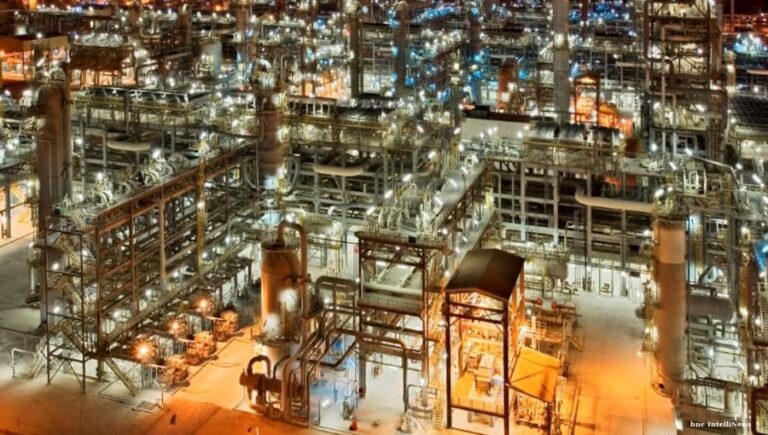
Saudi’s largest refinery, Ras Tanura, remains offline, the main Tadawul stock exchange has fallen sharply, and infrastructure across the Eastern Province has been damaged. Additionally, KSA’s stock of U.S.-made interceptor missiles has been badly depleted.
Beneficiary:
Brent crude has traded between $90 and $110 per barrel, above Saudi Arabia’s fiscal breakeven of $65 to $70. Higher prices are narrowing the deficit projected by Goldman Sachs, with estimates suggesting a fiscal gap of 3% to 3.5% at $80 Brent, and potential surpluses at $110 for exportable volumes.
Accelerant:
Saudi Arabia continues to advocate for intensified U.S. strikes, even as retaliatory attacks mount. “The kingdom is positioning to dominate the post-war energy market,” Perera said. “Every day the war continues, Saudi gains structural advantage over every producer whose molecules must transit the strait.”
The strategy is going to cost KSA dearly in the short-term if it is carried to its conclusion. And if Tehran is pushed into a corner, it may well choose to carry out its threat to target and destroy the main production facilities of its Gulf neighbours – damage that would take years to rebuild.
So far, Saudi Arabia has lost $300 billion in stock market capitalization in 25 days as escalating conflict with Iran disrupts energy infrastructure and unsettles investors, with the Tadawul index falling 12% in the first week of Operation Epic Fury.
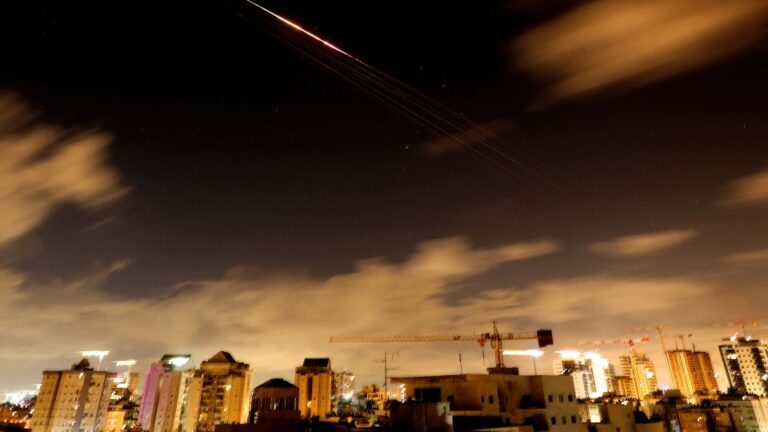
Ras Tanura, with a capacity of 550,000 barrels per day, was shut down following Iranian drone strikes on March 2, while oil fields in the Eastern Province sustained direct hits. Gulf-wide production fell by 6.7 million barrels per day by March 10, reaching 10 million by March 12, according to industry estimates.
The fiscal deficit, projected at 5.8% of GDP before the conflict, could widen to between 8% and 12% if hostilities persist, prompting a review of Vision 2030 megaprojects as capital outflows increase and investor activity slows.
If MbS’ objective is to emerge from the conflict with Saudi Arabia as the dominant Gulf power, then the apparent contradiction between victim and beneficiary becomes secondary. The losses — damaged infrastructure, market capitalization declines, fiscal slippage — are not being offset; they are being tolerated. In strategic terms, they function as the cost of entry into a higher-status position that would take years to achieve otherwise, if ever.
The Long-Term Strategy
Seen through this prism, the “accelerant” role becomes the organizing logic rather than a third pillar. By encouraging Washington to intensify pressure on Iran, Riyadh is effectively wagering that a decisive weakening — or removal — of Tehran as a regional competitor would deliver enduring advantages that outweigh the cost of the current damage being inflicted. These include reduced OPEC competition, greater control over pricing power, and a reordering of Gulf energy logistics in Saudi Arabia’s favor, particularly if Hormuz becomes structurally less reliable.
Iran represents the only regional actor with the scale, resources, and ideological reach to contest Saudi primacy across multiple fronts — energy, security, and political influence. If that constraint is removed or significantly degraded, the upside is not cyclical, like oil prices, but structural and long-lasting.
In that context, the “victim” side of the ledger — even if it deepens — is reframed as a temporary drawdown against a potential and permanent strategic windfall.
The Risks Involved
The risk, however, is in badly underestimating costs. If backed into a corner, Tehran has threatened to use its surprisingly effective missiles to completely destroy the production facilities and key infrastructure in its neighbors — damage that could take years to repair. However, the secondary effects could be as significant, or worse. The whole region, but KSA in particular, has been selling itself as an island of stability and prosperity. The outbreak of a serious region-wide war has already done enormous damage to KSA’s “Vision 2030” investment appeal that will erode the very capacity needed to capitalize on a post-conflict order. Instead of a bounce back into pre-eminence, KSA could find itself hamstrung and surrounded by a region descended into civil war and long-term instability.