Gold declines amid uncertain ceasefire prospects with Iran
Gold Prices Drop Amid Uncertainty Over US-Iran Conflict
Gold prices experienced a significant decline as U.S. President Donald Trump provided conflicting signals regarding the potential for a deal between the United States and Iran to end the ongoing conflict. This uncertainty has created volatility in global markets, with investors reacting to the shifting dynamics.
On Thursday, gold fell as much as 3.4%, but it managed to recover some of its losses after Trump announced that he would extend the pause on strikes against Iranian energy sites. In a post on Truth Social, Trump stated, “Talks are ongoing,” and emphasized that the negotiations are going “very well.” This statement helped to calm some market fears, although the initial drop was substantial.
Earlier in the day, gold approached a bear market, which is defined as a 20% drop from its recent peak. This occurred as Trump gave mixed messages about the possibility of a ceasefire. During a meeting at the White House, Trump remarked, “They’re lousy fighters, but they’re great negotiators, and they are begging to work out a deal.” However, he also expressed uncertainty about whether a deal could be reached, while simultaneously threatening to escalate military action if talks failed.
Trump later extended his pledge to refrain from attacks on Iranian energy sites by an additional 10 days, providing temporary relief to global energy markets.
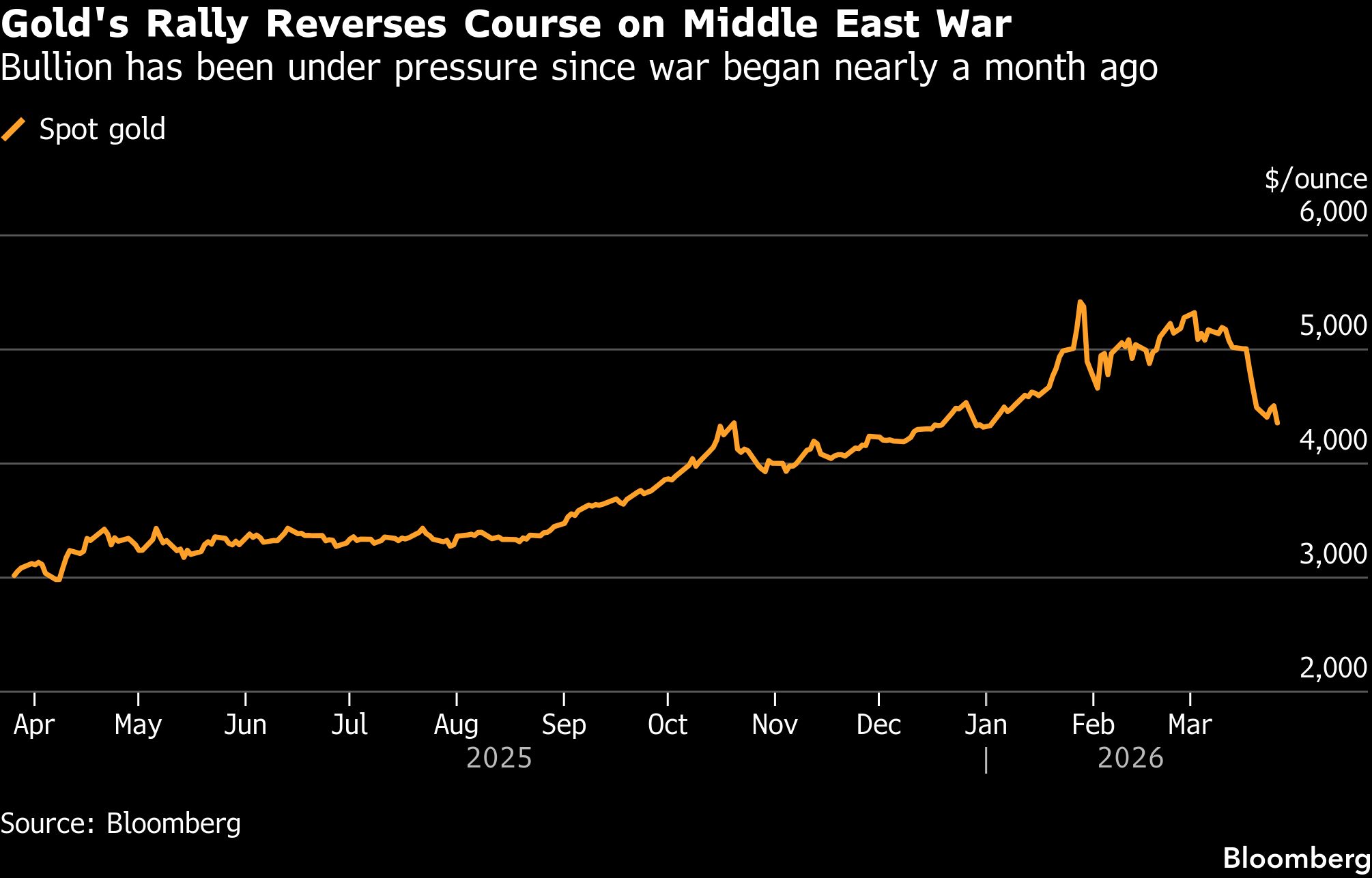
Since the war began nearly a month ago, gold has fallen more than 15%. This decline has largely mirrored movements in stock markets and has shown an inverse relationship with oil prices. Rising energy prices have increased concerns about inflation, leading investors to speculate that central banks may maintain or even raise interest rates. This scenario poses challenges for non-yielding assets like gold.
The potential for a Federal Reserve rate increase could be tempered by the risk of an economic downturn in the U.S. caused by a prolonged conflict. Wall Street has revised its forecasts for the American economy this year, increasing projections for inflation and unemployment, and raising the likelihood of a recession.
Oil prices rose on Thursday as hopes for a swift resolution to the conflict diminished. Earlier, Iran confirmed that it is awaiting a response after rejecting a U.S. 15-point plan to end the war and presented its own conditions.
According to calculations by Jendela Magazine, around 85 tons of gold holdings in exchange-traded funds have been redeemed since the war began. Even at $4,500 an ounce, an additional 83 tons of holdings remain loss-making and therefore vulnerable to liquidation, according to analysts from Standard Chartered Plc, including Sudakshina Unnikrishnan. This amounts to approximately $12 billion based on gold’s closing price on Wednesday.
“Frothy positioning is likely to remain vulnerable in the near term,” the analysts noted.
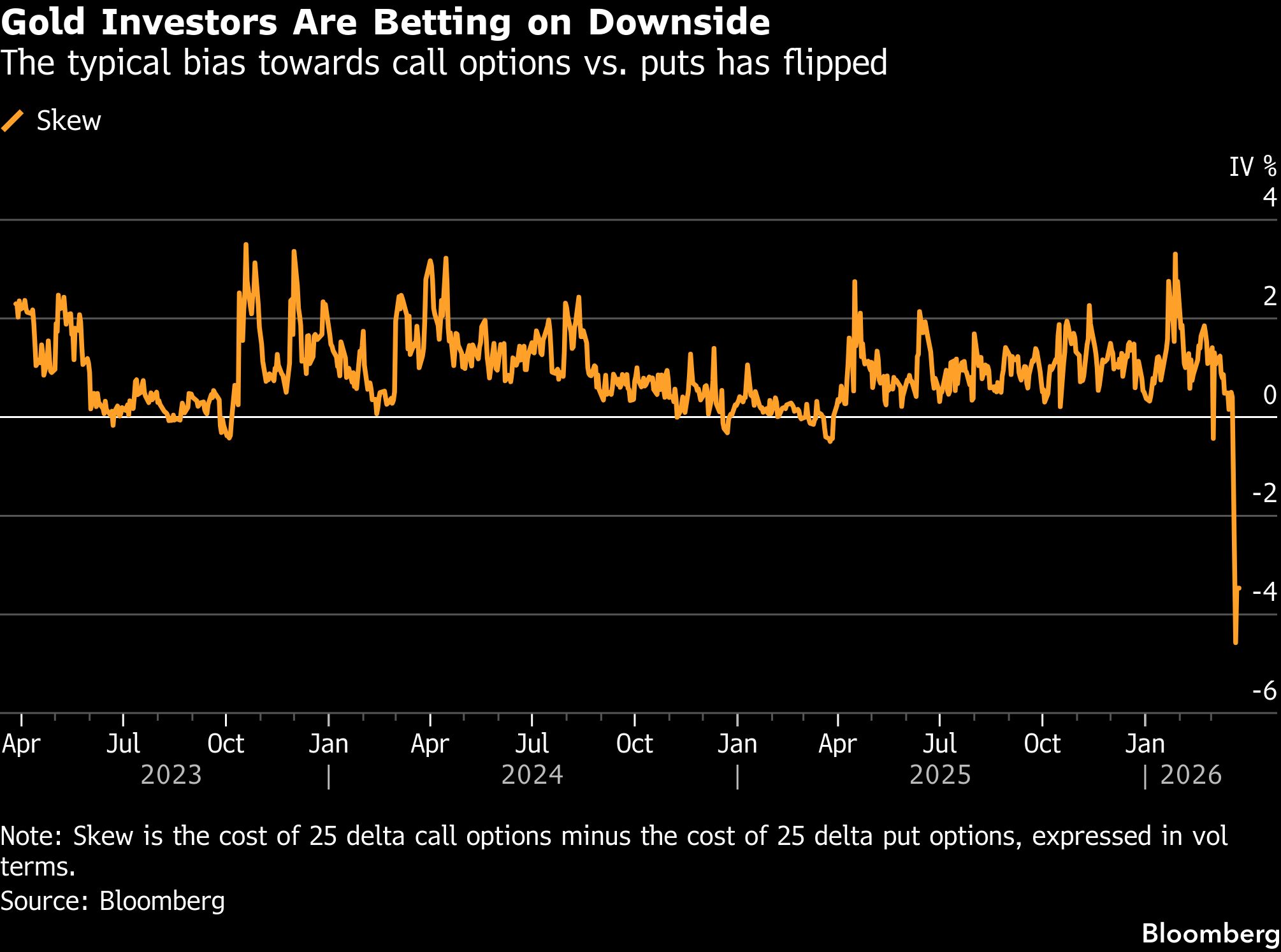
Some investors have been betting on price declines through options, with one individual spending over $100 million on puts for the largest gold-backed exchange-traded fund earlier this week. A put option allows the buyer to sell at a predetermined price, and it is used by speculators to bet on downside, as well as by miners to lock in high prices.
The cost of buying puts relative to the cost of buying equivalent calls, which allow investors to profit from upside in prices, reached a six-year high this week.
In the meantime, Turkey’s central bank sold and swapped about 60 tons of gold, valued at over $8 billion, within two weeks after the start of the war in Iran—adding to downward pressure on bullion prices.
Spot gold dropped 2.2% to $4,408.30 an ounce at 4:38 p.m. in New York. Silver fell 3.7% to $68.56, while platinum and palladium also declined. The Dollar Spot Index edged higher.
–With assistance from Sybilla Gross.