
NASDAQ Confirms Correction as Wall Street Slumps Amid Middle East Uncertainty
Market Volatility and Geopolitical Tensions
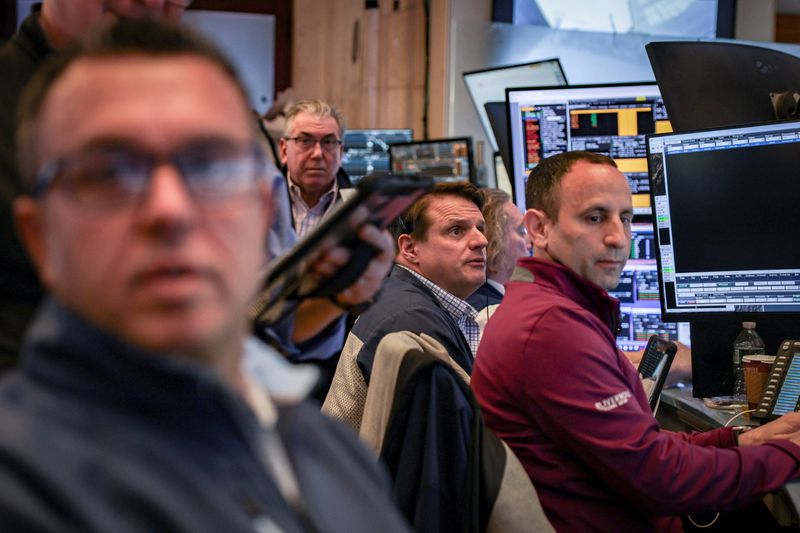
The U.S. stock market experienced significant declines on Thursday, with the Nasdaq falling over 2% to confirm a correction. The S&P 500 and the Dow also saw drops of more than 1%, as investors sought safety amid fears of escalation in the U.S.-Israeli conflict with Iran. This situation has led to soaring oil prices and increased concerns about inflation.
Thursday marked the largest one-day drop for both the Nasdaq and the S&P 500 since January 20. President Donald Trump emphasized that Iran must reach a deal with the U.S. or face continued attacks, while also hinting at the possibility of taking control of Iran’s oil. A senior Iranian official described the U.S. proposal as “one-sided and unfair,” indicating that diplomatic efforts have not yet resolved the ongoing conflict.
Stock futures showed slight improvements after the market closed when Trump announced a temporary pause in attacks on Iran’s energy plants for 10 days until April 6, following a request from the Iranian government. He also mentioned that talks with Tehran were progressing well.
Earlier in the day, the lack of progress in negotiations caused oil prices to rise sharply. U.S. crude futures ended up 4.6%, while Brent futures gained 5.7%. This surge in oil prices contributed to the decline in stock indexes, erasing gains made on Wednesday when investors had anticipated a de-escalation in the conflict.
Uncertainty and Investor Behavior
The uncertainty surrounding the conflict has led to a “fog of war” scenario, where conflicting signals are causing investors to sell equities. Doug Beath, a global equity strategist at Wells Fargo Investment Institute, noted that the rapid pace of events and the unclear nature of negotiations are driving market volatility.
The Dow Jones Industrial Average fell 469.38 points, or 1.01%, to 45,960.11, while the S&P 500 lost 114.74 points, or 1.74%, to 6,477.16. The Nasdaq Composite dropped 521.74 points, or 2.38%, to 21,408.08. The technology-heavy Nasdaq closed down 10.7% from its October 29 record high, confirming it has been in a correction since that date.
Peter Tuz, president of Chase Investment Counsel, highlighted that stock markets have generally performed poorly on Fridays since the Iran war began a month ago. He suggested that the S&P 500 could follow the Nasdaq in confirming a correction. Tuz added that while a selloff of 10%-20% should not be surprising after three strong years for markets, poor technical indicators might encourage further selling.
Sector Performance and Corporate News
Most of the S&P 500’s 11 major industry sectors lost ground. Energy was the biggest gainer, adding 1.6%, while defensive utilities saw a small increase of 0.2%. The communications services and technology sectors were the biggest losers, with declines of 3.5% and 2.7%, respectively.
Meta and Alphabet faced significant losses after jurors found them liable in the first two trials from a series of lawsuits accusing social media companies of harming children. Meta shares fell nearly 8%, while Alphabet lost over 3%. In the technology sector, chip stocks were particularly affected, with the Philadelphia Semiconductor Index dropping 4.8%. Nvidia, a leader in artificial intelligence chips, saw its shares fall more than 4%.
Global Economic Impact and Central Bank Considerations
The OECD warned that the Middle East conflict has disrupted the global economy, with the near-closure of the Strait of Hormuz threatening to push inflation higher. High oil prices have raised inflation concerns, placing central banks in a difficult position regarding interest rates. Traders no longer expect any rate cuts from the U.S. Federal Reserve this year, according to the CME Group’s FedWatch Tool.
Earlier data showed a slight increase in new applications for U.S. unemployment benefits, suggesting a stable labor market and giving the Fed room to keep rates steady while monitoring the impact of the Iran war. U.S.-listed shares of gold miners, including Sibanye Stillwater and Harmony Gold, fell more than 4% as bullion prices declined by over 2%.
Market Activity and Trading Volumes
Declining issues outnumbered advancers by a 3.16-to-1 ratio on the NYSE, with 121 new highs and 202 new lows. On the Nasdaq, 1,385 stocks rose while 3,423 fell, with declining issues outnumbering advancers by a 2.47-to-1 ratio. The S&P 500 recorded 20 new 52-week highs and eight new lows.
Trading volumes were light, with 16.50 billion shares changing hands on U.S. exchanges compared to the 20.54 billion average for the last 20 sessions.