Trump’s Pause on Attacking Energy Infrastructure Could Make Kharg Island a New Front
The Extended Pause and the Potential Target: Kharg Island
President Trump extended his five-day pause on a planned U.S. attack on Iran’s energy infrastructure until April 6, but the focus remains on Kharg Island, a critical oil-export hub in Iran. This decision came after the U.S. market closed on Thursday, with Trump stating that talks with Iran were going “very well” on Truth Social.
This move follows Trump’s initial pledge to delay an attack for five days to allow for “very good and productive conversations” and explore a diplomatic solution. Despite this pause, the U.S. has deployed thousands of additional troops and more warships to the Middle East, according to reports from defense officials. These reinforcements are expected to take time to arrive in the region.
Why Kharg Island is a Strategic Target
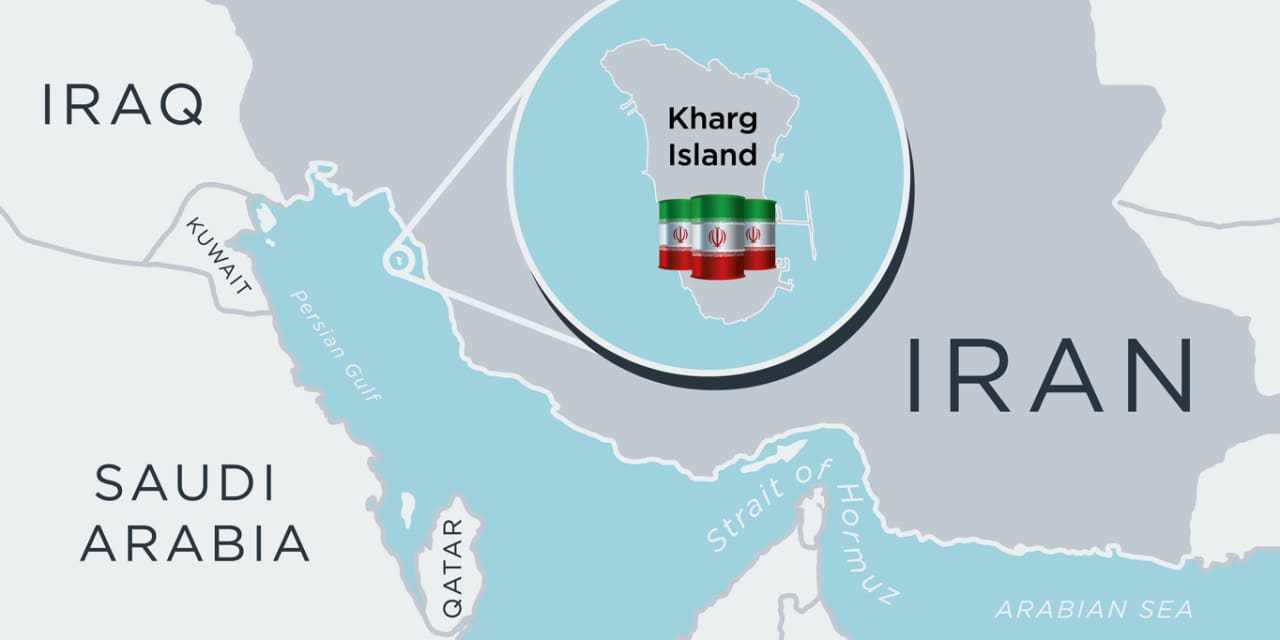
Many oil-market experts now believe the conflict will reach a critical point at Kharg Island, which handles roughly 90% of Iran’s crude exports. This makes it the backbone of Iran’s energy industry and, by extension, its economy. Stephen Innes, managing partner at SPI Asset Management, emphasizes that “Kharg is not just another asset. It is Iran’s economic heartbeat.”
The island’s strategic location near naturally deep waters in the Persian Gulf makes it a prime target. Much of Iran’s mainland coast along the Gulf is shallow and silty, making it difficult for large VLCC “supertankers,” capable of carrying about 2 million barrels of crude, to approach the coast.
Export Trends and Economic Impact
Iran’s control over the Strait of Hormuz has led to a slight increase in oil exports, reaching about 2.1 million barrels a day, compared to 2 million barrels a day before the war. There was a similar spike in exports in June 2025 when the U.S. and Israel attacked Iranian nuclear and military sites. In recent years, Iranian exports have hovered around 1.2 million to 1.6 million barrels a day.
Given these factors, Kharg Island would be the “cleanest lever” for Washington to apply “maximum economic pressure” on Iran, as Innes noted in late Wednesday commentary. Although the U.S. previously hit military targets on Kharg Island, it left crude infrastructure intact. Seizing loading terminals, pipelines, and storage tanks could represent a significant escalation of the conflict and send more jolts through global energy markets.
Military Intervention and Oil Prices
Denton Cinquegrana, chief oil analyst at OPIS, suggested that Kharg Island could become the “landing spot” for troops sent by the U.S. Fresh military intervention would prolong the conflict and keep a floor under oil prices, he added.
Oil prices have seen a slight reprieve this week from their sharp climb in March. Brent crude and West Texas Intermediate crude were trading lower on a weekly basis but remained up about 40% in March. Prices eased on optimism around a 15-point U.S. proposal to Iran for ending the war. However, Iran’s state-run media outlet Press TV indicated that Tehran had rejected the plan and set out its own conditions for a deal.
Global Implications and the Risk of Recession
The oil price shock and its global economic impact have increased the urgency for a peace deal. This comes as Iran reportedly threatened to target another oil chokepoint known as the Bab al-Mandeb Strait, at the southern entrance of the Red Sea. The waterway connects the Red Sea with the Gulf of Aden in the Indian Ocean.
The conflict continues to disrupt oil flow through the Strait of Hormuz, leading to increased storage options in the region and prompting major crude producers like Saudi Arabia to reduce output. Normally, around a third of the world’s global seaborne oil passes through the strait each day.
If Trump’s diplomatic efforts fail and the Strait of Hormuz sees continued low traffic, global financial-market confidence in a negotiated solution could collapse, causing oil prices to spike back to $120 per barrel or higher. This could increase the odds of a U.S. recession above 50%, according to Matt Gertken, chief geopolitical and U.S. political strategist at BCA Research.
The Tipping Point and Economic Consequences
Should oil reach $120 and stay there for a month, a recession becomes much more likely, Gertken told Jendela Magazine. At this level, U.S. consumers could see their real incomes erode beyond their ability to maintain spending. Currently, with oil prices around $100, the U.S. has an incentive to negotiate a solution since this is a level at which consumers start to feel pinched.
Iran also has an incentive to keep oil prices at $100 or higher to reinforce the regime and encourage a change in U.S. policy. This delicate balance between economic pressure and potential global consequences underscores the high stakes involved in the ongoing conflict.