David Sacks Steps Down as AI Czar — His New Role Revealed
David Sacks Transitioning from AI Czar to PCAST Co-Chair
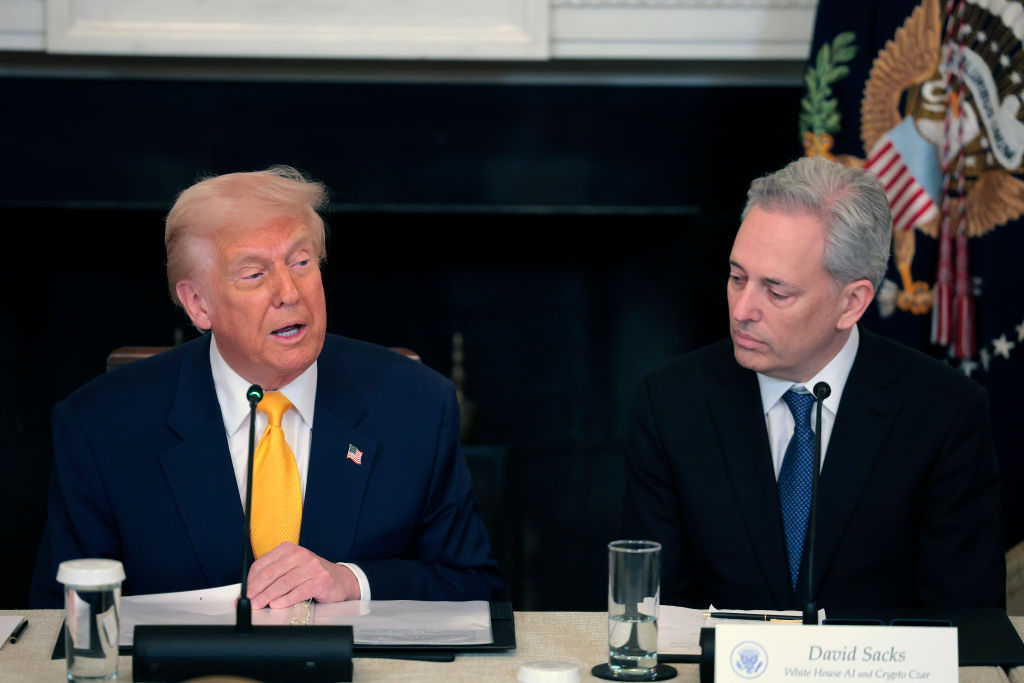
David Sacks has concluded his tenure as Donald Trump’s AI and crypto advisor. In a recent interview with Bloomberg, the entrepreneur, investor, and podcaster confirmed that his 130-day stint as a special government employee has come to an end. He is now co-chairing the President’s Council of Advisors on Science and Technology (PCAST) alongside senior White House technology adviser Michael Kratsios.
“I think moving forward as co-chair of PCAST, I can now make recommendations on not just AI but an expanded range of technology topics,” Sacks said during the video interview. “So yes, this is how I’ll be involved moving forward.”
This new role means Sacks will be less directly involved in Washington’s power dynamics compared to when he was the AI czar. As a special government employee, he had direct access to Trump and played a key role in shaping policy. However, PCAST is an advisory body that focuses on research, reporting, and sending recommendations up the chain rather than making policy itself.
A Star-Studded Advisory Panel
The council has existed since the time of Franklin D. Roosevelt, but Sacks emphasized to Bloomberg that this version is unique for its “most star power of any group like this” ever assembled. The initial 15 members include high-profile figures such as Nvidia’s Jensen Huang, Meta’s Mark Zuckerberg, Oracle’s Larry Ellison, Google co-founder Sergey Brin, Marc Andreessen, AMD’s Lisa Su, and Michael Dell, among others.
That’s a lot of billionaires, and their presence signals a shift in the composition of the council. Sacks mentioned that the group will focus on AI, advanced semiconductors, quantum computing, and nuclear power. A near-term priority is advancing Trump’s national AI framework, which was recently released to address the patchwork of state-level regulations that Sacks described as a challenge for innovators.
Addressing the War with Iran
Sacks did not directly address why the transition is happening now or whether his recent comments were a factor. Earlier this month, on the popular “All In” podcast he co-hosts, Sacks urged the administration to find an exit from the U.S.-backed war with Iran, discussing potential scenarios and calling for a polite way out. Trump responded by stating that Sacks hadn’t spoken to him about the war.
When asked about it by Bloomberg, Sacks expressed frustration: “I’m not on the foreign policy team or the national security team,” he said, adding that his podcast comments represented his personal view, not an official one.
Historical Context of PCAST
It’s worth noting what PCAST has historically been—a body with varying degrees of influence depending on the administration. President Obama’s version was particularly productive, producing 36 reports over eight years, two of which led to concrete policy changes. In contrast, Trump’s first-term council struggled to name its first members and produced minimal impact. Biden’s council, on the other hand, was heavily academic and issued a modest number of reports before the administration ended.
The current PCAST is different, composed almost entirely of executives from companies shaping the technology it advises on. For Sacks, this means he is returning to the world of investors and entrepreneurs, likely free to resume his life in that space.
Ethics and Financial Conflicts
Sacks’ move also raises questions about ethics. Last year, Jendela Magazine reported on the ethics waivers he obtained to maintain financial stakes in AI and crypto companies while shaping federal policy. This arrangement drew criticism from ethics experts and lawmakers, highlighting the complex relationship between private interests and public policy.
As Sacks steps into his new role, the implications of his transition and the composition of PCAST will continue to be closely watched.