Wall Street Surges as Trump Halts Iran Strike Plans
Market Reaction to Political Developments
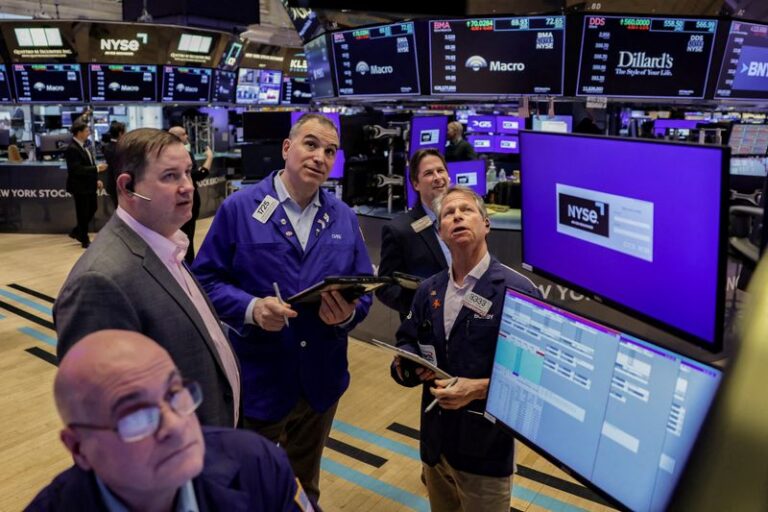
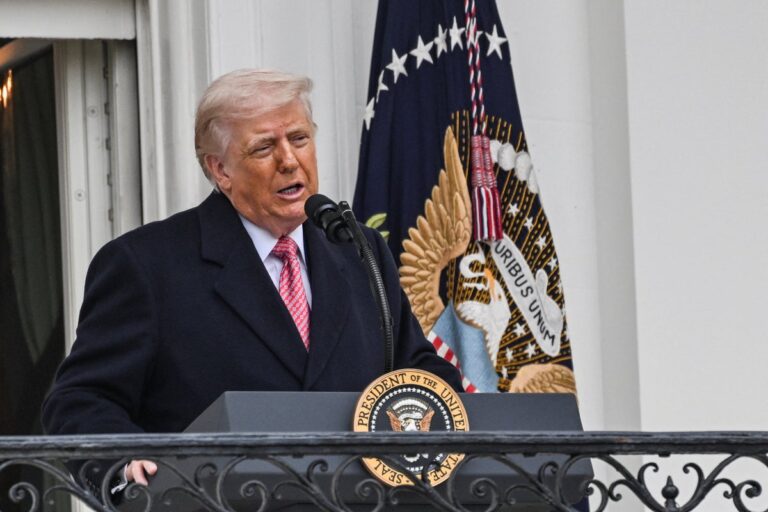
The U.S. stock market experienced a strong rebound on Monday, with the three main indices closing more than 1% higher. This surge came after President Donald Trump announced that military strikes against Iranian power plants had been postponed following “productive conversations” with Tehran. However, this claim was quickly refuted by Iran’s Parliamentary Speaker, Mohammad Baqer Qalibaf, who denied any discussions had taken place between the two nations.
This conflicting information created a wave of uncertainty in the markets. Despite the denial from Iran, the announcement by Trump led to a drop in oil prices, which in turn boosted investor confidence. The market had initially fallen earlier in the day due to fears of potential attacks on Israeli and Iranian power networks.
Tim Ghriskey, a senior portfolio strategist at Ingalls & Snyder, noted that while it is difficult to determine whom to believe, there seems to be an effort by Trump to initiate dialogue with Iran. This has resulted in a significant boost to stock prices, although the gains were tempered by the Iranian denials.
Strong Gains Across Major Indices
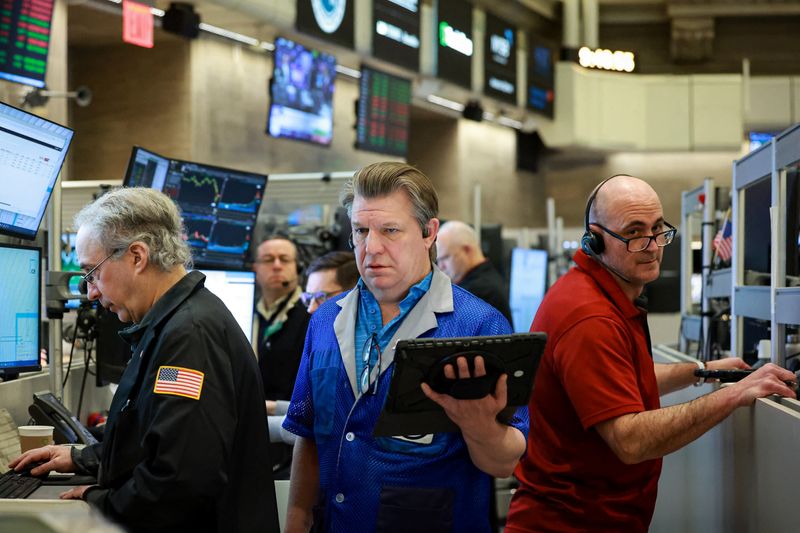
With oil prices dropping over 10%, Wall Street’s major stock indexes saw their largest single-day percentage gains since February 6. The Dow Jones Industrial Average rose 631.00 points, or 1.38%, to 46,208.47. The S&P 500 gained 74.52 points, or 1.15%, to 6,581.00, while the Nasdaq Composite climbed 299.15 points, or 1.38%, to 21,946.76.
The CBOE Volatility Index, often referred to as Wall Street’s fear gauge, decreased after hitting its highest level in two weeks. It ended the day down 0.63 points at 26.15.
All 11 major sectors within the S&P 500 advanced, with cyclical sectors like consumer discretionary seeing the most significant gains at 2.46%. Defensive sectors, such as healthcare and consumer staples, performed more modestly, with healthcare barely rising and consumer staples closing up 0.37%.
Bob Doll, chief investment officer at Crossmark Global Investments, emphasized that the market’s movements are heavily influenced by oil prices. He stated, “When oil prices are down, stocks go up and vice versa.”
Investor Sentiment and Federal Reserve Outlook
Investors have reduced their bets on a potential interest-rate hike from the U.S. Federal Reserve. According to CME Group’s FedWatch, the probability of a rate hike in December dropped to roughly 13% from just above 25% in the previous session. Traders now anticipate a 72% chance that rates will remain unchanged by year-end.
Despite this shift, the small-cap Russell 2000 outperformed large-cap indexes, finishing the day up 2.3%. On Friday, the index had fallen more than 10% below its record close, indicating it was in correction territory.
Sector Performance and Individual Stocks
Airlines, which are highly sensitive to oil prices, saw significant gains. Alaska Air and United Airlines both rose over 4%, while American Airlines added 3.66%. Cruise ship operators also benefited, with Norwegian Cruise Line gaining over 6%, and Carnival Corp and Viking Holdings each climbing more than 5%.
Banks, which had weakened during the conflict, regained ground on Monday. The S&P 500 Banking index added over 1%, marking its biggest daily gain since February 25. JPMorgan Chase rose 1.2%, and Goldman Sachs increased by 2.2%.
Investors are now turning their attention to upcoming Fed speakers, business activity surveys, and consumer sentiment readings.
In individual stock news, Synopsys rallied 2.9% after reports indicated that activist investor Elliott Investment Management had made a multibillion-dollar investment in the company.
Trading Volumes and Market Activity
On U.S. exchanges, about 20.94 billion shares changed hands, slightly above the 20.68 billion average for the last 20 sessions. On the NYSE, advancing issues outnumbered decliners by a 3.6-to-1 ratio, with 59 new highs and 109 new lows. On the Nasdaq, 3,546 stocks rose while 1,229 fell, resulting in a 2.89-to-1 ratio of advancing to declining issues.
The S&P 500 recorded 7 new 52-week highs and 8 new lows, while the Nasdaq Composite posted 34 new highs and 154 new lows.