War Reveals the Truth About Oil Beneath Our Feet – How Australia Slid into Crisis
Australia’s Fuel Security Crisis Exposed by Middle East Conflict
The ongoing conflict in the Middle East has exposed critical weaknesses in Australia’s fuel security, highlighting a growing dependence on foreign supplies and vulnerable international shipping routes. Experts warn that decades of refinery closures have left the nation at risk, with only minimal domestic refining capacity to meet its needs.
John Blackburn, a former defense and energy adviser, emphasized that policy decisions over the past two decades have significantly weakened Australia’s ability to produce and process its own fuel. This has forced the country to rely heavily on overseas refineries, foreign tankers, and supply chains that are increasingly threatened by geopolitical instability.
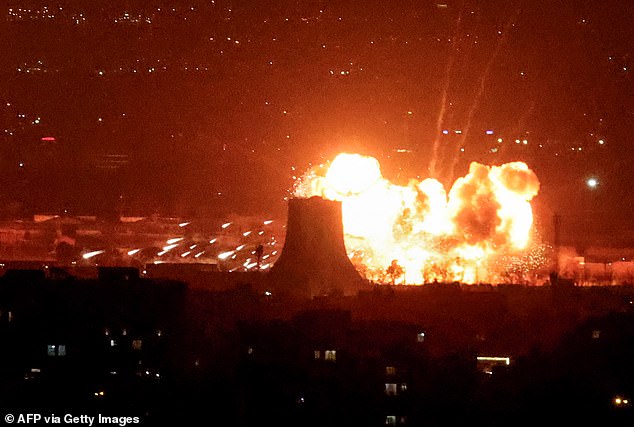
“The vulnerability has become clear as conflict in the Middle East disrupts the Strait of Hormuz,” Blackburn said. “This has pushed fuel prices higher and triggered supply strains in parts of regional Australia.”
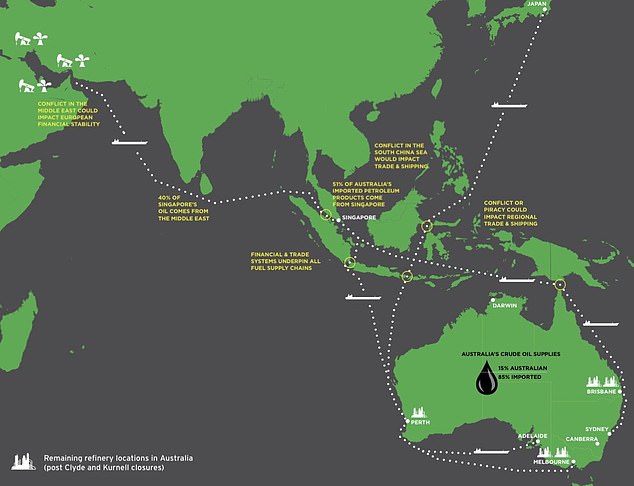
Despite producing crude oil and having significant energy resources, Australia lacks the refining capacity to convert much of it into usable fuel. “We export all of that because we can’t process it even though we knew this was going to happen,” he explained. “And so we import 90 per cent of all our fuels, most of which comes to us from Asian refineries.”
Most of Australia’s crude oil is shipped overseas, while imported fuel is refined in countries such as South Korea, Japan, and China—nations that are themselves heavily reliant on oil flowing through the Strait of Hormuz. “When they run out of oil stocks, that’s going to give them a big problem,” Blackburn said.
He noted that China has already signaled concerns about its own oil supplies. “China is saying, well, in about a month we’re not going to sell anything—we need it for ourselves.”
The Decline of Australia’s Refining Sector
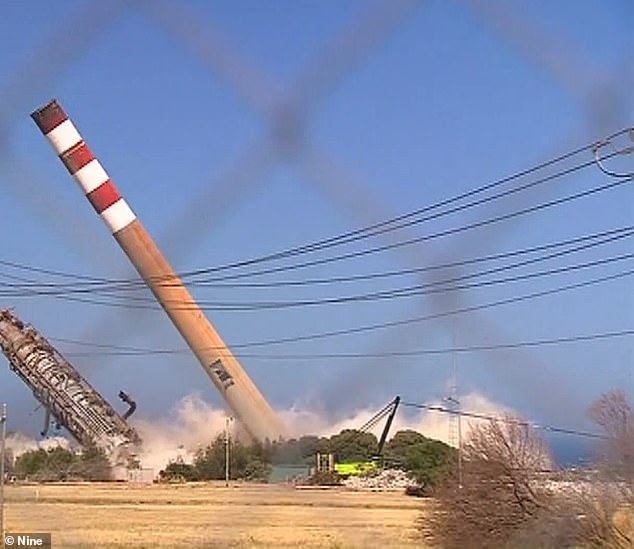
Australia’s refining sector has been in decline for over 15 years, with many plants closing due to financial losses, inability to compete with larger Asian facilities, and high upgrade costs. Key closures include:
- Port Stanvac (2009)
- Clyde (2012)
- Kurnell and Bulwer Island (2014)
- BP’s Kwinana and ExxonMobil’s Altona (2021)
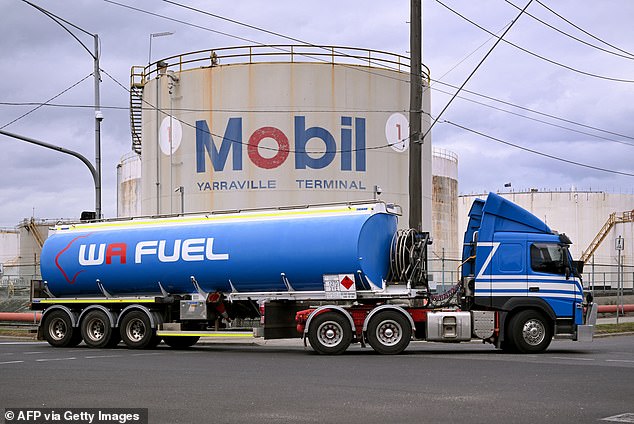
Today, only Ampol’s Lytton plant in Brisbane and Viva Energy’s Geelong refinery remain, supplying just a fraction of the nation’s fuel needs.
Dr Lurion De Mello, a lecturer at Macquarie Business School, warned that the shutdown of refineries has left the country dangerously exposed. “For Australia, the consequences are particularly acute,” he said. “If the crisis at Hormuz continues for weeks or spreads further, genuine shortages become plausible.”
Blackburn predicted that the strain on fuel supply chains would become visible within two months. “If the war continues, we’re going to have to readjust how much fuel we’re using,” he said.
Dependence on Foreign Shipping Fleets
Australia’s exposure has also been worsened by the loss of its domestic fuel shipping fleet, leaving supply chains dependent on foreign-flagged vessels. “All that supply chain is run on foreign flagships, more than half Chinese owned,” Blackburn said. “Monty Python couldn’t have written this. It is that dumb. Everywhere there’s a point of failure.”
He criticized the political neglect that led to the current situation, arguing that both major parties ignored long-term planning in favor of short-term gains. “What a dumb way to run a country,” he said. “We could have actually prepared for this, not unaffordably, there’s things we could have done, but neither side of politics was prepared to do it.”

Australia’s Oil Potential and Challenges
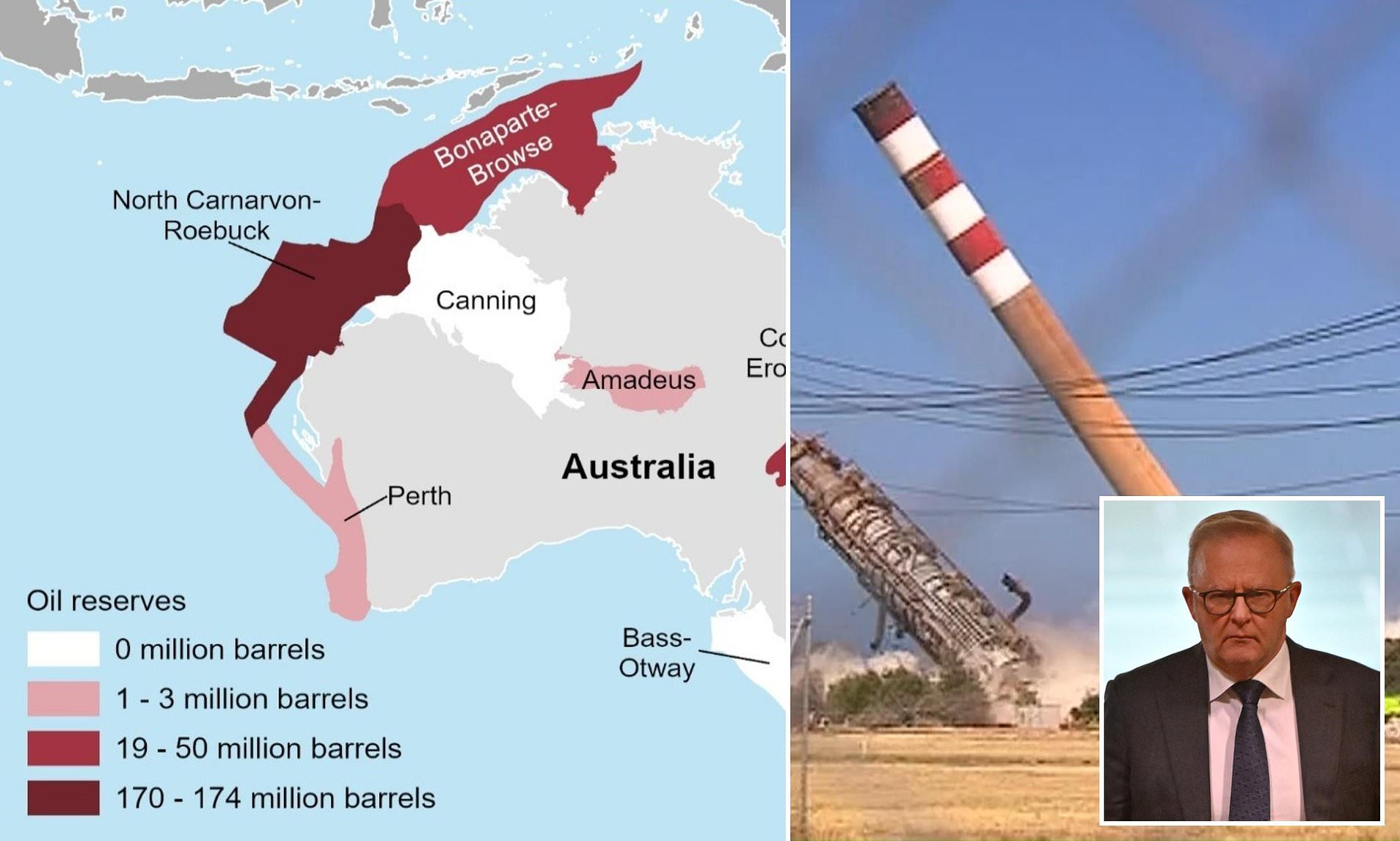
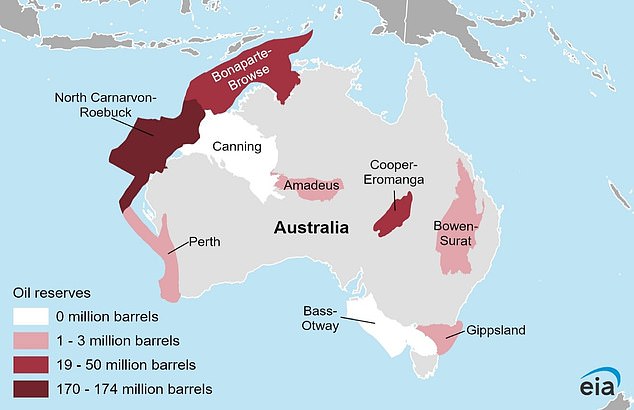
While Australia produces only modest volumes of oil, its long-term potential is far greater than current reserve figures suggest. American geologists have estimated that there could be around 2.6 billion barrels of undiscovered oil across Western Australia and the Northern Territory.
However, extracting this oil presents significant challenges. About half of the estimated reserves are conventional oil, which is relatively easy to extract. The other half is locked in dense rock and requires hydraulic fracturing—a costly and water-intensive process, especially in remote, arid regions.
Additionally, Geoscience Australia has identified 13.4 billion barrels of oil shale, which is even more difficult to extract. Unlike conventional oil, oil shale must be mined, crushed, and superheated to release usable fuel. Currently, only Estonia and China operate at commercial scale, and no one does it in Australia.
At current oil prices and with existing technology, most of these harder-to-reach resources are not economically viable. However, changes in prices, technological advancements, or government investment could alter this dynamic.
Conclusion
Australia’s fuel security crisis underscores the risks of relying on foreign supplies and the urgent need for long-term strategic planning. With dwindling refining capacity and increasing geopolitical tensions, the nation must re-evaluate its approach to energy resilience.