Qatar LNG Plant Damage May Take Five Years to Repair
The Attack on Qatar’s Ras Laffan Gas Plant
On March 18, Iran targeted and hit Qatar’s Ras Laffan gas plant, a critical facility that serves as the backbone of Qatar’s liquefied natural gas (LNG) exports. This location is also a major source of liquid gas, supplying roughly one-third of the world’s supply. The attack destroyed 17% of Qatar’s production capacity, a significant blow that could take years to repair. This event may have also shifted the balance of power in the global LNG market, potentially placing the United States in a more dominant position.
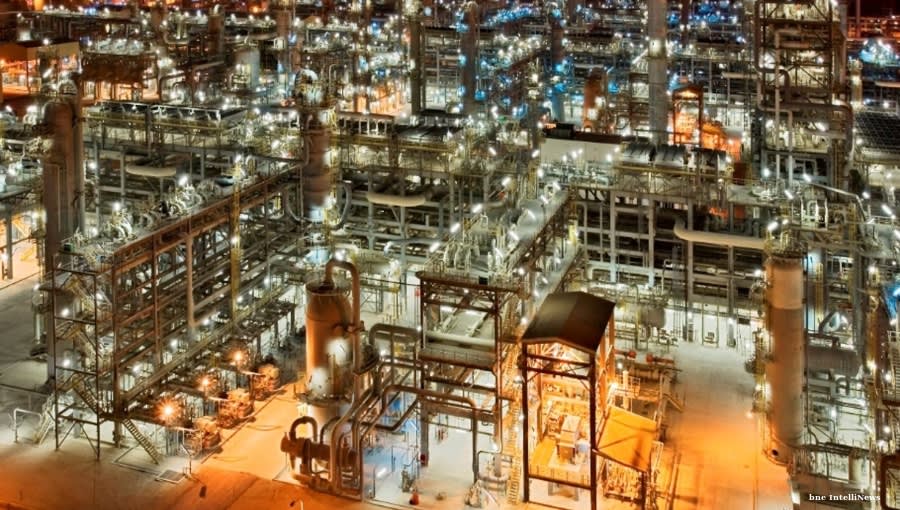
The facility that was attacked is the Pearl gas-to-liquids (GTL) plant, located in the Ras Laffan City site. It houses some of the most complex machinery in the industry. While repairs are possible, the question remains: how long will it take? Shell, which operates the Pearl plant, released a statement estimating that the facility will take one year to repair. This is positive news, suggesting that while the damage was severe, some of the most sensitive components were not affected. According to authorities, two out of the 14 LNG trains were damaged, but the full extent of the damage is still unclear.
Challenges in Repairing the Facility
The main challenge lies in the fact that only five firms in the world manufacture the most complicated components needed for such facilities. These companies have already filled their order books, meaning that if the most sensitive parts of the Pearl plant were damaged, it could take four to five years before the facility is fully operational again.
This situation is reminiscent of the sanctions imposed on Russia’s Novatek Arctic LNG-2 project. The US sanctions cut Novatek off from essential components, stymying the rollout of new LNG lines. Russia was unable to produce the key parts itself, and China attempted to do so but produced substandard pieces. This example highlights how Western technology sanctions can effectively cut off countries from critical technologies, preventing them from expanding their LNG businesses.
How the LNG Process Works
Every LNG train at Ras Laffan City depends on a continuous supply of high-purity nitrogen, which is produced by Air Separation Units (ASUs). These large-scale industrial plants cool atmospheric air to around minus 190°C to separate it into its component gases—primarily nitrogen, oxygen, and argon. In LNG operations, nitrogen is used to maintain inert conditions, preventing combustion and ensuring safe processing of gas.
At Shell’s Pearl GTL facility, approximately 30,000 tonnes per day of pure oxygen is required, also supplied by ASUs built by Germany’s Linde. Oxygen is critical in GTL processes to enable the controlled conversion of natural gas into liquid fuels.
Shell’s Pearl GTL has eight ASUs, which are extremely complex machines. Each ASU is centered on a “cold box”—a large, insulated structure housing the cryogenic distillation equipment. These units can weigh around 470 tonnes and stand up to 60 metres tall.
From contract award to commissioning, ASUs typically take three to four years to deliver, given the engineering precision, manufacturing constraints, and installation requirements. In the event of destruction, replacement capacity would not come online before 2029, creating a prolonged bottleneck for LNG and GTL output.
The Choke Point: Critical Components
The choke point in every ASU is the brazed aluminium heat exchanger, known as a BAHX. This critical component enables the extreme cooling required for gas separation. The original EPC contract for all eight units was valued at approximately $800 million to $1 billion in 2006 prices. The total Pearl GTL project cost $18–$19 billion, with the ASU complex alone representing roughly 5 percent of the entire facility cost.
These exchangers operate with temperature differentials of as little as one to two Kelvin, requiring highly controlled manufacturing processes, including precision brazing in vacuum furnaces to ensure structural integrity at cryogenic temperatures.
“Every liquefaction train at Ras Laffan requires massive quantities of high-purity nitrogen. Nitrogen is injected into the LNG process as a refrigerant component and to control the heating value of the final product. Without nitrogen, the train cannot produce specification-grade LNG. The ASU is the lung of every LNG facility. Cut the oxygen supply to a human body and the organs shut down. Cut the nitrogen supply to an LNG train and the entire downstream chain goes dead,” says Veron Wickramasinghe, an engineer and analyst.
Limited Manufacturing Capacity
Only five firms make the heat exchangers: Fives Cryo in France, Kobelco and Sumitomo in Japan, Linde in Germany, and Chart Industries in the United States. Lead times currently range from 12 to 18 months or longer, with order books already filled, limiting the ability to rapidly replace damaged units. The lead time for manufacturing a single mega-scale ASU, from contract signing to operational commissioning, is three to four years.
QatarEnergy Chief Executive Saad Sherida Al-Kaabi confirmed that LNG Trains 4 and 6 at Ras Laffan have been damaged, taking 12.8 million tonnes per annum (mtpa) of capacity offline. All the repairs are expected to take three to five years, with an estimated $20 billion in annual revenue losses and a force majeure that was imposed in the first days of Operation Epic Fury potentially lasting up to five years. Shell has said that Pearl GTL’s Unit 2 will require around one year of repairs.
What remains unclear is whether the ASUs themselves were destroyed. Shell’s one-year repair estimate suggests that core ASU infrastructure may be intact, as full replacement would typically require four to five years given engineering, procurement, and construction timelines.
Impact on Global Helium Supply
In addition to the lost LNG production, Qatar produces roughly one-third of the world’s helium from facilities integrated into the same industrial complex. Helium, a by-product of natural gas processing, is essential for semiconductor manufacturing, among other things, and has no viable substitute in key applications such as advanced chip fabrication.
The LNG trains, ASUs, and helium production facilities are co-located, drawing on the same Qatari North Field gas reserves that it shares with Iran, and reliant on shared infrastructure and maritime access through the Strait of Hormuz. Strikes reported between March 18 and 19 disrupted an estimated 17% of global LNG supply while simultaneously threatening around one-third of global helium output.
There have been claims that the ASUs were hit, but they originate from satellite-based thermal analysis published by an energy industry blog. However, no official damage assessment has been released. Shell’s stated repair timeline of one year for restoring Pearl GTL Unit 2 is consistent with the assumption that the ASUs have not been destroyed.