Top 10 US Shoe Import Production Rankings for 2025
China Remains Top Footwear Supplier to the U.S. Despite Tariff Concerns
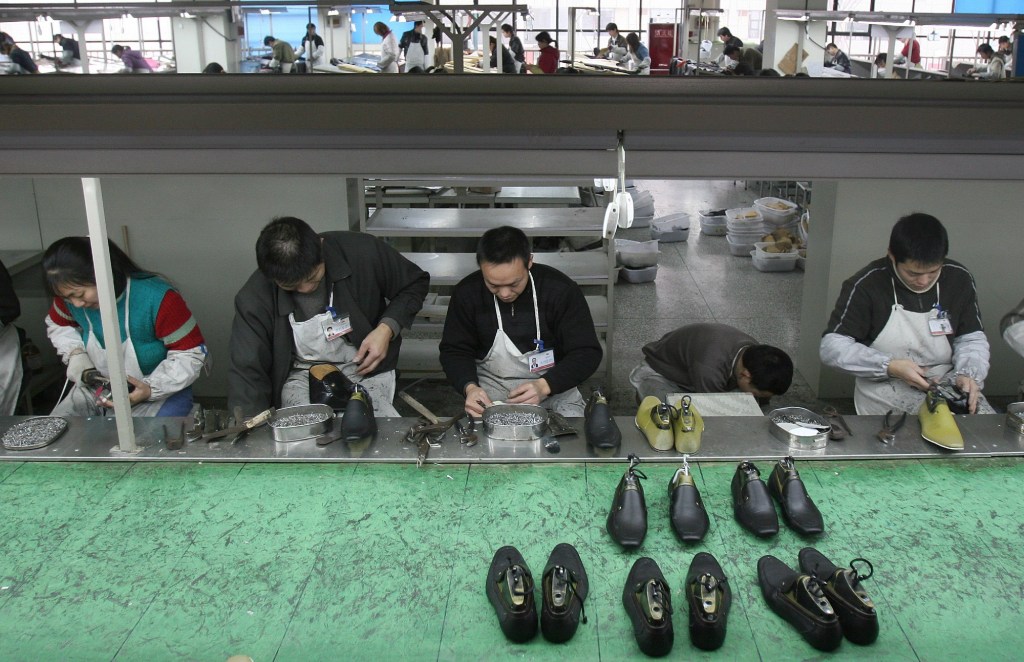
Despite the ongoing debate over the impact of tariffs, China maintained its position as the leading supplier of footwear to the United States in 2025. According to data from the U.S. International Trade Commission, China exported 964 million pairs of shoes to the U.S. last year. While this represents a decline in both dollar and volume import shares to 35-year lows, the average landed cost of Chinese footwear relative to global costs dropped to a 34-year low.
Matt Priest, CEO of the Footwear Distributors and Retailers Association (FDRA), noted that China has been gradually losing market share since 2010, but the pace of this shift has accelerated in recent years. “It’s the lowest level we’ve seen out of China for volume and value in 35 years,” he said. The FDRA reported that other countries in the top 10 saw gains in their footwear shipments to the U.S., with tariffs acting as a key factor in this transition.
Priest explained that while China has become more price competitive, many shoe companies are hesitant to return due to fears that tariffs could rise again to 45 percent. “They don’t want to go through what they went through the last few years, so even if China is more price competitive, that doesn’t necessarily mean companies are going to be incentivized to go back into China and source a bunch of product,” he said.
Top Suppliers to the U.S. Footwear Market
Vietnam remained the second-largest supplier, shipping 574 million pairs of shoes to the U.S. in 2025. Shipments to the U.S. have increased for 23 of the last 25 years, although the average landed cost rose to a 24-year high of $21.17 per pair.
Indonesia shipped 194 million pairs of shoes, with a weak rupiah helping to lower the average landed cost premium over world costs to a 26-year low. This led to record shipments and volume in 2025.
Cambodia saw a 50% increase in shoe shipments to the U.S., reaching a record 105 million pairs. The average landed cost relative to the world cost fell to a five-year low.
India also experienced a surge in footwear imports, with 37 million pairs shipped to the U.S. A weak rupee helped reduce the average landed cost premium to its lowest level in decades.
Mexico remained relatively stable at 21 million pairs, while the average landed cost jumped to a record high in 2025. Italy rounded out the top seven with 20 million pairs shipped to the U.S.
Shifting Positions in the Top 10
The rankings for the bottom three positions in the top 10 saw some changes. Bangladesh moved up to the eighth spot from No. 10 in 2024, with footwear shipments to the U.S. increasing by 76% in 2025. A weaker taka helped reduce the average landed cost premium to an 18-year low.
Germany fell from No. 8 to No. 9, despite a 12-year high in average landed costs. The FDRA noted that men’s, women’s, leather, and sandal shipments all reached record levels in 2025.
Thailand moved up one spot to No. 10, with 14 million pairs of footwear shipped to the U.S. This represented a 42% increase and a 17-year high, despite the baht rising to its highest level since 2021.
Brazil, which was in the ninth spot in 2024, dropped to the 11th position in 2025. This was attributed to higher tariffs throughout the year, including a 50% rate on most products.
Impact of Tariffs and Supply Chain Adjustments
Footwear manufacturers entered 2025 aware that tariffs were likely under the new administration of U.S. President Donald Trump. However, they did not anticipate the imposition of reciprocal tariffs on April 2. In response, many companies restructured their supply chains to mitigate the impact of potential tariff increases.
Last month, the U.S. Supreme Court ruled that the tariffs imposed by Trump under the IEEPA were illegal, but a new 15% tariff under Section 122 of the Trade Act of 1974 was introduced, set to expire on July 24th.
New Section 301 investigations were launched by the U.S. Trade Representative, targeting areas such as excess production capacity and forced labor. These developments mark the next phase of tariff actions affecting the global footwear industry.
Additional Industry Updates
In other developments, DSW announced plans to expand into beauty, wellness, and other growing categories. Meanwhile, Vivobarefoot is opening its first U.S. flagship store in SoHo, signaling continued growth in the footwear sector.