Wall Street Plummets to 5th Straight Losing Week, Worst Since Iran War
U.S. Stock Market Faces Sharp Declines Amid Geopolitical Tensions
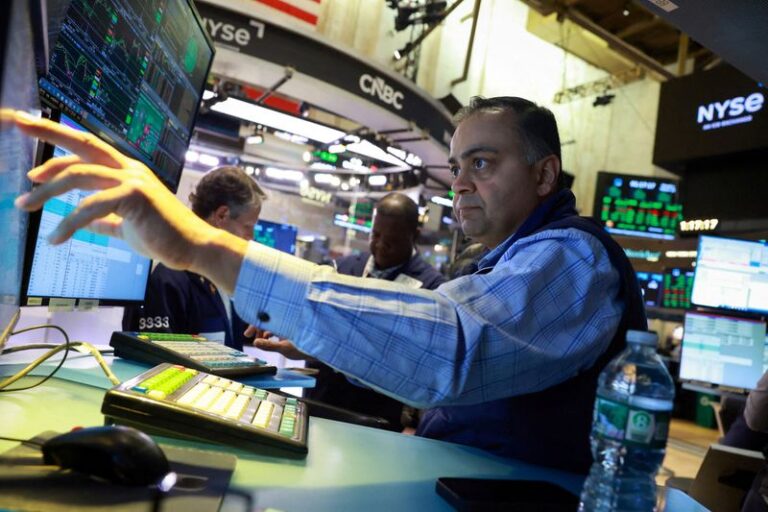
U.S. stocks experienced a significant downturn on Friday, marking the fifth consecutive week of losses for Wall Street. This streak represents the longest period of decline in nearly four years. The S&P 500 suffered a drop of 1.7%, closing its worst week since the conflict with Iran began. Meanwhile, the Dow Jones Industrial Average fell by 793 points, or 1.7%, and dropped over 10% from its record high set last month. The Nasdaq Composite also saw a sharp decline, falling 2.1%.
The market’s volatility throughout the week was characterized by daily shifts between gains and losses, as investors oscillated between hope for an end to the war and concerns about its potential impact.
Political Developments and Market Reactions
Following the close of trading on Thursday, President Donald Trump extended a self-imposed deadline to “obliterate” Iran’s power plants to April 6, provided that Iran allows oil tankers to exit the Persian Gulf through the Strait of Hormuz. This announcement initially led to a decrease in oil prices, reflecting a sense of optimism. However, this relief was short-lived as oil prices resumed their upward trend during Friday’s trading.
Despite the president’s latest statement, tensions in the Middle East persisted. Iran showed no signs of backing down, while Israel threatened to escalate its attacks on Iran. These developments contributed to continued uncertainty in financial markets.
Investor Sentiment and Economic Concerns
Investors expressed dismay at the diplomatic dissonance between the U.S. and Iran. Analysts noted that risk appetite could not withstand the ongoing uncertainty. Some market observers suggested that any further statements from Trump regarding a potential deal would have little impact unless Iran signaled progress in negotiations.
Brent crude oil prices rose 3.4% to settle at $105.32 per barrel, while benchmark U.S. crude increased by 5.5% to $99.64 per barrel. The fear of prolonged disruption in the Persian Gulf’s energy industry has raised concerns about potential inflationary pressures globally.
Impact on Consumers and Businesses
High gasoline prices and the ongoing conflict are already affecting consumer confidence in the U.S. According to a survey by the University of Michigan, sentiment among consumers fell more than expected in March. This decline could have broader implications for the economy, as consumer spending constitutes a significant portion of economic activity.
On Wall Street, most stocks declined, with three out of every four companies in the S&P 500 experiencing losses. Big Tech stocks were particularly hard-hit, with Amazon, Meta Platforms, and Nvidia each dropping by around 4%. Non-essential businesses also faced significant declines, with Norwegian Cruise Line Holdings, Starbucks, and Chipotle Mexican Grill seeing notable drops.
Global Market Performance
Stock markets abroad also experienced declines, with European indexes following a mixed performance in Asia. In the bond market, Treasury yields fluctuated, with the 10-year Treasury yield rising to 4.48% before settling at 4.43%. This increase has already impacted mortgage rates and other loan rates, potentially slowing economic growth.
Conclusion
The combination of geopolitical tensions, market volatility, and economic concerns has created a challenging environment for investors. As the situation in the Middle East continues to evolve, the global financial landscape remains uncertain. The outcome of these developments will likely shape market trends in the coming weeks.