
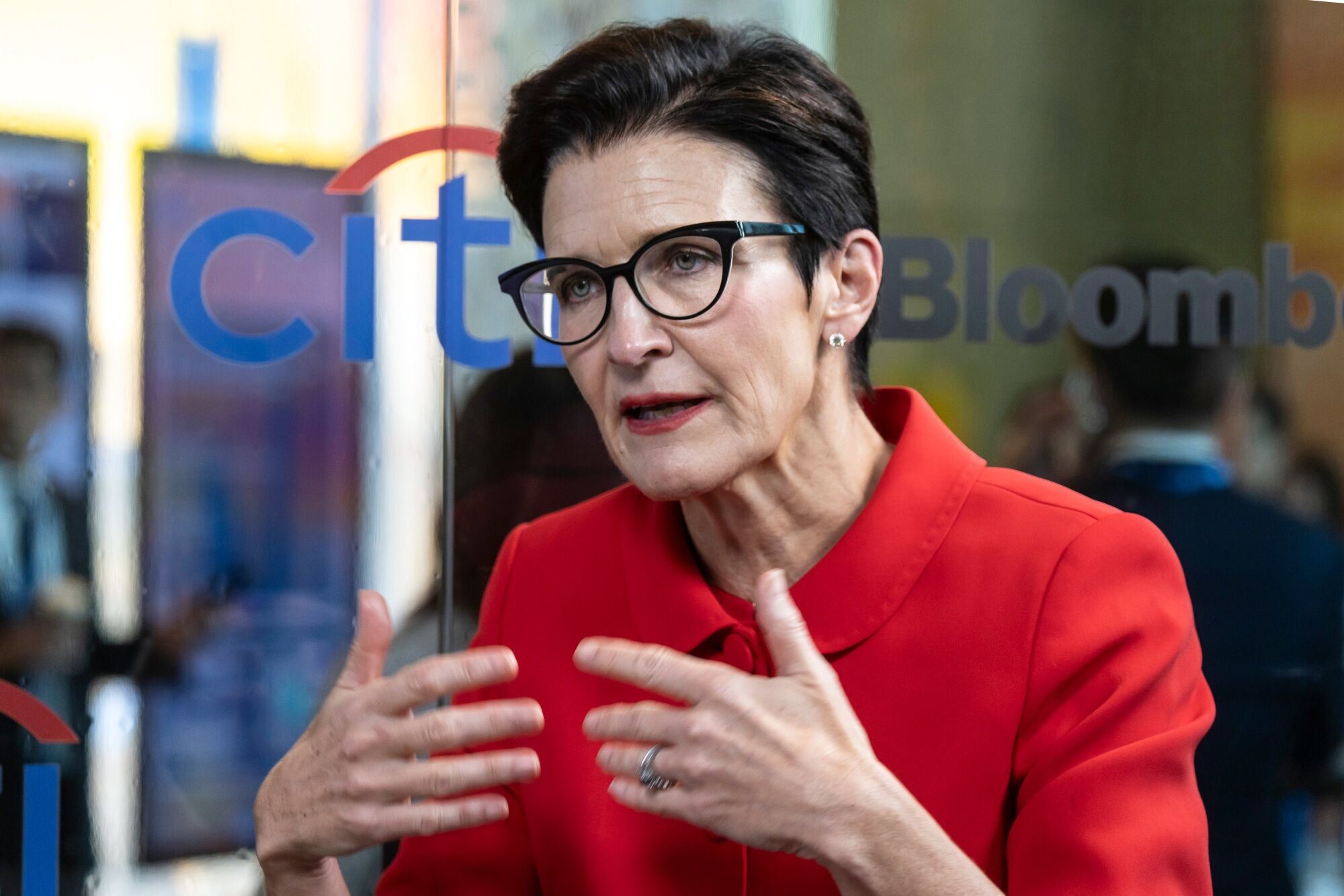
Citi Targets Regional Bank Deal as Fraser Moves Forward
Citigroup Considers Major Bank Acquisition Amid Regulatory Scrutiny
Citigroup Inc. is reportedly considering the acquisition of another bank, a move that has been seen as unlikely in recent years. The New York-based financial institution is currently working to address regulatory concerns and improve its operations. Senior executives have engaged in early discussions about acquiring a major regional lender, aiming to significantly increase deposits and strengthen their lending and trading activities.
Recent meetings between Citigroup’s leadership and U.S. regulators have included talks about potential acquisitions. While the authorities have shown some openness to the idea, the discussions are still in the preliminary stages. Citigroup is currently under two consent orders that require regulatory approval for any acquisition. There is no certainty that the company will proceed with a formal proposal.
The company has also explored the possibility of acquiring a brokerage firm. However, Citigroup has denied any such plans, stating that it is focused on organic growth and executing its strategy.
Strategic Moves and Market Implications
Any significant acquisition would represent a bold step for Jane Fraser, who has led Citigroup since 2021. Her tenure has centered on simplifying the company, streamlining operations, and improving returns. A major acquisition could transform Citigroup, which nearly collapsed during the 2008 financial crisis, by expanding its branch network across the country.
Potential targets include regional banks with around $500 billion in assets, such as Truist Financial Corp. and PNC Financial Services Group Inc. These acquisitions could rival some of the largest in U.S. banking history, including Citigroup’s $70 billion merger with Travelers Corp. in 1998.
In addition to banks, Citigroup has considered acquiring a brokerage like Stifel Financial Corp. or Raymond James Financial Inc. This would provide access to wealthy Americans and their deposits, while generating steady fees.
Analysts’ Perspectives
Wells Fargo & Co. analyst Mike Mayo criticized the potential acquisition, invoking the anti-drug slogan “Just say no.” He noted that while having more deposits would be beneficial, Citigroup is not in a position to pursue such a move operationally, financially, or in terms of stock market capitalization.
Mayo pointed out that Citigroup is still dealing with the aftermath of mergers from 25 years ago. He emphasized that the company needs to focus on its current challenges before considering large-scale acquisitions.
Organizational Changes and Strategic Shifts
Jane Fraser, who previously led Citigroup’s consumer bank, has made several key appointments. Gonzalo Luchetti was promoted to chief financial officer after managing the domestic retail bank and credit card business for years. The U.S. retail unit, now overseen by Kate Luft, has been integrated into Andy Sieg’s wealth division.
Some executives have long advocated for greater investment in deposit-generating businesses to compete with JPMorgan Chase & Co. and Bank of America Corp., which benefit from extensive branch networks. Truist, for example, operates over 1,900 branches across 17 states and the District of Columbia.
However, a major acquisition could reignite debates about “too big to fail” banks, particularly given Citigroup’s history of aggressive acquisitions that contributed to the 2008 financial crisis.
Regulatory Challenges and Historical Context
Citigroup survived the 2008 crisis with substantial government support, highlighting its systemic risk. Over the years, the bank has lost much of its deposit-gathering capacity by selling off its Smith Barney wealth brokerage to Morgan Stanley and reducing its retail banking footprint.
Under Fraser, Citigroup has exited retail banking operations in over a dozen countries. As a result, its U.S. retail arm holds significantly fewer deposits compared to JPMorgan and Bank of America. In 2023, Citigroup reported $89 billion in average deposits within its U.S. personal banking unit, while JPMorgan had $1.1 trillion in its consumer and community banking division.
Branch Network and Regulatory Compliance
Despite being the third-largest U.S. bank, Citigroup has only 655 branches concentrated in urban areas. This pales in comparison to JPMorgan’s over 5,000 branches across the continental U.S.
Citigroup’s consent orders, imposed in 2020, required improvements in risk management, internal controls, data handling, and technological infrastructure. In 2024, the Office of the Comptroller of the Currency (OCC) fined the bank for failing to meet milestones, but the company claims it is nearing the completion of its corrective measures.
Political Climate and Future Prospects
President Donald Trump’s administration has sought to reduce regulatory burdens, which could create a more favorable environment for Citigroup’s potential acquisitions. Trump has criticized the Federal Reserve’s approach to bank regulation, vowing to ease unnecessary rules and promote lending.
Given this political climate, some executives believe Citigroup could gain regulatory approval for a major transaction. However, the path forward remains uncertain, with many challenges ahead.