The World Mocks Democrats’ Flawed Voter ID Claims
Global Perspectives on Voter Identification Laws
Across the world, many countries have implemented voter identification laws to ensure the integrity of their electoral processes. These measures often include requiring voters to present a government-issued photo ID or proof of citizenship when casting their ballots. While some critics argue that such requirements can disenfranchise certain groups, including Black and Hispanic Americans, these practices are widely adopted in both developed and developing nations.
Voting Requirements Around the World
In Africa, for instance, every country requires government-issued identification to vote. Out of the 54 African nations, 51 demand that potential voters submit proof of citizenship to register. This is not unique to Africa; in Latin America, Mexico and all 12 South American countries mandate government-issued photo IDs for voting, along with verifying the citizenship of each registered voter.
Mexico’s system, which closely resembles the proposed SAVE Act in the United States, requires voters to provide an original birth certificate issued by a civil registry, a naturalization certificate, or a Mexican passport. Additionally, the country mandates a thumbprint when casting a ballot to prevent double-voting.
In Europe, all 47 countries require government-issued photo identification at the polls. Most also check voters’ citizenship against national databases. France, for example, requires voters to submit documentation, while the United Kingdom, Cyprus, and Ireland reserve the right to demand documents when there is doubt about a voter’s citizenship.
The Rationale Behind Strict Voting Rules
The primary justification for these strict rules is to combat widespread vote fraud. In Mexico, major reforms were enacted in 1991 after election fraud became rampant. The government introduced biometric photo voter-IDs, banned absentee ballots, and required in-person registration. Despite these tighter rules, voter turnout increased, rising from 59% in the prior three elections to an average of 68% in the next three presidential elections.
Similarly, in Northern Ireland, decades of sectarian conflict led to intense electoral tactics, with voter fraud described as “widespread and systemic.” Under Prime Minister Margaret Thatcher, the UK began requiring voters to show identification at the polls. However, this failed to solve the problem, as individuals could easily forge medical cards — the accepted ID — or obtain them fraudulently to cast illegitimate votes.
IRA Belfast commanders admitted to complex scams involving volunteers who used disguises to vote multiple times and transported fraudulent voters between polling stations. By 2002, a UK Electoral Commission survey found that 64% of voters believed fraud in some areas was significant enough to change election outcomes. Only 10% disagreed.
That year, the Labour government strengthened ID requirements, introduced harder-to-forge identification, and implemented rules to prevent multiple registrations — and voter confidence rose.
Public Support for Voter ID Laws
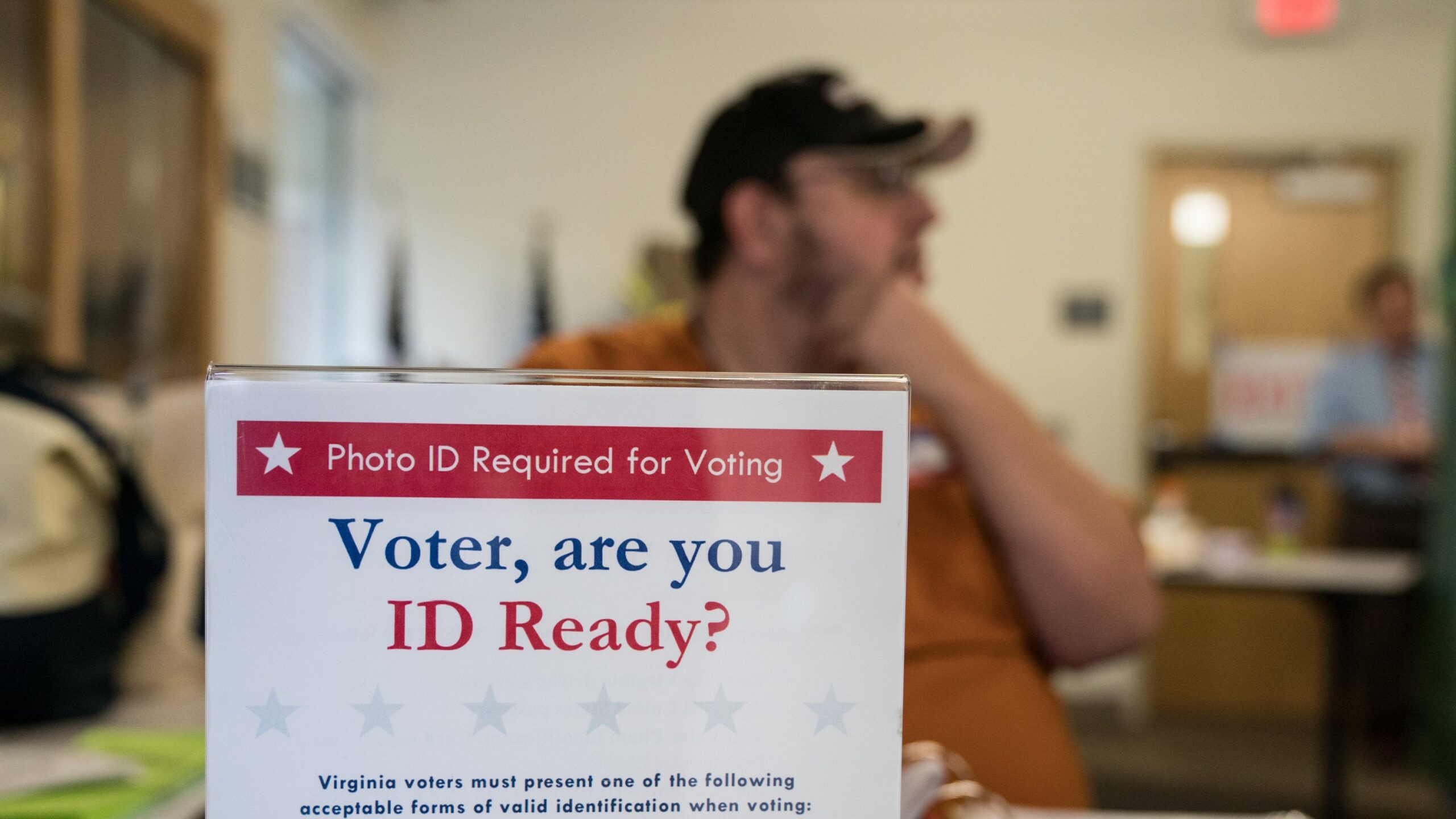
Despite political opposition, public support for voter ID requirements remains strong across the United States. Polls show that 71% of Democrats and 95% of Republicans support such measures. Even among minority voters, significant majorities favor voter ID laws: 76% of Black Americans and 82% of Hispanic Americans support them.
CNN chief data analyst Harry Enten recently noted that “voter ID is not controversial in this country.” Nor does it spark controversy elsewhere around the world.
However, only one Democratic House member, Rep. Henry Cuellar, supports the SAVE Act. Pennsylvania’s John Fetterman is the only possible Senate Democrat supporting the bill. Unless seven more of the Senate’s 47 Democrats step forward, their filibuster will kill the bill.
If voter ID and proof of citizenship truly destroy democracy, Democrats would have to label virtually every other democracy in the world as undemocratic.