Asian nations chase Russian oil as Iran conflict disrupts supplies
Asian Nations Grapple with Energy Crisis as Russian Oil Becomes a Key Resource
BANGKOK (AP) — Asian nations are increasingly competing for Russian crude oil as an energy crisis intensifies amid the month-old conflict between the U.S. and Israel against Iran, which has disrupted roughly a fifth of the world’s oil supply.
Much of the oil from the mostly shut Strait of Hormuz was heading toward Asia, which has been hit hardest by recent energy shocks. Over the weekend, Iran-backed Houthi rebels entered the conflict, further threatening shipping routes.
To stabilize global crude oil supplies, the U.S. has temporarily eased sanctions on Russian oil shipments already at sea — first for India, then for the rest of the world.
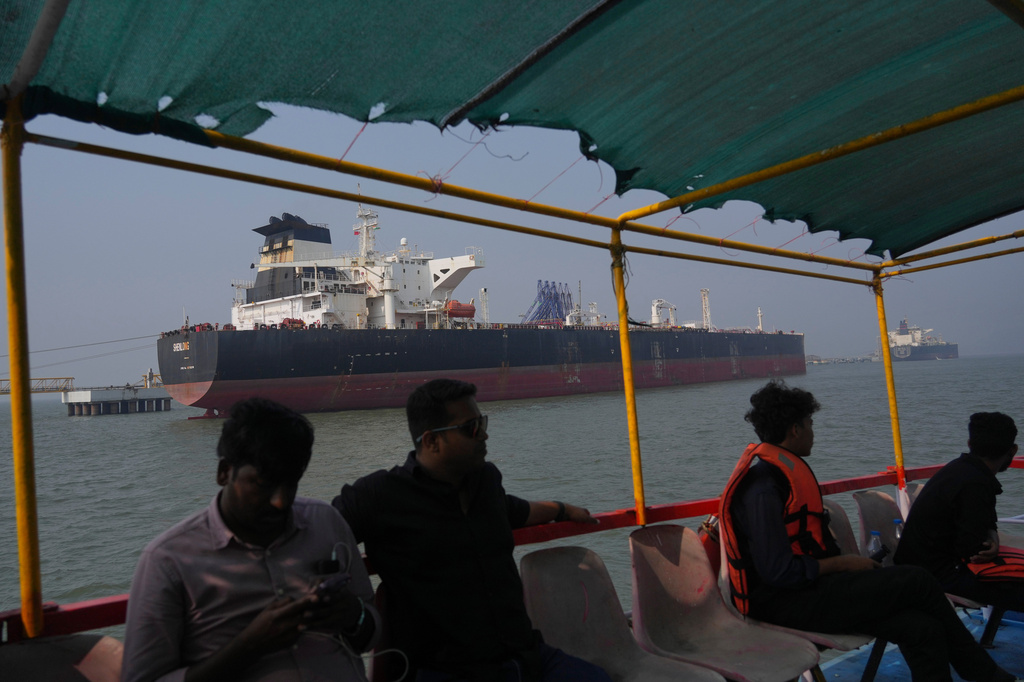
Demand is rising in Asia while Russia continues to generate billions of dollars from its oil exports. However, experts suggest there is a limit to how much Moscow can boost its crude oil exports, which is unrefined petroleum used to produce fuels like gasoline and diesel. Russia is already exporting at a level close to its previous peak.
Challenges to Russian Export Capacity
In addition, Russia’s 4-year-old full-scale invasion of Ukraine and recent drone attacks on its energy facilities by Kyiv are affecting its export capabilities.
For desperate countries in Asia, the opportunity to secure Russian oil is short-lived and shrinking, according to Muyu Xu, a senior crude oil analyst at the global trade data firm Kpler.
“The real problem is how much cargo is still available in this market,” she said.
A Flurry of Interest
Before the Iran war, China, India, and Turkey were the main importers of Russian oil, bypassing Western sanctions for a healthy discount.
U.S. and European Union sanctions were meant to economically hinder Russia after its invasion of Ukraine.
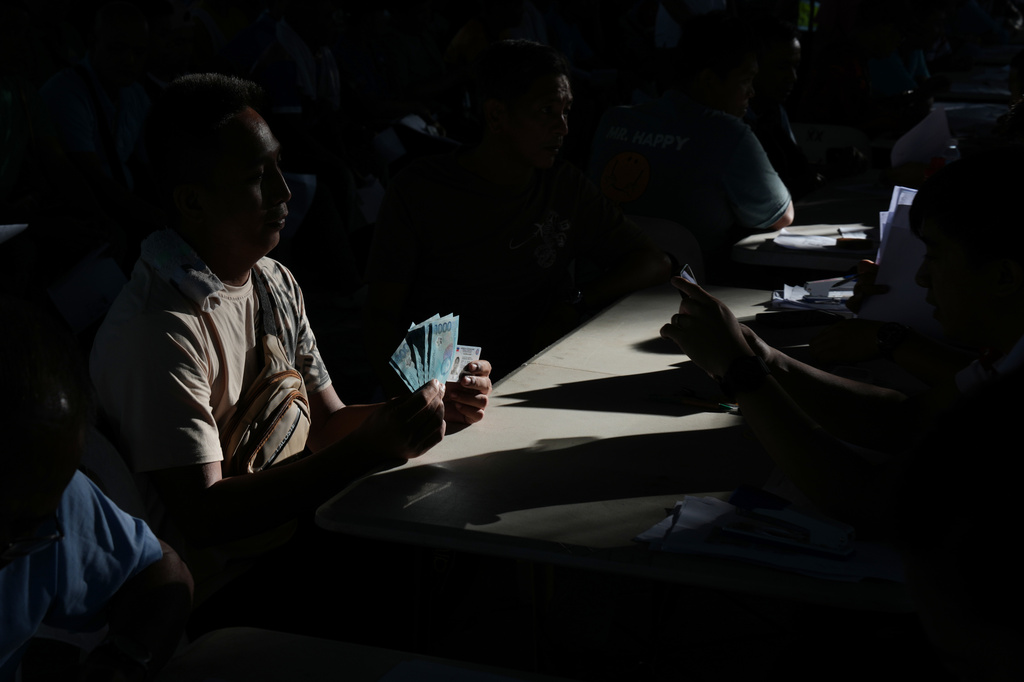
But the U.S. sanction waiver sent energy-hungry Southeast Asia into a frenzy. This month, the Philippines, Indonesia, Thailand, and Vietnam signaled new interest in Russian oil.
Manila, a long-time U.S. ally, imported Russian crude for the first time in five years — days after it declared an energy emergency.
Others may follow, but will compete with China and India for roughly 126 million barrels still at sea, according to Kpler.
India alone typically needs 5.5 million to 6 million barrels of oil per day.
Analysts say Russia is unlikely to boost exports sharply. In March, flows were about 3.8 million barrels a day, above February’s 3.2 million but still below the mid-2023 peak of 3.9 million.
Xu said the crisis was a reminder of how quickly geopolitics can shift — sometimes driven by just a few decision-makers — making it hard for countries to plan ahead. She said “right now, really the priority is to ensure your supply and all the other considerations are secondary.”
Southeast Asian Countries Compete for Dwindling Supplies
Southeast Asian countries competing for the dwindling amount of Russian crude oil at sea are likely hoping the U.S. extends its sanction waiver beyond April, Xu added.
The options are limited for these nations, and safer bets — like crude oil from the U.S., South America, or West Africa — are too far for Asia, meaning shipments won’t arrive for months. That leaves poorer nations scrambling.
The Squeeze in the Philippines
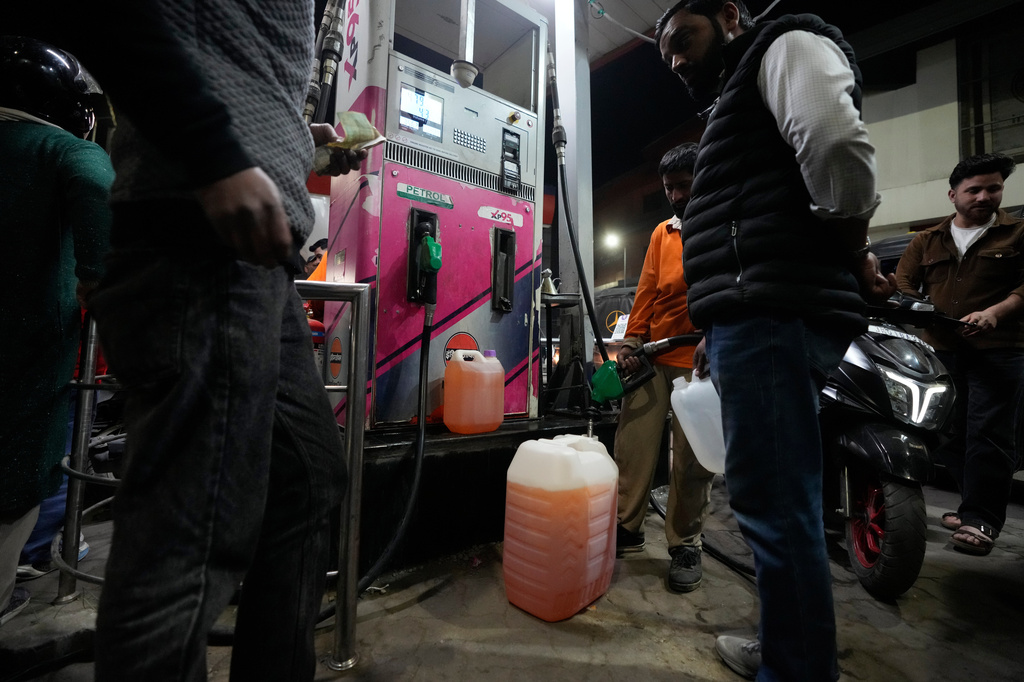
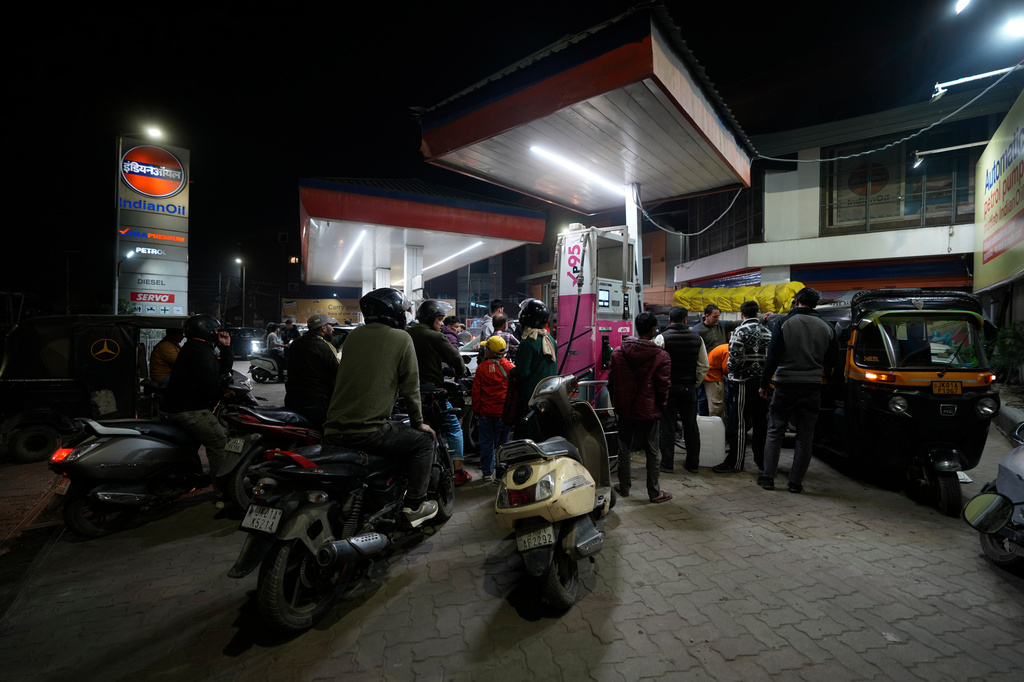
Airlines in the Philippines are weighing fuel rationing. Cash handouts are being rushed to those hit hardest, like transportation workers. On most days, lines at gas stations stretch for blocks.
The nation of 117 million is an early warning for Southeast Asia.
Before the war, the Philippines relied on the Middle East for nearly 97% of its total seaborne oil imports, according to Kpler data. The energy emergency declaration is a “new frontier” in its scale and magnitude, said Kairos Dela Cruz of the Institute for Climate and Sustainable Cities.
“It will definitely drive people down even further in the poverty line,” he said.
To ease energy shortfalls, the Philippines imported crude oil, a first since 2021. Other Southeast Asian nations are weighing similar options.
Vietnamese Prime Minister Pham Minh Chinh’s March 23 visit to Russia included agreements on oil and gas cooperation, alongside nuclear energy, as rising diesel prices begin to squeeze Vietnam’s manufacturing sector.
In Indonesia, officials said “all countries are possible” partners as they shore up reserves. This includes Russia and the tiny oil and gas sultanate of Brunei, said Indonesian Energy Minister Bahlil Lahadalia.
“When you don’t have any other options, all options are on the table,” said Putra Adhiguna of the Jakarta-based Energy Shift Institute.
While weighing similar moves, Thailand is not as desperate as the Philippines, said Jitsai Santaputra of the energy consultancy The Lantau Group in Bangkok. She added that Thailand will likely wait and see so long as the impact is limited.
But it’s growing.
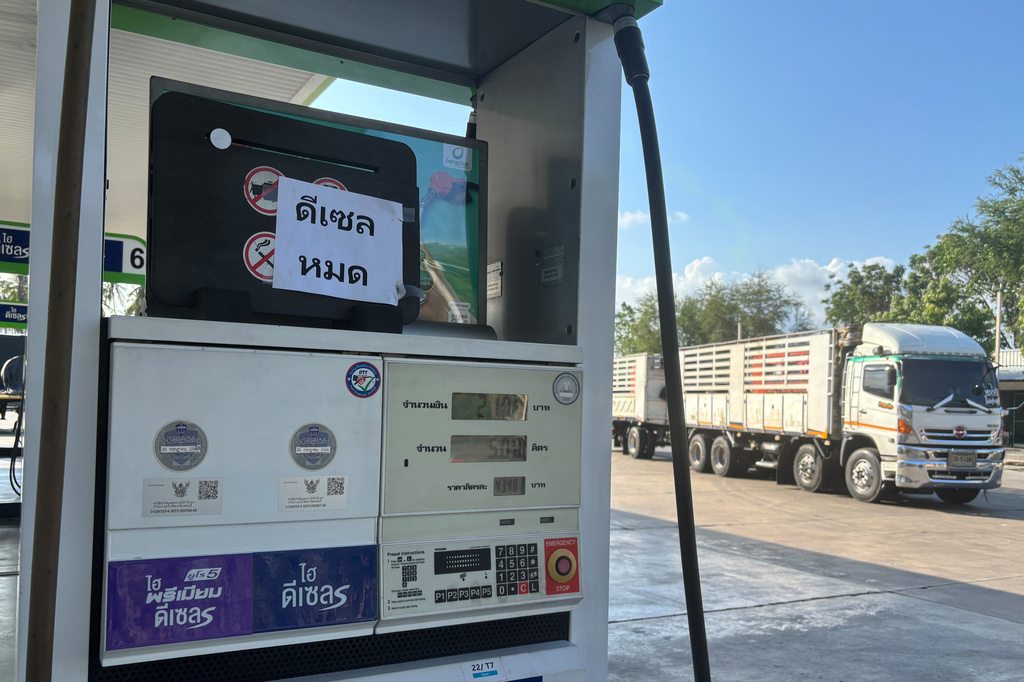
Fuel prices in Thailand jumped on March 26 after caps and subsidies were lifted, with most fuels rising about 20 U.S. cents per liter, with diesel up roughly 18% — a hit to industry and transportation that risks pushing up the price of other goods.
China and India Have the Advantage
Defying Western sanctions, China and India were major Russian crude oil customers before the U.S. and Israel attacked Iran on Feb. 28.
An additional advantage for India was having U.S. sanctions on Russian crude oil removed about a week before other countries.
“They took that chance and snapped up quite many cargoes,” Xu said. By the time U.S. President Donald Trump allowed everybody else to buy, she said it was “already a bit too late because most of the cargo had already been ordered” by China and India.
Even with the head start, Kpler data shows India’s crude oil imports from Russia probably aren’t enough to offset the lack of supplies from the Middle East.
Its oil imports from Russia jumped to roughly 1.9 million barrels a day in March, from about 1 million barrels before the Iran war. Before that conflict, India imported around 2.6 million barrels per day of crude oil from the Middle East.
That may not be enough, with the approach of peak summer energy demand — driven by travel, agriculture, and freight needs — especially as emergency oil stockpiles run down, said Duttatreya Das of the think tank Ember. He added that short-term buys cover only a few days of supply, leaving any gap hard to fill without extra shipments from the U.S. or Canada.
“I don’t know how the shortfall will be met,” he said.
Despite being the fifth-largest crude producer and pushing clean energy, China still has strong oil demand from its 1.4 billion people. But it also has built a vast oil stockpile.
It has approximately 1.2 billion barrels of onshore crude inventories, Kpler estimates. That is nearly four months of its overall seaborne crude imports, which cushion short term impacts from the war.
China sourced about 13% of its seaborne crude from Iran, according to Kpler, and roughly 20% from Russia, said financial data group LSEG.
With ample reserves and deep pockets, analysts say some Russian shipments bound for China could be diverted to more desperate countries.
“Russia emerges as a major winner from the entire conflict,” said Sam Reynolds of the U.S.-based Institute for Energy Economics and Financial Analysis. Given the energy crisis, speed of delivery and temporarily lower prices, he said Asia has “a much larger incentive to import Russian oil.”
“We can argue whether there’s a moral dilemma there, but I think it’s a reflection of the fact that countries are going to do whatever they need to to protect their energy security,” he said.